

Jack and I have lived near each other for a decade now. He changes a lot, and I enjoy his company in every phase.
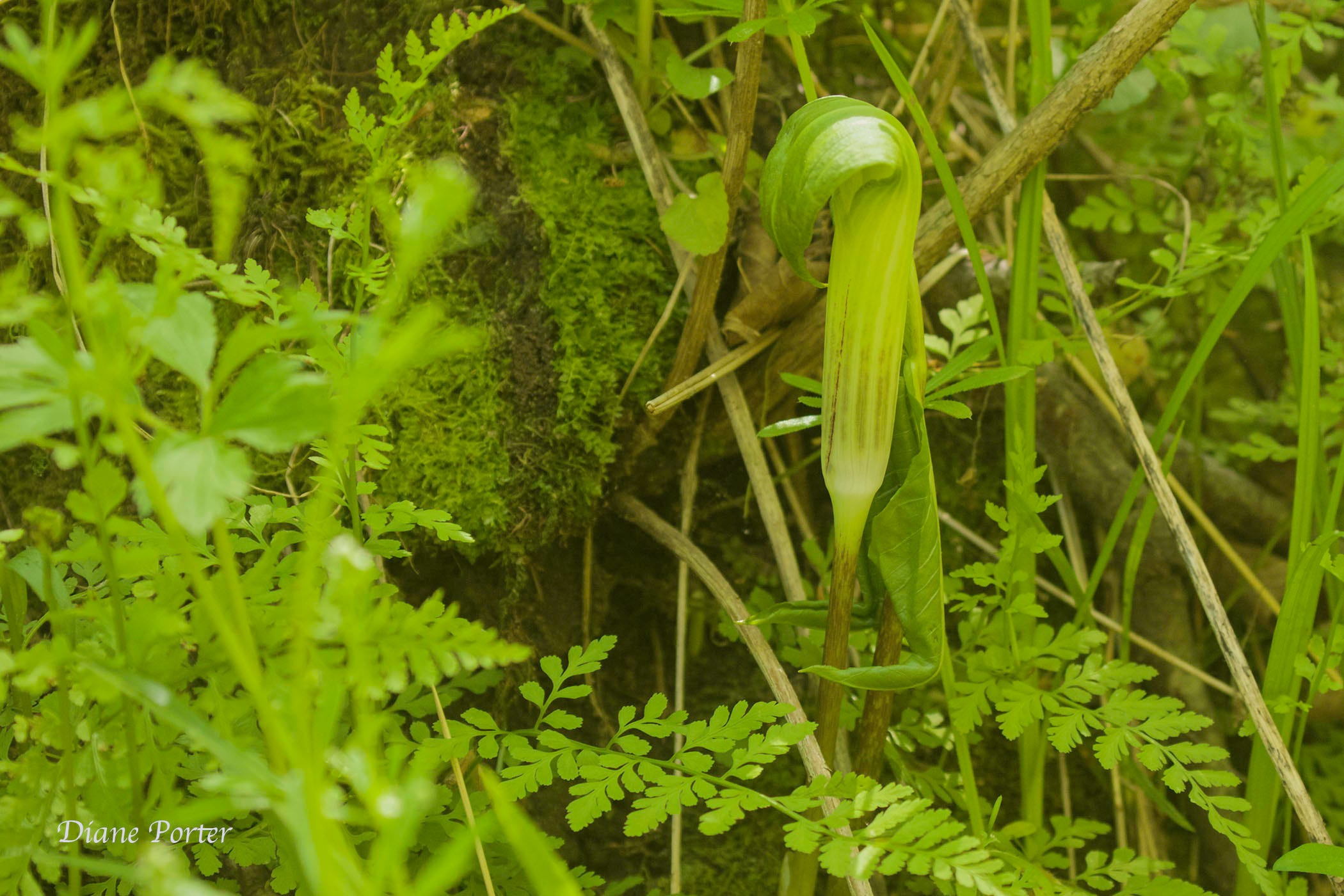
In May, he waves at me from his pulpit in the shade garden. And I see how the plant got named for a preacher speaking from a rather flamboyant pulpit.
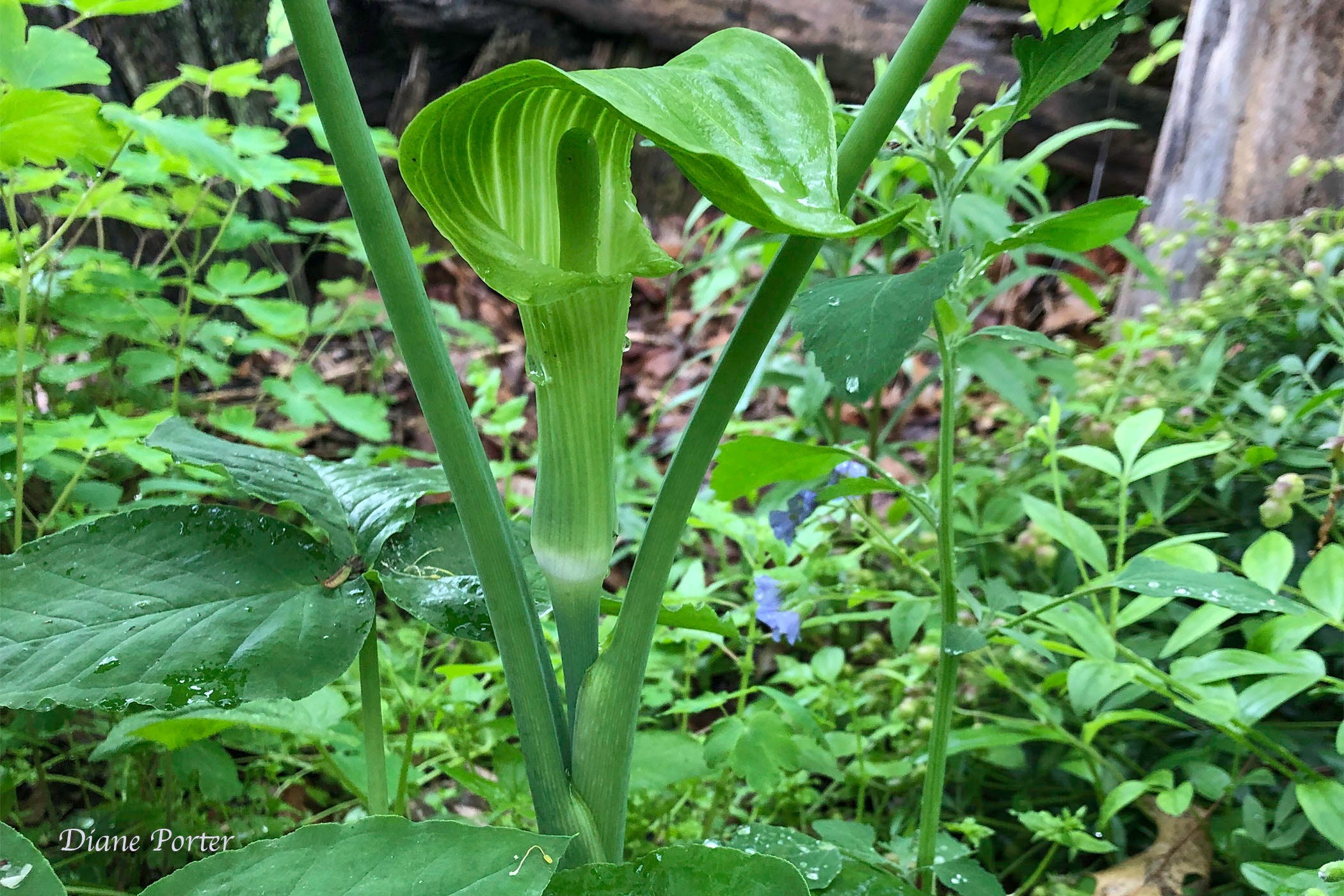
The “preacher” is the central column, called the spadix, that bears the flowers. You normally can’t see the tiny flowers because they are clustered around the lower part of the spadix. The sheath around the spadix, that hides the flowers, is called the spathe. That’s the pulpit.
The top of the spathe-pulpit arches over Jack’s head and forms the waving roof.
By July, the fertilized flowers on the spadix have become green berries. The spathe has withered away to almost nothing. Up at the top, the leaves are wilting and going pale.
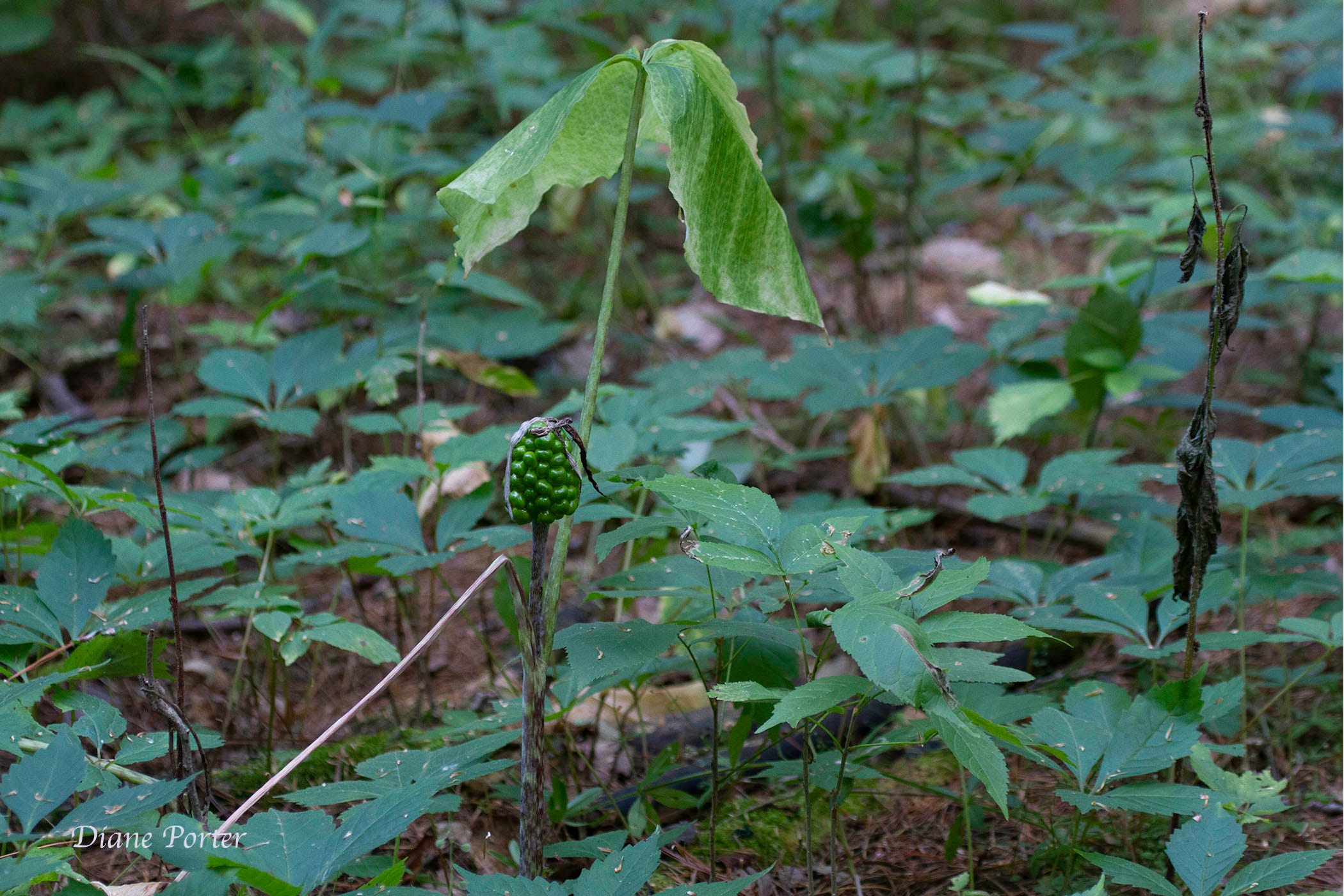
When they’re green, the berries are hard and shiny as polished rock. Jack-in-the-pulpit berries contain irritating calcium oxalate crystals. Its tiny needles puncture the tissues of the mouth and tongue and sting painfully.
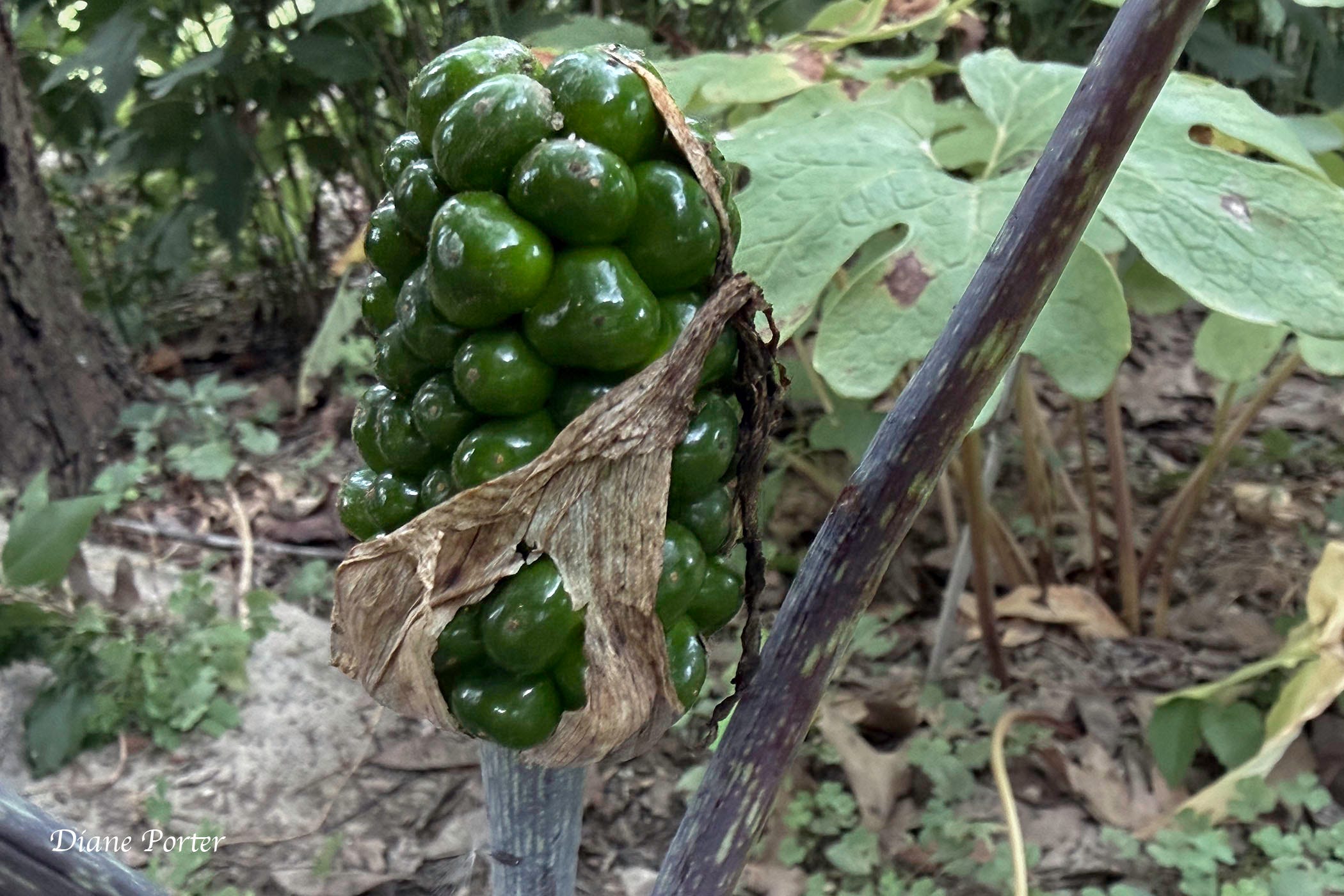
You’d think that no wild animal would eat them, but my experience is that sometimes they do get munched in my garden at the first hint of ripening. If I want to save the berries, I now enclose the head in an organza drawstring bag, and I’ve never lost a berry so protected.
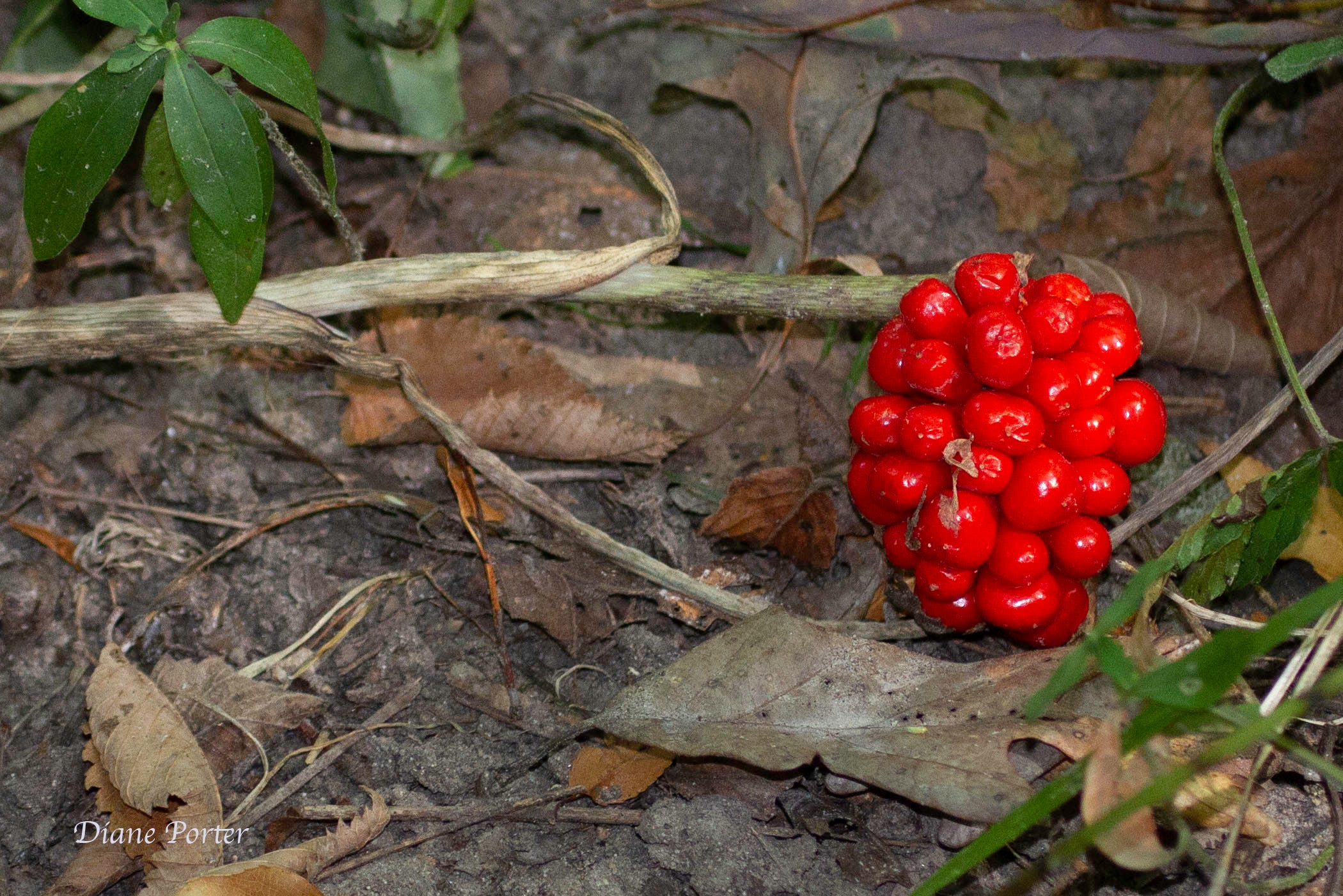
As summer wanes and the berries ripen, the leaves wither away and the softening stem collapses. I’ve seen a head of red, red berries lying on the ground.
I wear surgical gloves when I collect and process the berries. Those calcium oxalate crystals can irritate the skin, I’ve heard, though when I’ve accidentally touched them, I’ve not experienced any such effect.


Under running water, I squish the seeds out of the berries, which are almost as soft as jelly. I get one to three seeds from each berry. I refrigerate the cleaned seeds until February, when I plant them outdoors in a space protected from digging animals. They make one simple leaf the first year, but the next year they usually have one leaf divided into three attractive green leaflets.
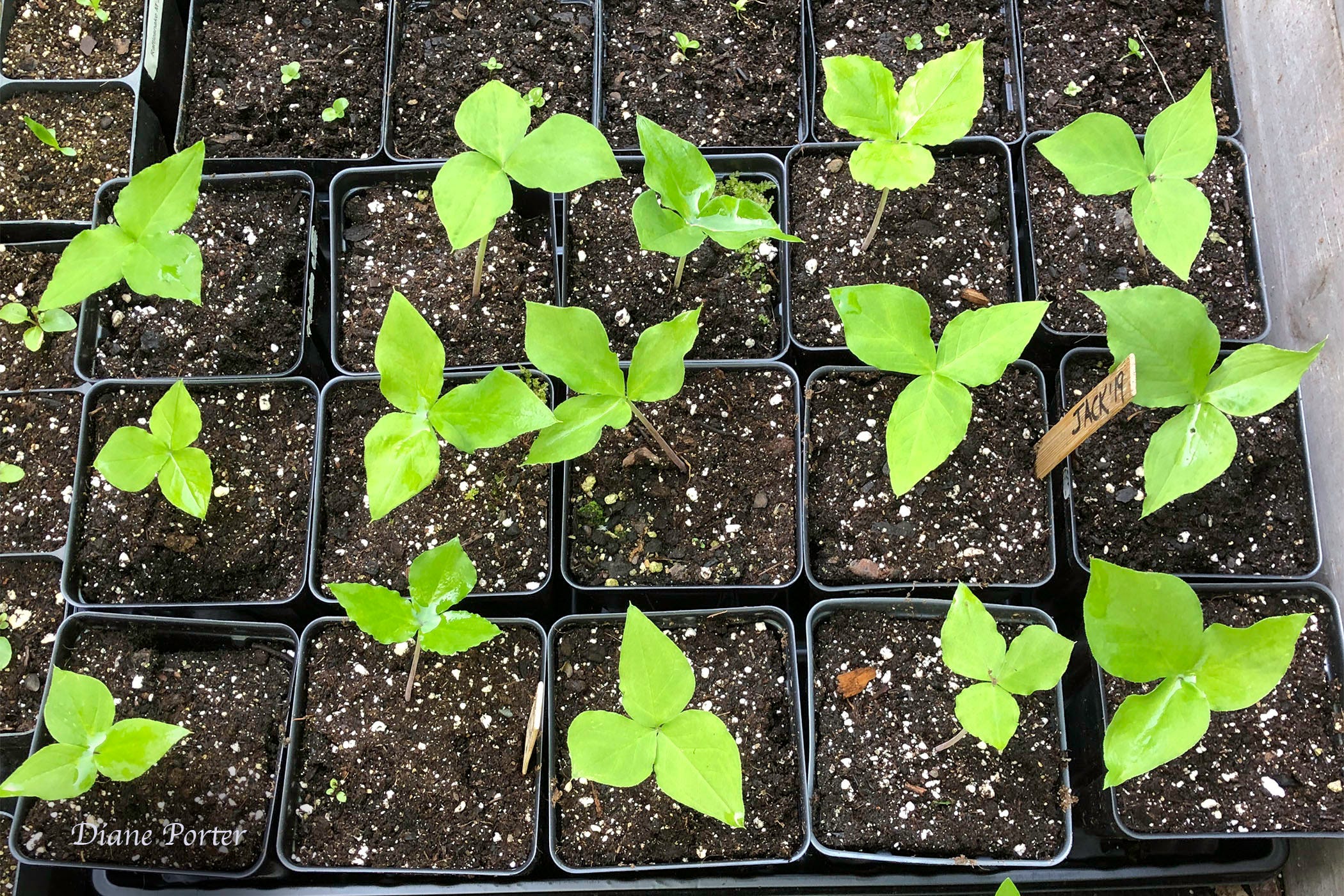
I plant them in shady spots in the garden or the woods. Many have gone home in the hands of smiling friends who are delighted to add this lovely native plant to their backyard garden.
Jack makes friends wherever he goes.
I grew up next to a very big wood (the 'high woods') in Pennsylvania. Among the many glories were Jack-in-the Pulpits. We kids spent every moment we could amongst the trees and running thru them to the pond that lay below. My Mother rang a bell at dusk when it was time for me to come home. I have it here these many years later. Such memories, so happy.
I started with a few seeds years ago but not am working to keep this lovely plant in control. I has spread over the year into my neighbors yard and into all my gardens. I believe the squirrels are moving the seeds around.