

Blue faced ladies!
It’s a droll and cheering sight on a chill fall morning. A few blue-headed Wild Turkey hens stroll leisurely on the grass, poking at fallen leaves and pecking at seedheads of goldenrod and asters.
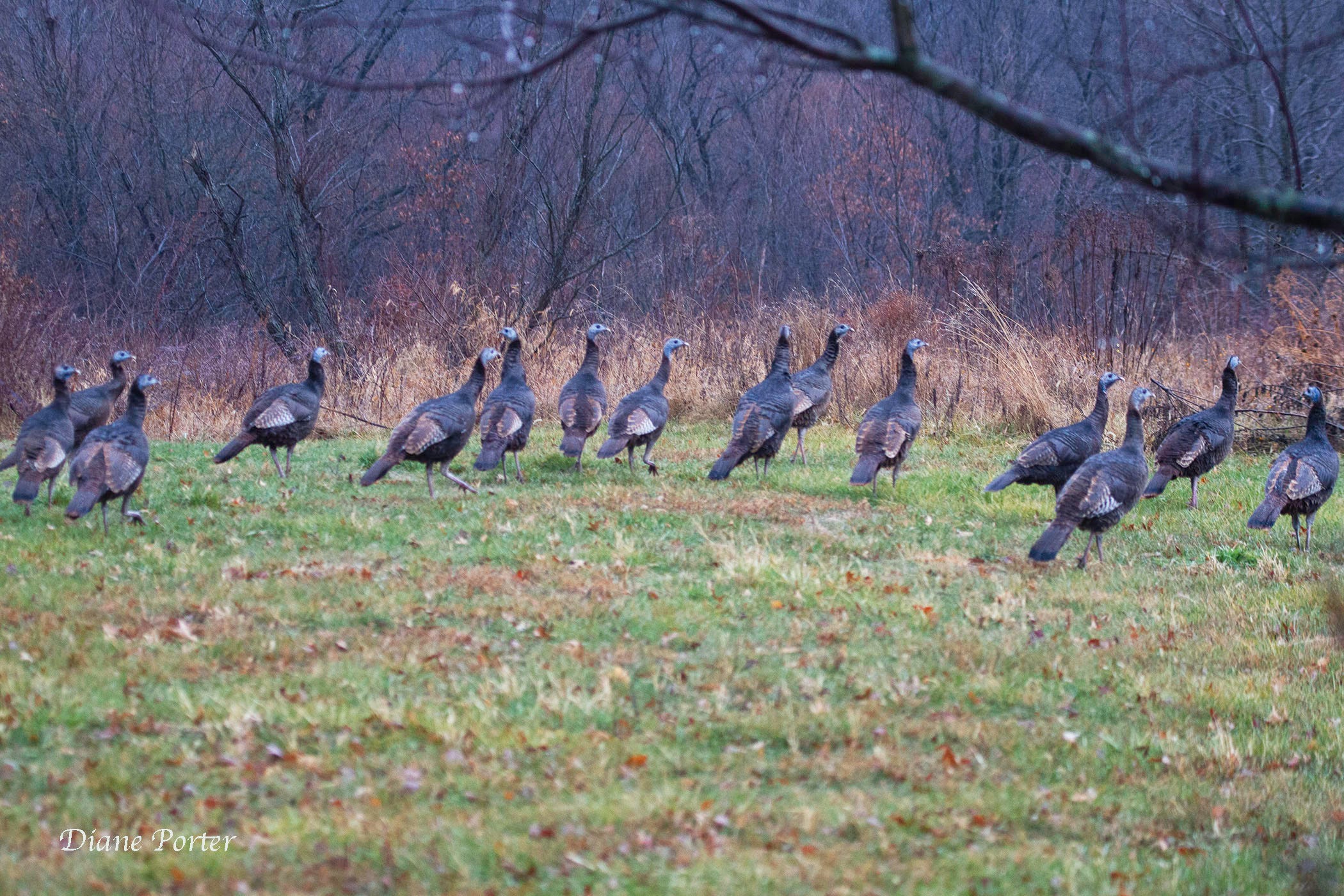
Female Wild Turkeys show up a lot in late fall. They’re tamer than the toms. In Iowa, the hunting of male turkeys is legal and licensed. Females, in Iowa as in many other states, cannot legally be shot. Around here, the hens are pretty chill.
A hen sometimes strolls along my driveway as confidently as a neighbor coming over to say hello. Males live by different rules, which they have learned by adulthood. Toms seldom wander into sight of people.
Hens
In the winter woods, snow evidence shows flocks of turkeys have been parading down the trails.


Turkey footprints are big — 4 inches or longer, with the middle toe longest by far. In Iowa, the only other bird making tracks this big is the Great Blue Heron. But their track shows four toes, all about the same length. Not the same shape at all.
These turkey tracks are from hens and possibly some young males. Toms, the adult males, don’t just go for a walk with females. And they don’t form big male flocks, either. I’m seeing a band of hens here.
Toms
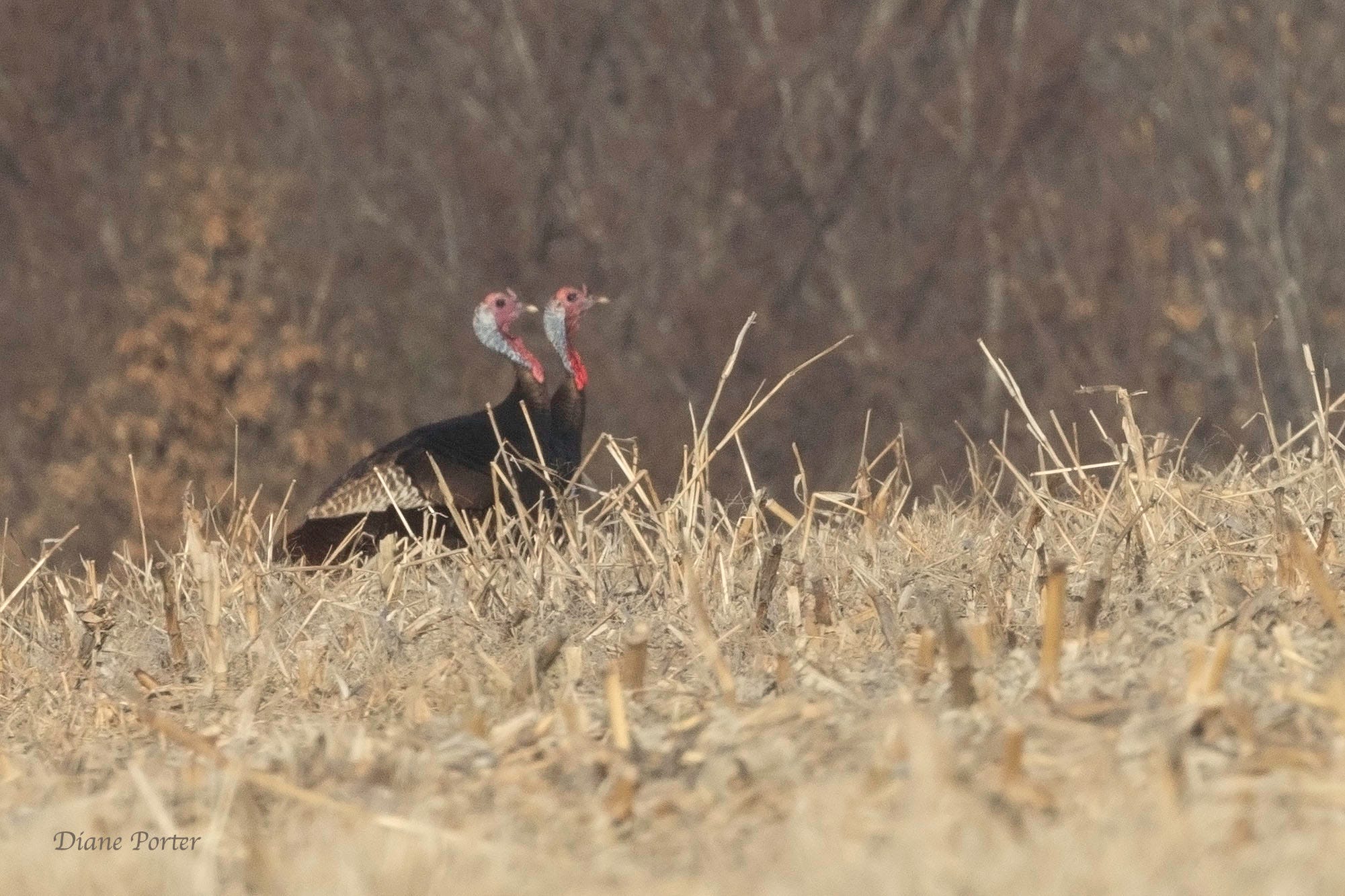
Toms are solitary and reclusive. They hide out in brushy creek bottoms, wooded ravines, and cedar thickets.
Although I’ve seen hen turkeys hundreds of times in 20-plus years living in rural Iowa, I’ve never come across a tom strutting and displaying his tail. However, in late March, before the spring snow is gone, I hear them faintly through the woods, gobbling in the distance.
Turkey recording by Diane Porter
The toms start gobbling well before sunrise. They call down from their roost in a big tree. From that elevated position, the sound easily carries a mile or more. Around sunrise, they come down from the trees and strut on the ground, fanning their tails and being gorgeous. I plan to try to witness such a display early next spring. Females watch the displaying males and decide which male(s) to mate with.
Jakes
Although adult turkeys are stealthy, in late winter young male turkeys (called jakes) often wander by two or threes through open fields. They have not yet learned to stay out of sight. Although many hunters prefer to take a big adult male, jakes are shot too. Hunting is the main reason that by spring, there are two to three female Wild Turkeys for every male.
Poults
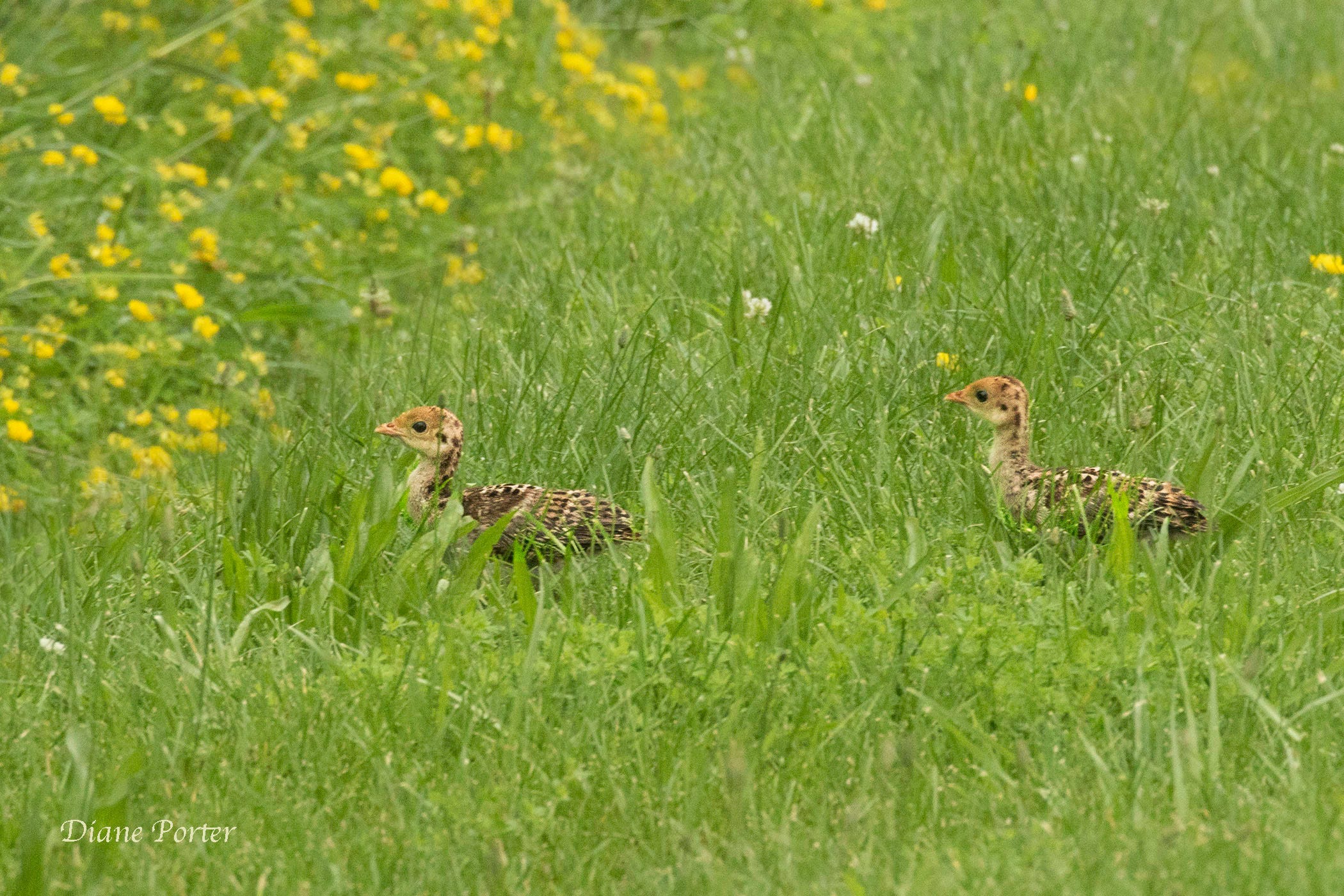
In the spring, the mother turkey watches over her young for a few weeks as they amble through the grass as a family. She warms them at night and gives calls that signal them to hide if a dog or raccoon comes near. She teaches them what to eat and shows them where to find it.
However, from the moment they hatch, the babies must peck up their own food. Because they need a lot of protein, they eat mostly insects and spiders they find in the grass. Gradually they transition to eating more seeds, berries, acorns, and grasses.
Bringing turkeys back
Wild Turkeys were abundant throughout North America prior to European settlement. However, by early 20th Century they had been almost hunted out of existence. The last verified Iowa sighting was in 1910, in Lucas County.
Re-introduction programs in Iowa, using pen-raised birds, were a flop, because the turkeys lacked survival skills or instincts. In 1965, biologists tried again with wild-captured turkeys, and that worked. By the end of the 20th Century, Wild Turkeys roamed the entire state again.
And for that I give thanks.
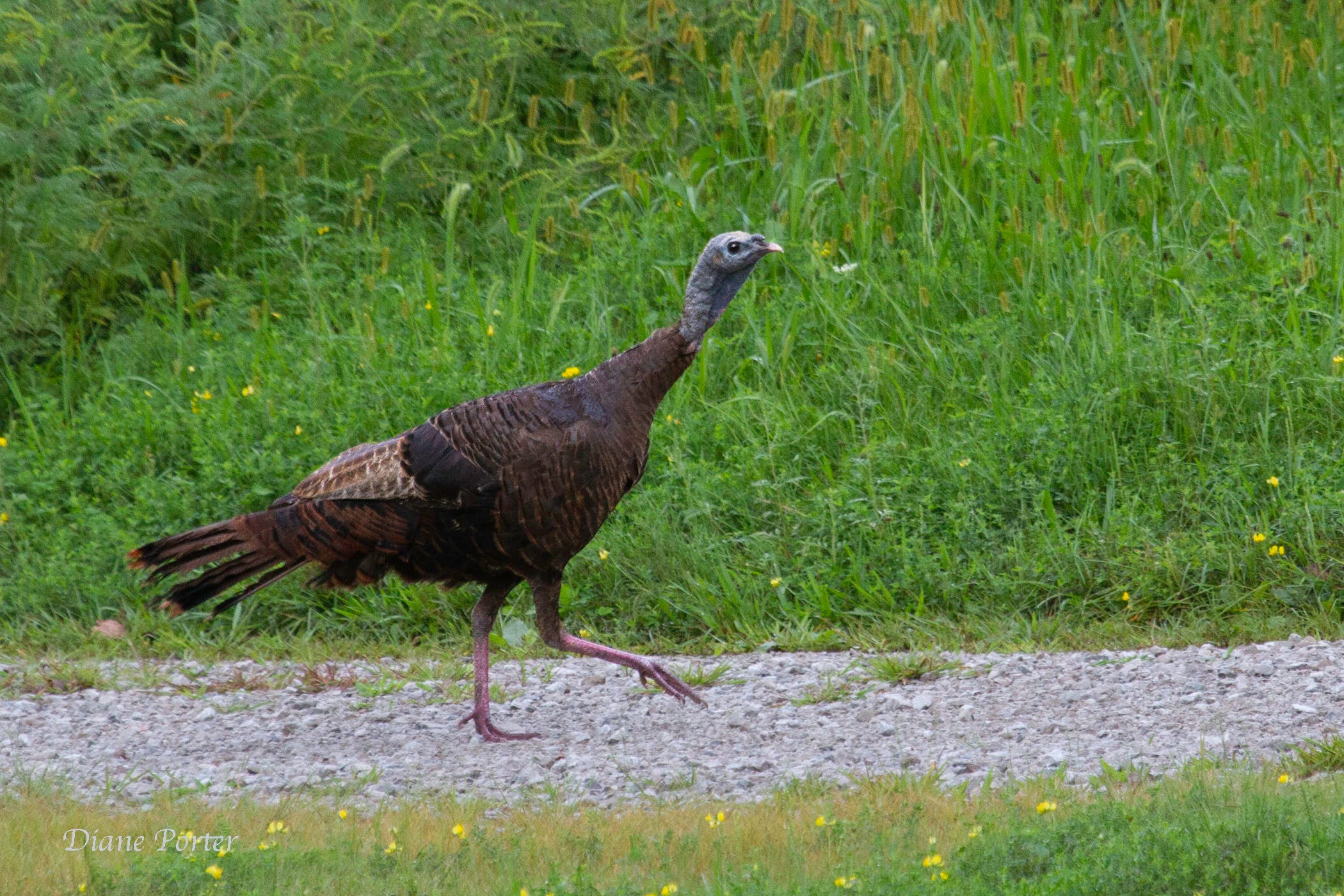
Thank you for the history lesson about the turkeys and for showing people what a normal turkey should look like. It's cruel what's been done to the domestic turkeys to produce more meat. I'm sponsoring one for Thanksgiving. She lives at the Gentle Barn, where she has no fear of becoming dinner.
Thank you for this post, I learned new turkey facts! In Minneapolis turkey flocks including adult males roam around parklands, riverlands and even occasionally urban yards foraging for acorns and other tasties. I also encounter them in all kinds of natural environments. They usually try to avoid people and head back into the woods when we cross paths. But in the city, on certain residential streets with bur oaks, drivers will wait patiently for turkeys crossing the road, and sometimes gently edge around a displaying tom in the middle of the street who is in a face-off with the whole line of cars. They are just gorgeous!