

An American Goldfinch is plucking seeds out of a spent Wild Bergamot flower head. He doesn’t know about the world events that weigh on our minds. He just wants some food.
The bergamot is dry and brittle. The goldfinches are drab now, too. On their throats, the males have only a trace of the shining gold their bodies wore last summer.
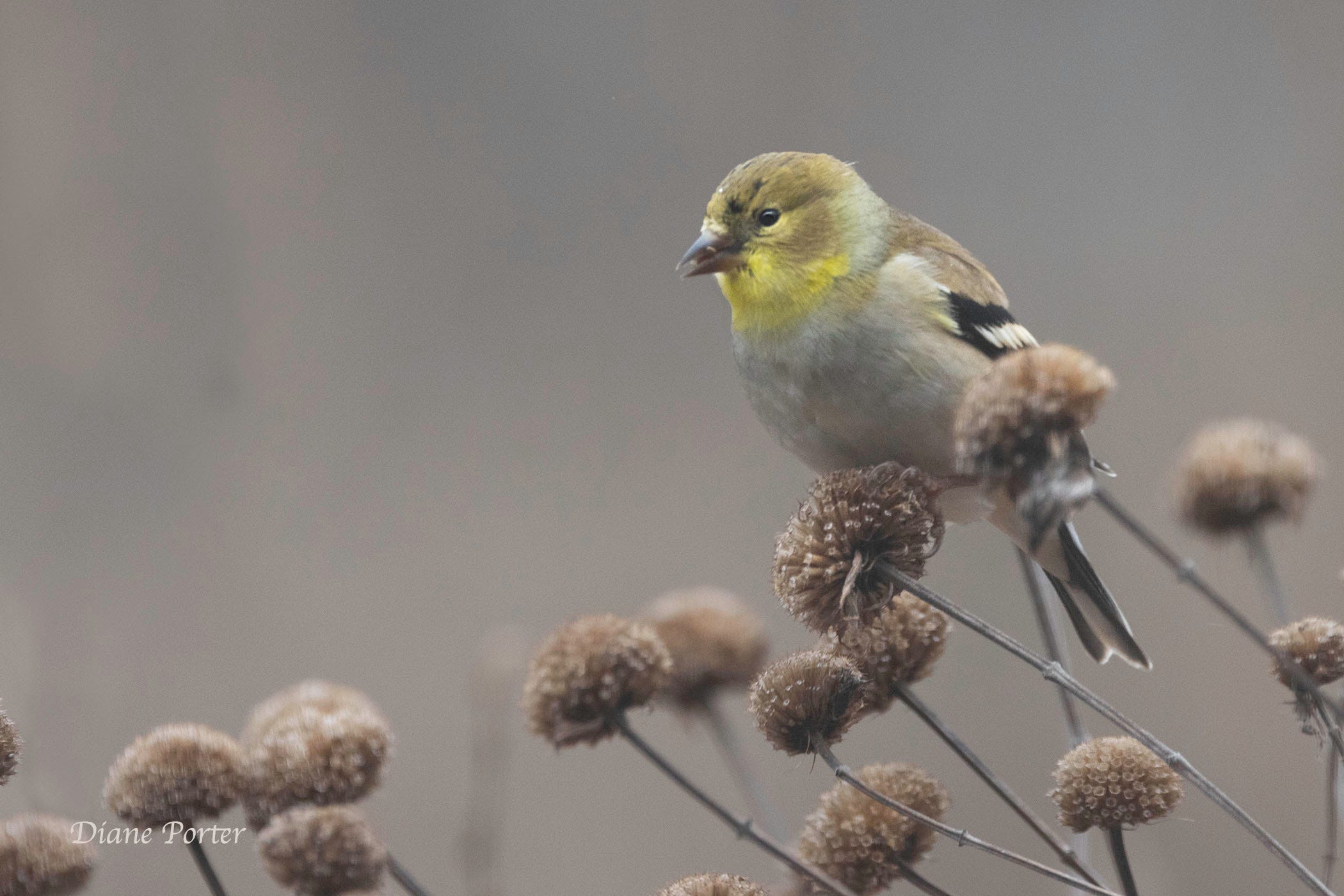
On this gray January day, the Wild Bergamot is still giving.
Winter
I always leave the flower stalks standing in my Iowa backyard. Dozens — sometimes hundreds — of goldfinches winter over. They need the seeds as food to get them through the months when nothing grows.
Watching goldfinches is nourishing to my wintering human soul.
Spring
Wild Bergamot (Monarda fistulosa) is a mint. Like most mints, its leaves are studded with oil glands housed in tiny hairs that stick out from the leaf surface. Merely touching fresh leaves releases a cooling aroma — something like camphor, but softer.
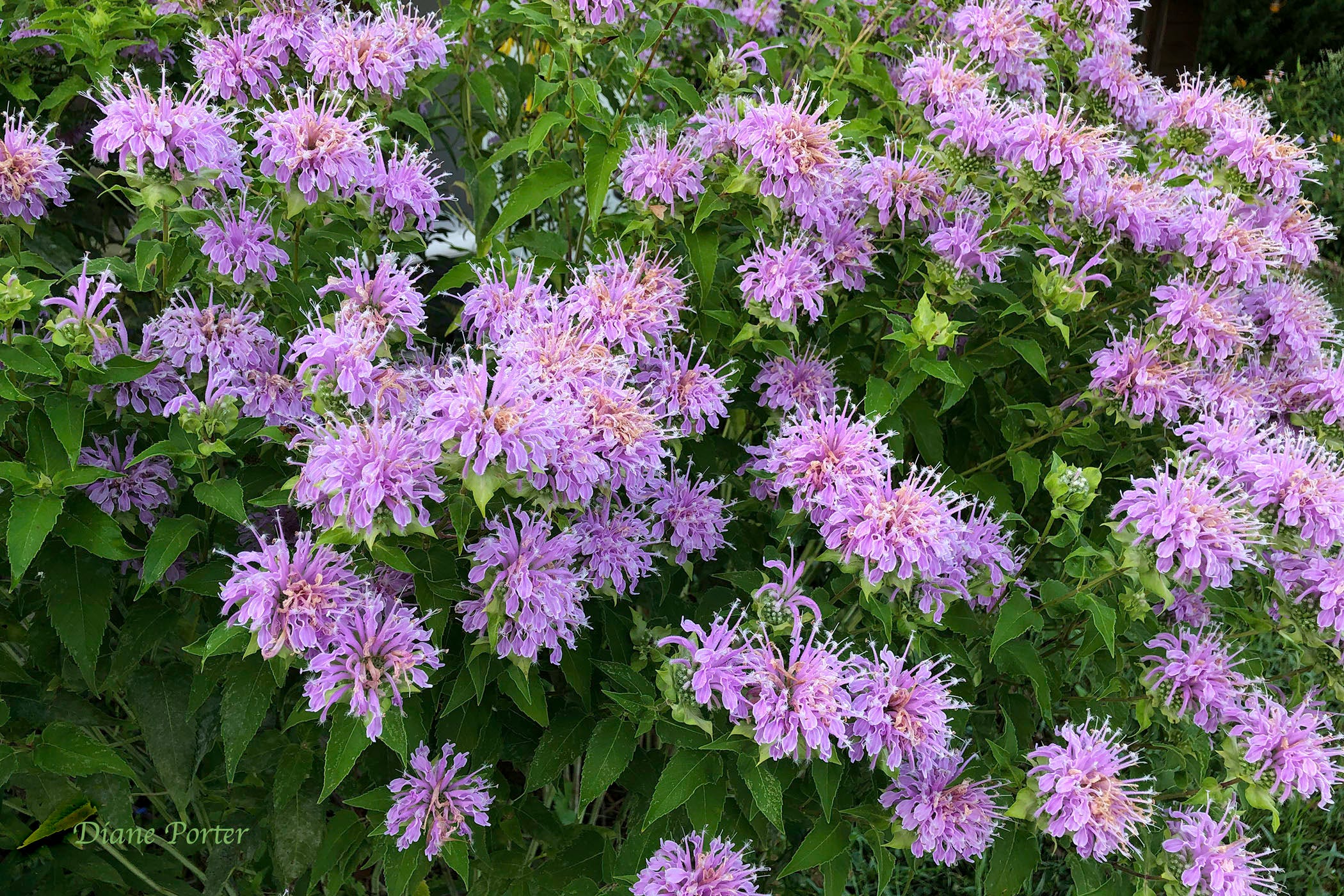
The scent delights me. It is not, however, a favorite of deer and rabbits, which is why mints enjoy some degree of protection from getting munched.
In mid-spring, especially on sunny days, I find myself brushing my fingertips over newly emerging bergamot leaves, just to experience the clear, delicate scent. It feels like a promise. Flowers coming soon.
Summer
In summer, Wild Bergamot blooms for a month or two. It offers a particularly sweet and sustained feast for pollinators.
As butterflies and bees slurp up the nectar, each blossom replenishes its supply within a few hours. Therefore, unlike some plants that give nectar only during certain times, these flowers are open for business all day long.


Some of our most dramatic butterflies seek out Wild Bergamot. The large flower heads make easy landing platforms, and the tubular blossoms are a good fit for a butterfly’s long proboscis. Swallowtails, monarchs, skippers, fritillaries, painted ladies, and sulphurs all favor this plant.
In Midwestern prairie remnants and restorations, Wild Bergamot is often cited as a keystone nectar source for native bees.
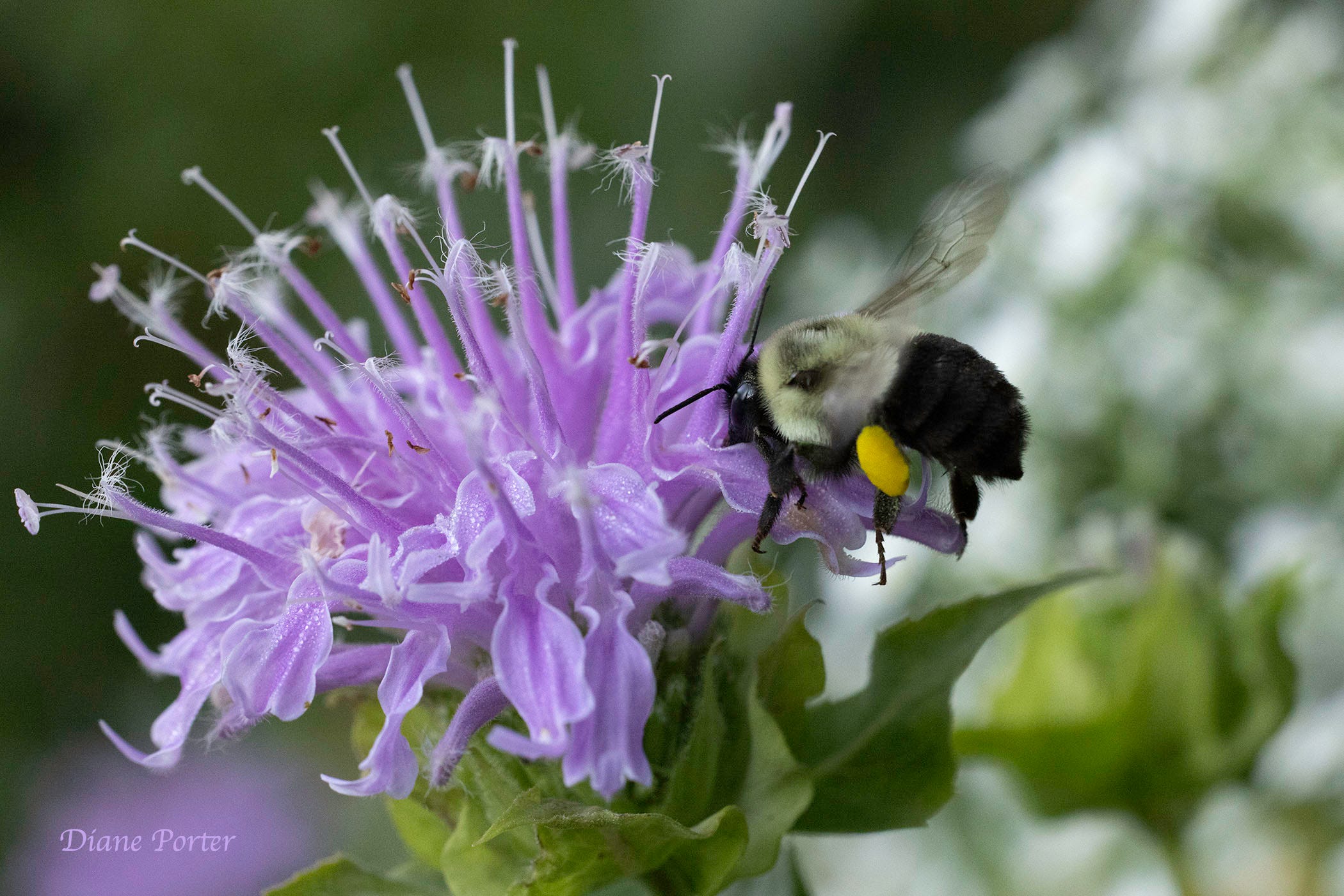
It blooms at a perilous season, in mid to late summer. Spring flowers are long gone. Goldenrods and asters aren’t open yet. Many native bees are seeking pollen for their nests. At precisely that moment, this wildly generous flower steps up to save the day. Without Wild Bergamot, there would be little else to fulfill its role.
Fall
Eventually, the flowers are all pollinated. Petals fall away from ripening seed heads. The glorious colors are gone. But gardeners who love wildlife often leave their spent plants standing, because they still have value for wild creatures.
In my garden last September, a hummingbird perched on the dried Wild Bergamot, as if pondering whether to return to the feeder or snatch a gnat from the air. He came back to the same seedhead day after day.
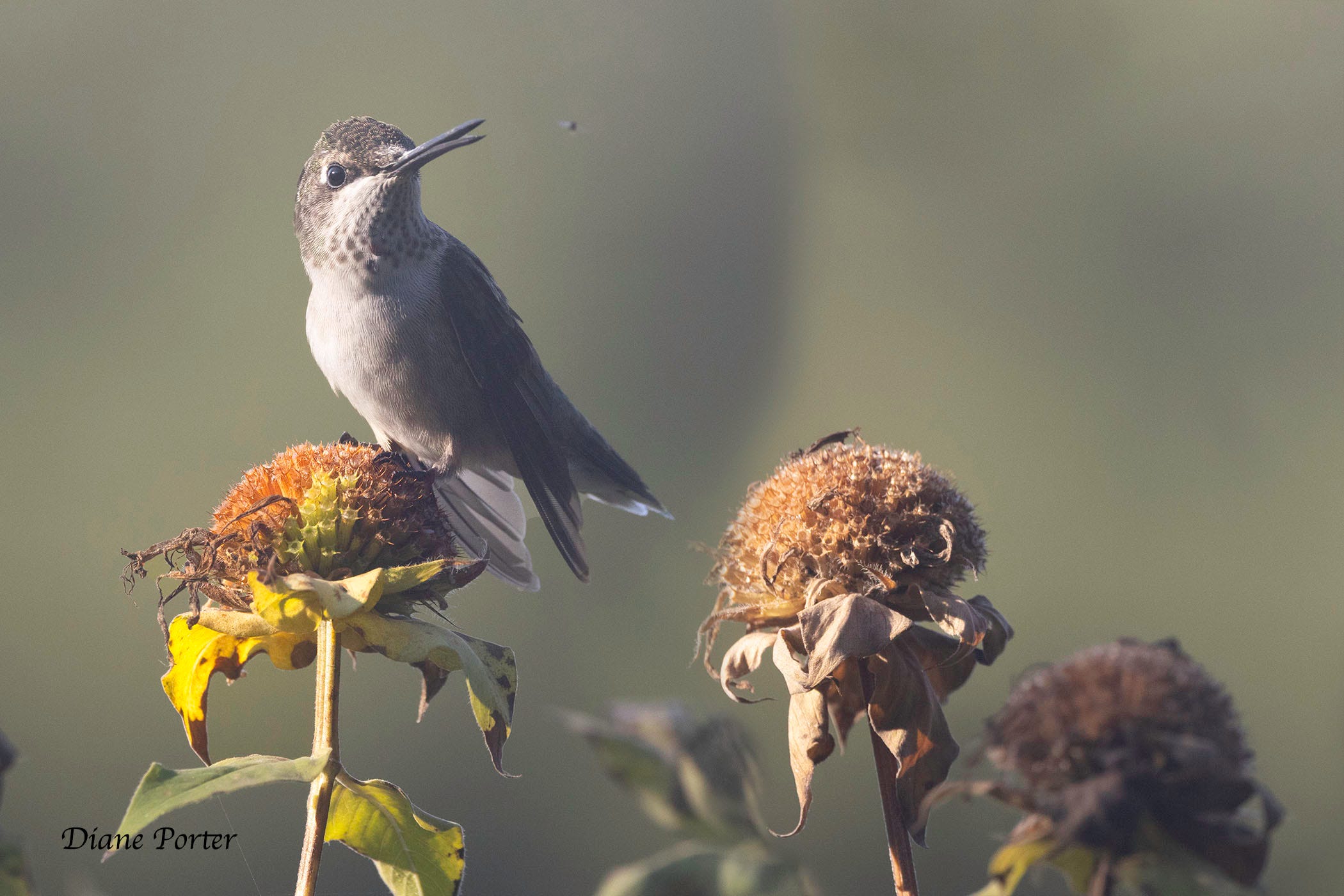
Maybe the delicate texture of the seed head felt just right on the toes. I was delighted to preserve it for him.
It soothes my soul to know that birds and other wild creatures find their needs met in my backyard.
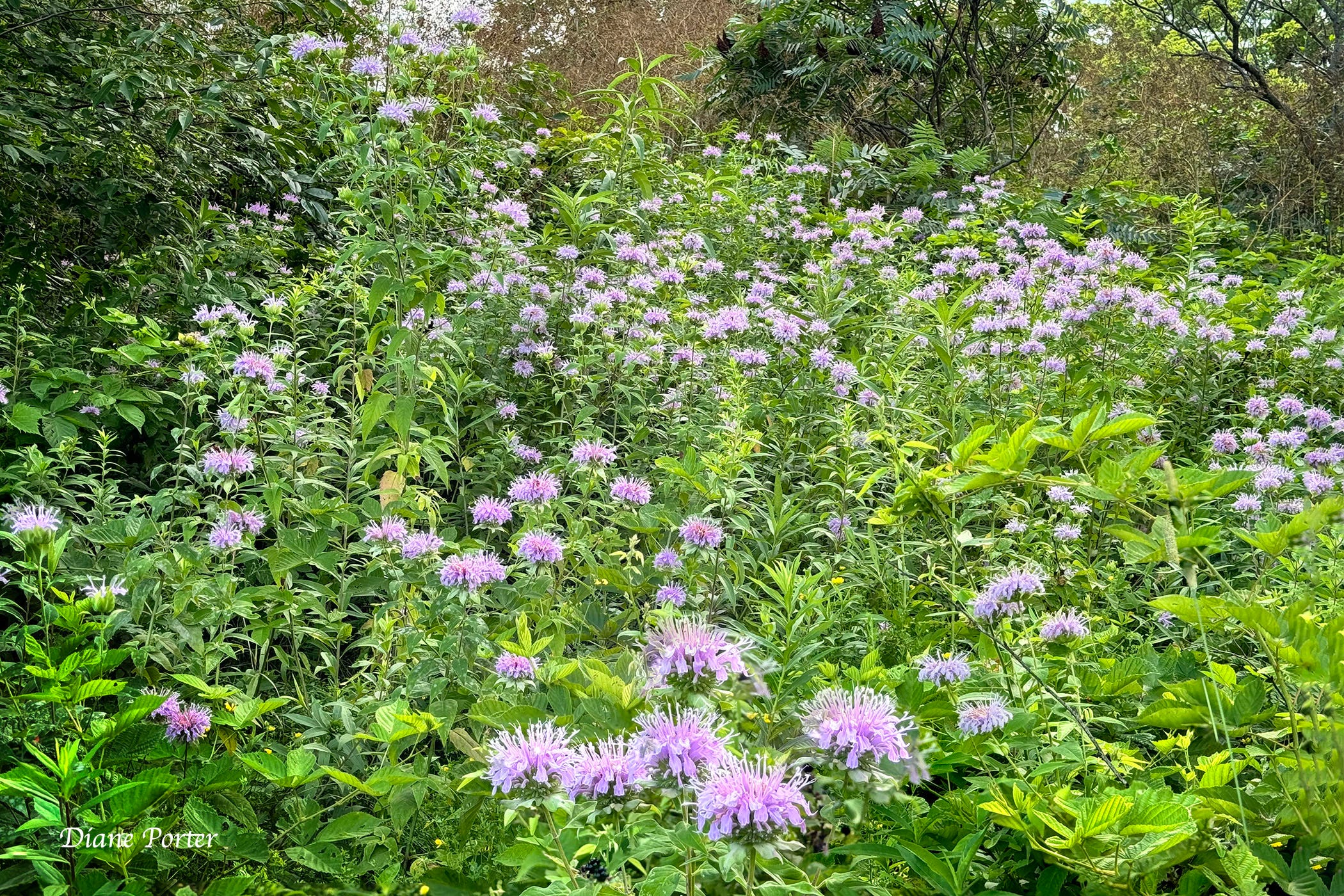
I fill my spot on this planet with native plants that support the world that supports us.
This much I can do.
Diane, your posts give me hope, and your remarkable photos illustrate the natural world at its very best. Thank you.
I, too, sing the praises of Monarda fistulosa. It's the anchor of my prairie meadow, just shivering with swallowtails all July and August long. Yours has deeper color than mine, which tends toward pale lilac pink here in SE OH. That hummer...showing gorget spots, is that a juvenile male?