

Today I’m starting a new batch of Whorled Milkweed seeds. They’ll spend the rest of the winter outside, protected from rodents but subject to rain, snow, and cold. In spring their life will begin.
This is a dainty milkweed, reaching only shin high. When we first met, one August in a wildflower-filled Iowa prairie, I could have walked right past without seeing it. But a Monarch butterfly caught my attention and made me bend over for a closer look.
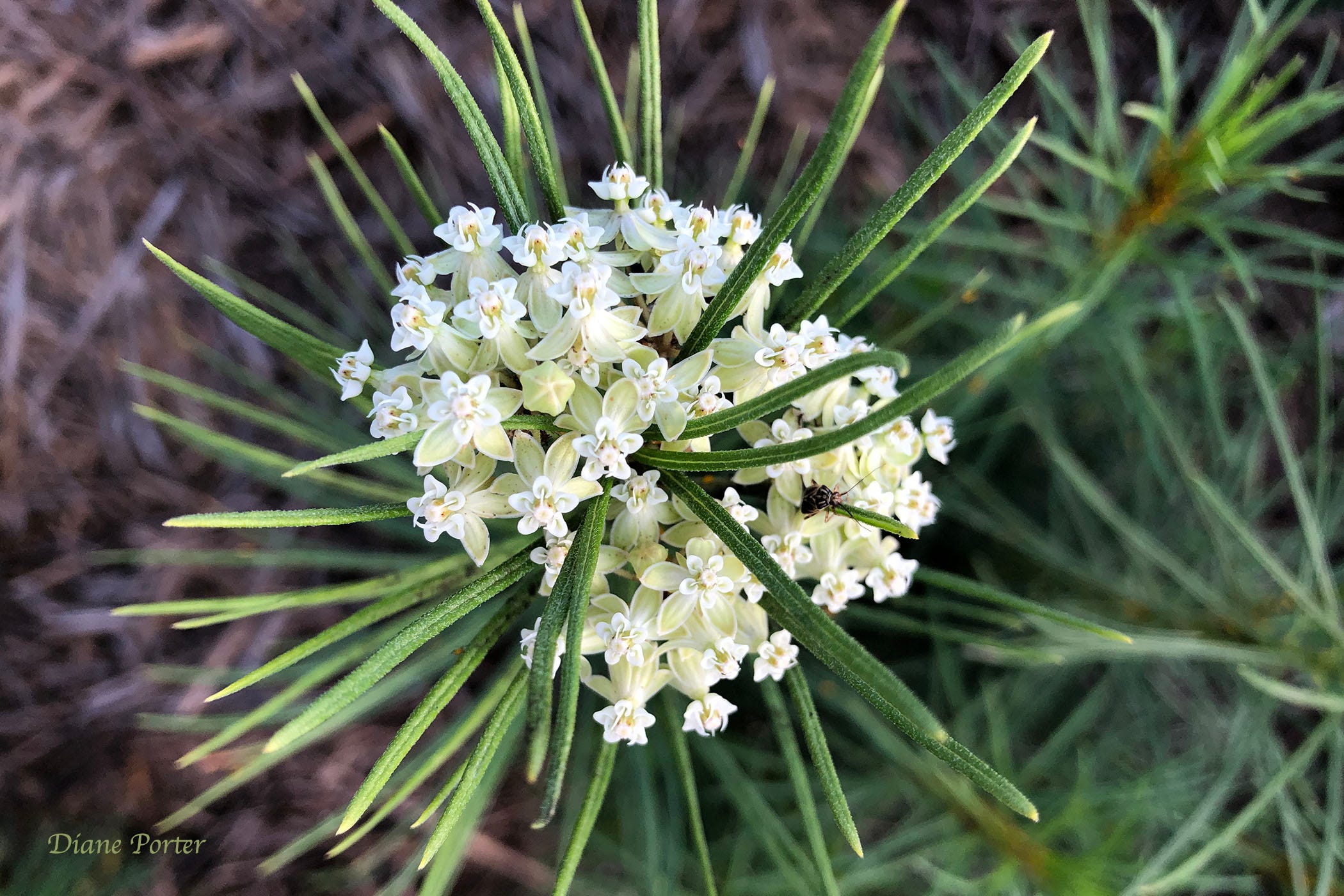
There are many species of native milkweeds. Most are fairly large plants, with colorful blossoms. Whorled Milkweed (Asclepias verticillata) is the smallest of our local milkweeds, and its flowers are white. Its leaves are unusual for milkweeds, too — long, skinny “pine needles.”
The tiny individual flowers are intricate, like miniature carved ivory. I needed a closer look.
I took a blossom home to my microscope. Under the lens I could see the elaborate architecture of the flower.
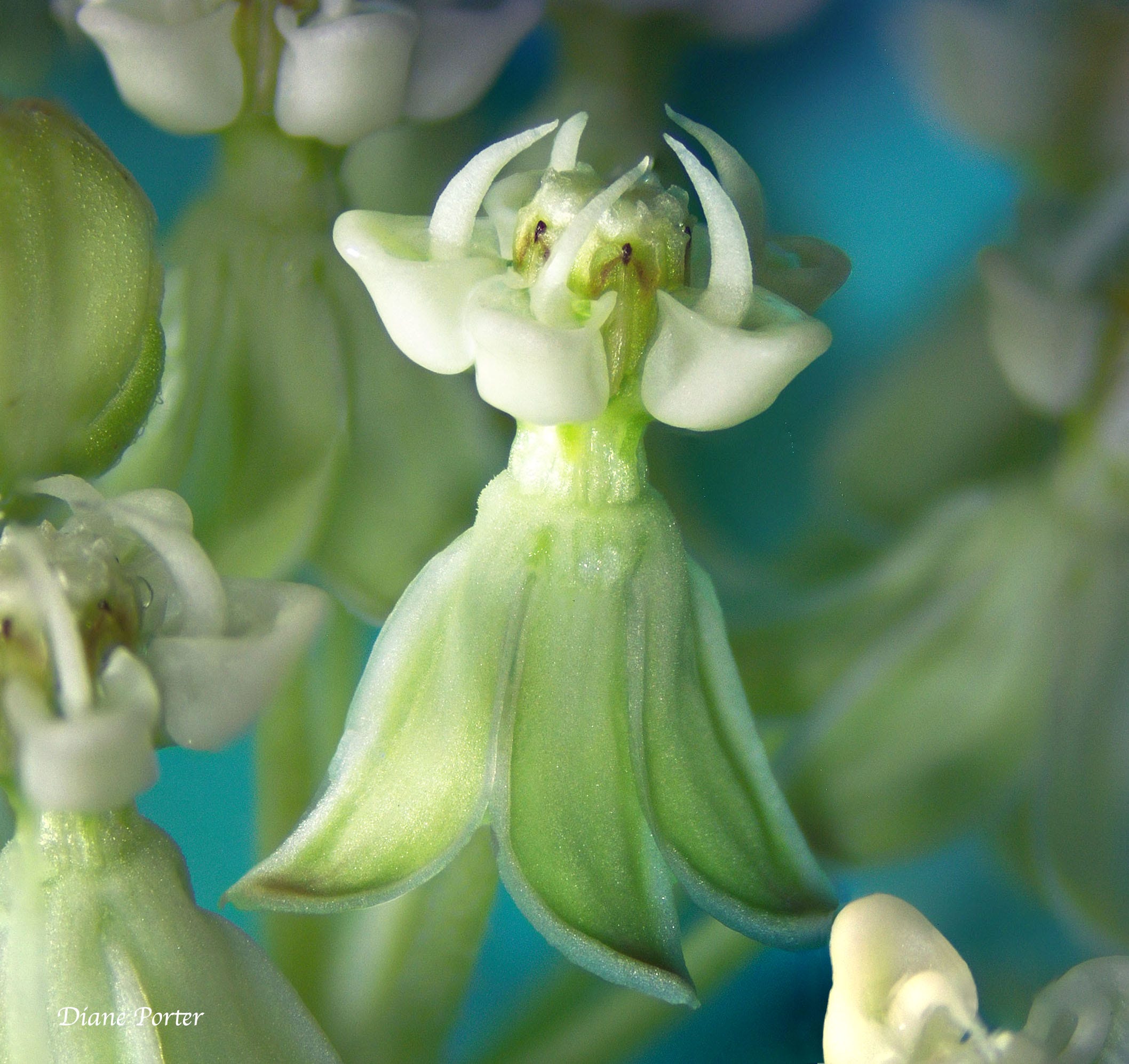
Five pale green petals swoop downward like wings. The top of the flower has five tiny white cups (called hoods). From the hoods arise five curved white spurs (called horns) that point upward and inward.
These horns are not sharp and won’t poke your finger. However, they’re firm enough to guide visiting insects so that they pollinate the flower effectively.
In addition to butterflies, many kinds of very small native bees, small wasps, and ants visit this milkweed for its nectar. And because it blooms late, it provides a reliable food source when other milkweeds have finished blooming. All nectar seekers are invited.
Monarch butterflies are considered to be vulnerable to extinction, in significant part because of the declining amount of milkweed, which is the only food their caterpillars can eat. Many gardeners and land managers make a big point of growing milkweeds to support Monarchs. At the same time they’re helping other less famous butterflies and moths, all of which are important parts of the natural food web.
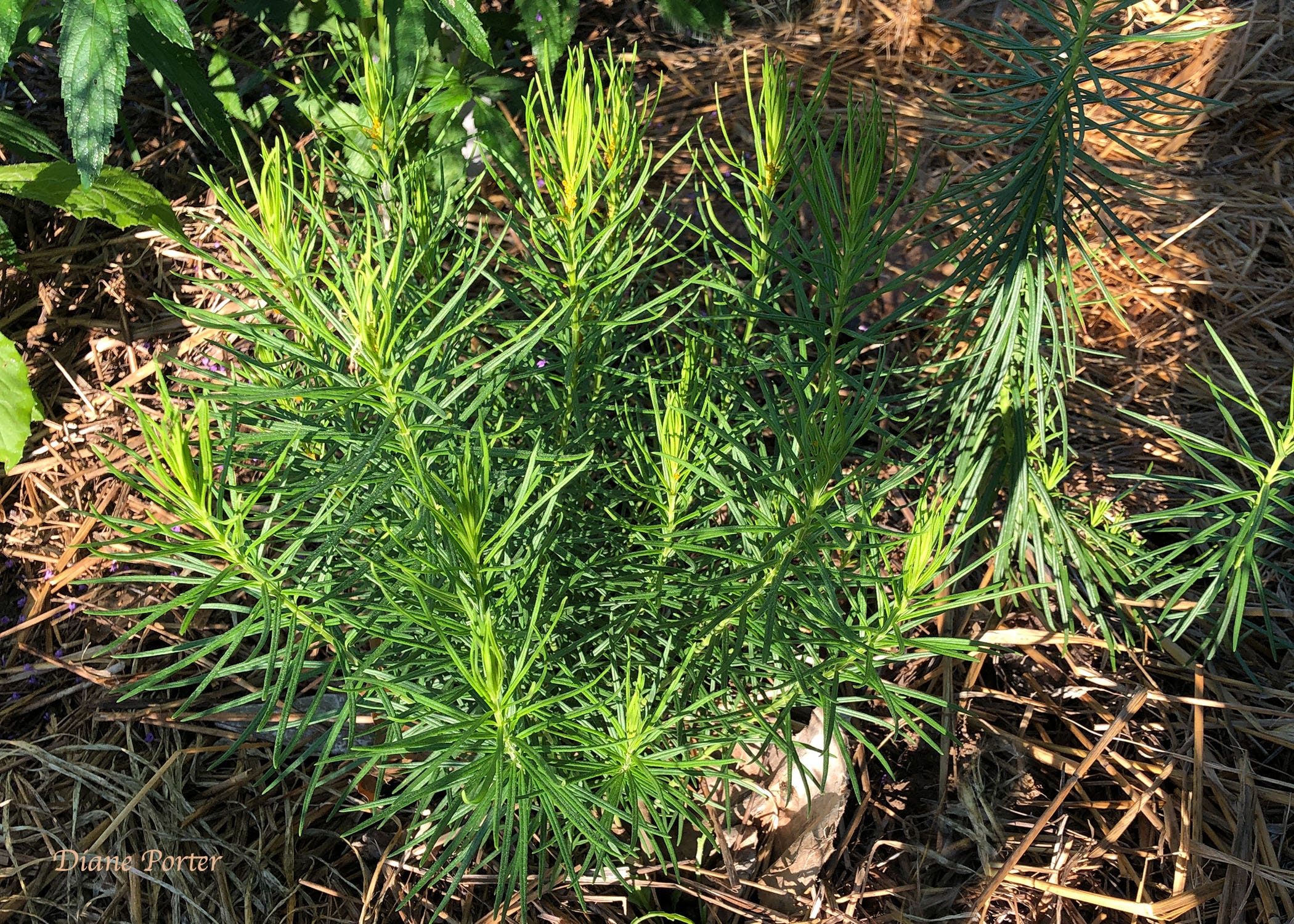
One of my goals is to have all the locally native milkweed species growing on my property.
My new Whorled Milkweeds won’t flower this year, instead putting their energy into establishing a deep, perennial root system. They will make at least a few blossoms in the second year of life. In following years they will bloom more abundantly.
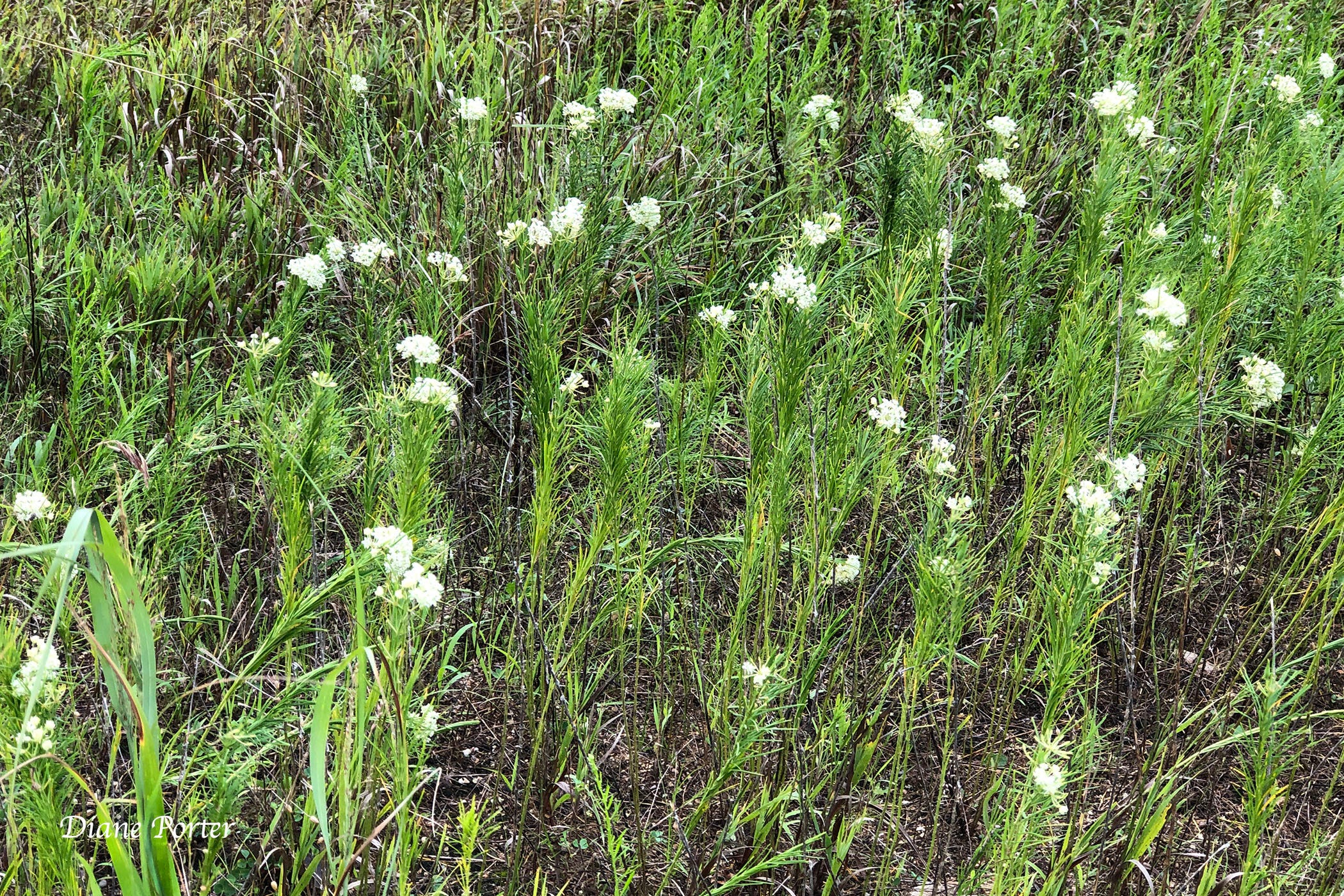
There’ll be a white breath in the prairie.
Now I want to buy a microscope! What a wonderful piece of writing. Thank you.
Diane, your photos are such a delight--especially the revelatory magnifications that show us what it's like to look *closely* at a plant. A special delight in winter, when everything has been frostbitten. Thank you!