

The tiny berries taste the way mountains smell. They’re reminiscent of camphor, orange peel, and pepper. They’re also slightly sweet. The taste is intense, and I like it.
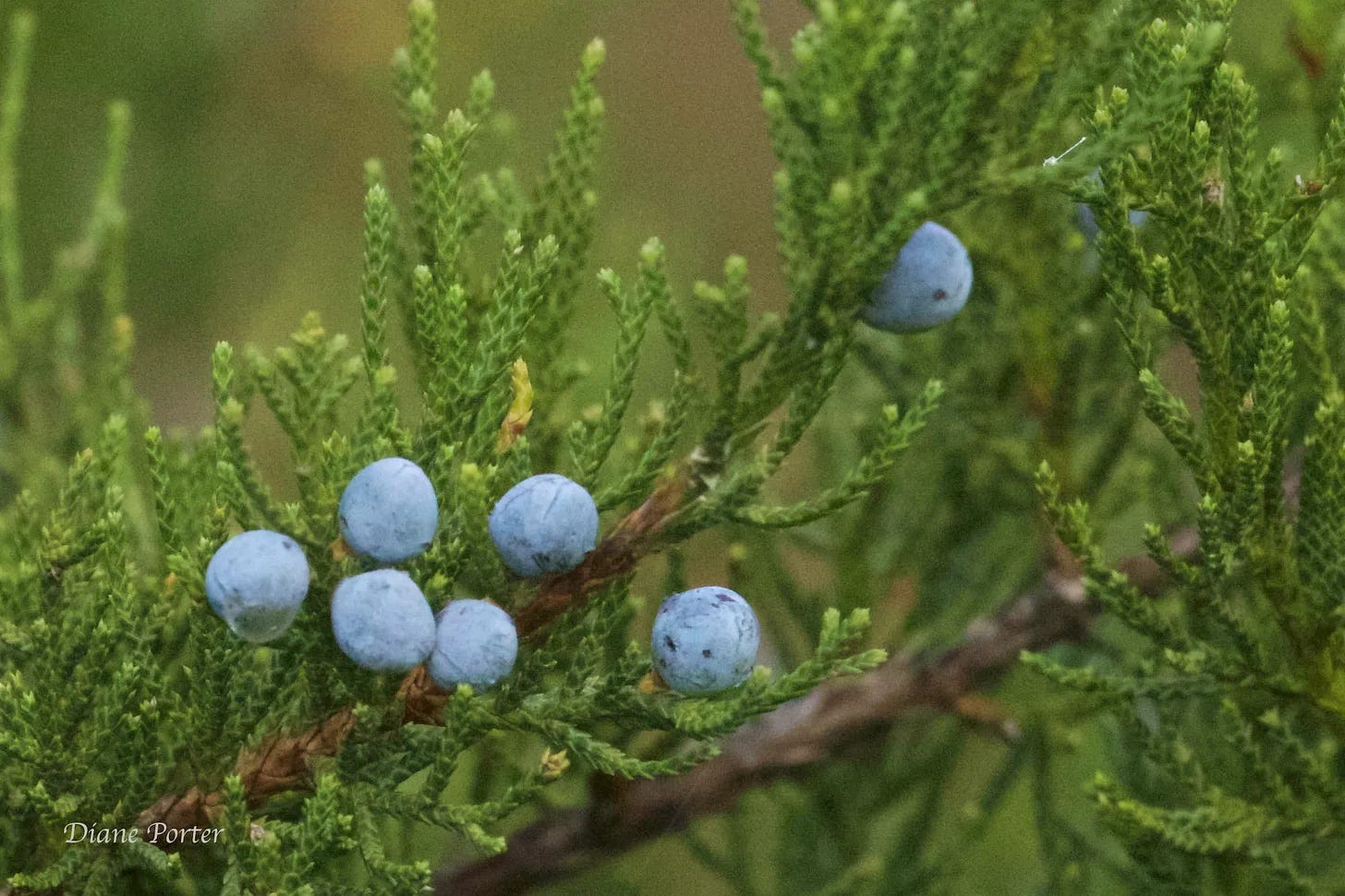
An Eastern Red Cedar tree at the edge of the woods offers me some of its berries, easily in reach. They're only a quarter of an inch across. I pick three plump ones and pop them into my mouth.
Their taste wakes me up a little, as if I’d been half asleep before.
Eastern Red Cedar berries are regarded as edible, but with caution. A large quantity can cause digestive distress, at least for humans. Many Native American tribes used them as medicine for infections and respiratory ailments. Some used them in spiritual purification rituals. They seem purifying to me, too.
After I suck away the sweet softness, a few small seeds remain.
Under the microscope
I put some berries in my pocket to take home to the microscope.


Their skin is frosted with a thin coat of whitish wax. Inside is a pale green jelly. It tastes sweet. Of course! That’s why birds eat them. At the center, each berry holds two or three small seeds.
Now I get how birds plant new Eastern Red Cedar trees.
Male and female
Female and male Eastern Red Cedars are separate trees.


Female trees bear the tiny blue globes. Although these look like berries, technically they are cones. Their scales are not woody, as in pine cones. Instead, when ripe, they’re soft and moist inside. The scales are fused together to create such a smooth blue skin that the seed cones look like berries.
Male trees make brownish cones, only an eighth of an inch long, which produce pollen but no seeds.
In spring, wind blows pollen onto the female seed cones. After fertilization occurs, the seed cones grow, turn blue, and soften — until they are delicious.
The case against this tree
In the absence of fire or other management, and with the help of birds, Eastern Red Cedars can rapidly take over open land. In a few years, dense thickets can outcompete pasture, grasses and native wildflowers.
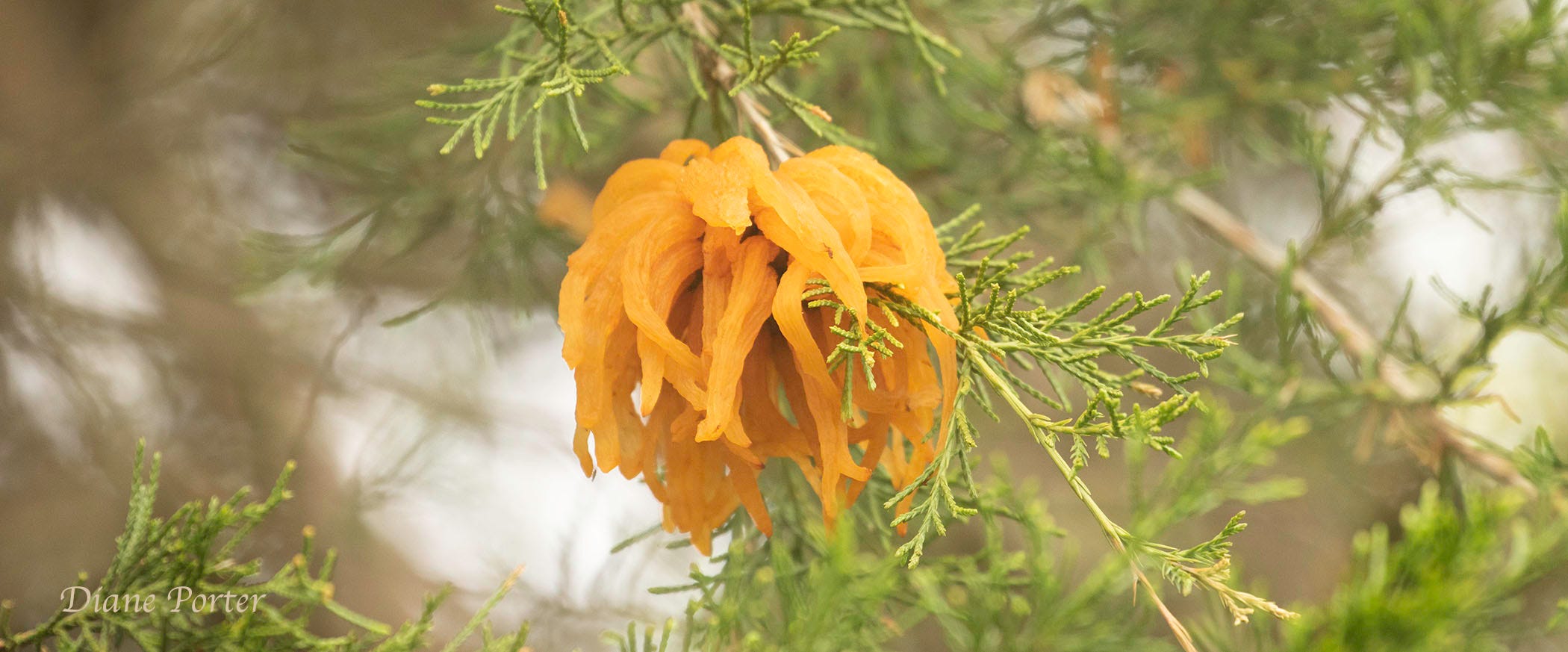
Also, the tree is a host to Cedar Apple Rust. (See USDA article.) Apple trees grown near cedars can suffer disfigured fruits and reduced yields.
Before European colonization, Eastern Red Cedars grew mostly where fire didn't dominate, such as on rocky bluffs. With modern fire suppression, they have multiplied dramatically. Land managers work to keep them under control with fire, cutting, and plowing.
Ecological roles
Despite these complaints, Eastern Red Cedars are ecologically valuable. Bluebirds, American Robins, and Purple Finches rely on the berries in winter. Cedar Waxwings love them so much that the birds were named after them.
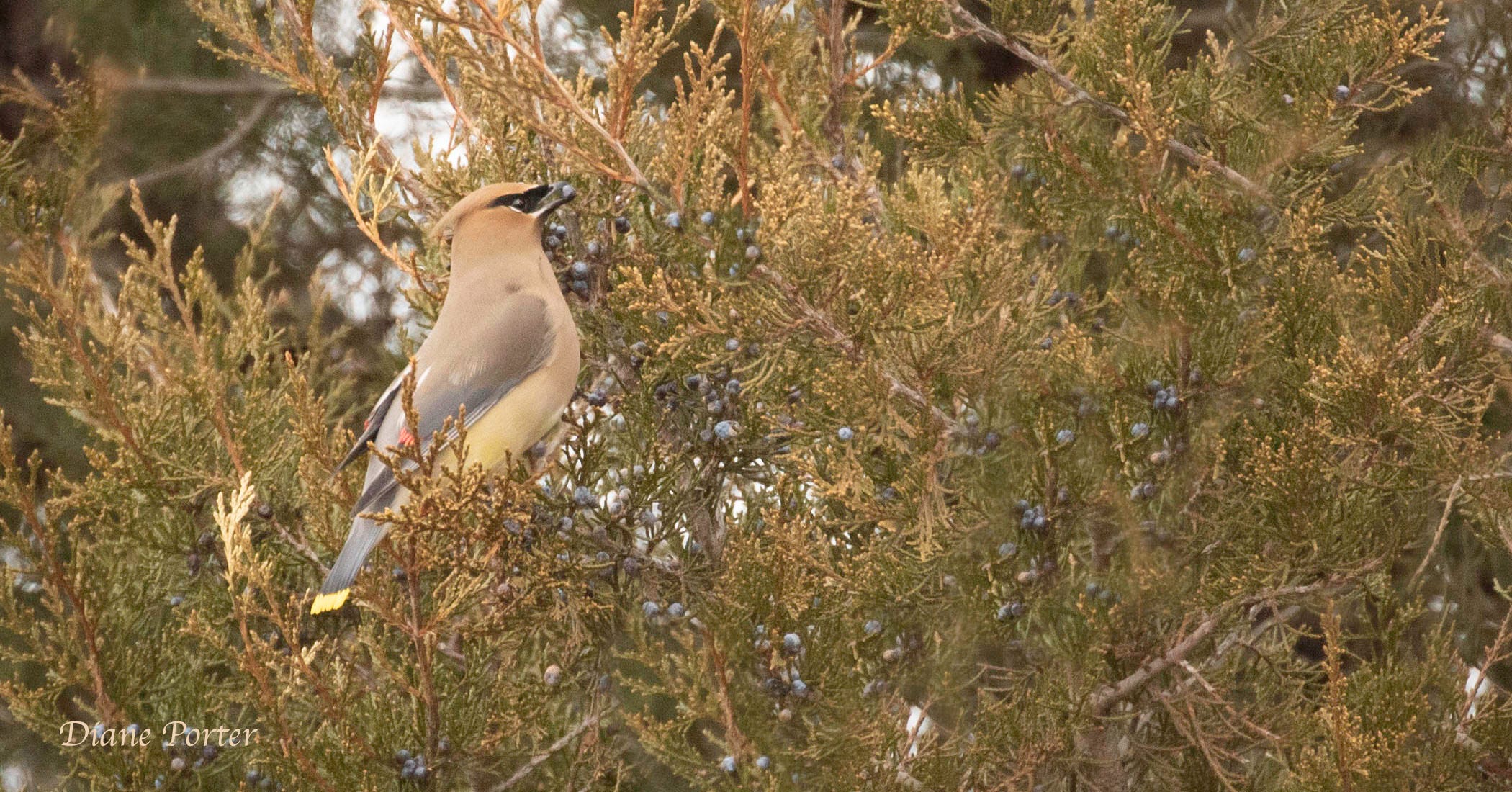
The trees offer bird nest sites protected among prickly branches. In winter, their snow-laden limbs create sheltered caves to roost in at night.


In summer, grassland birds favor them as perches from which to sing and court.


The names
Common names: Eastern Red Cedar
Also called Red Cedar, Eastern Juniper, Red Juniper, Virginia Juniper.
Juniper, as many people call it, would be a more accurate name, as the tree is indeed a juniper, not a cedar. In the 17th-century, settlers started calling it cedar because the aromatic, decay-resistant wood recalled the actual cedars of their homelands back in Europe.
Scientific name: Juniperus virginiana.
Swedish botanist Carl Linnaeus gave the tree this name in 1753.
Family name: Cyprus Family (Cupressaceae)
Native range
It is found native in Eastern North America. See map by BONAP, Biota of North America Program. (Lime green: found in county. Turquoise: grown horticulturally in county. Dark green: found in state but not county.)

I grew up with them in the Loess Hills in Western Iowa. My grandfather had planted a pair of them on a peak above our farmstead, and by the time I was young, they had begun to take over the native prairie on the hills. It was the natural fires that had kept them from spreading: fire suppression nearly wiped out the prairie. My brother discovered that no grass or other plants would grow under them, so just a managed burn would not get rid of them. They needed to be cut down and allowed to dry before fire would work. He was able to restore much of the prairie through hard work and volunteer events.
Love learning from you! I always crush the seeds and leaves and inhale deeply. Love that smell.