

In the subtle light of woodlands, blue flowers rise on delicate stems. They thrive in shade, where they seem to float, head-high above the forest floor. This native wildflower of north-central and eastern North America is Tall Bellflower.
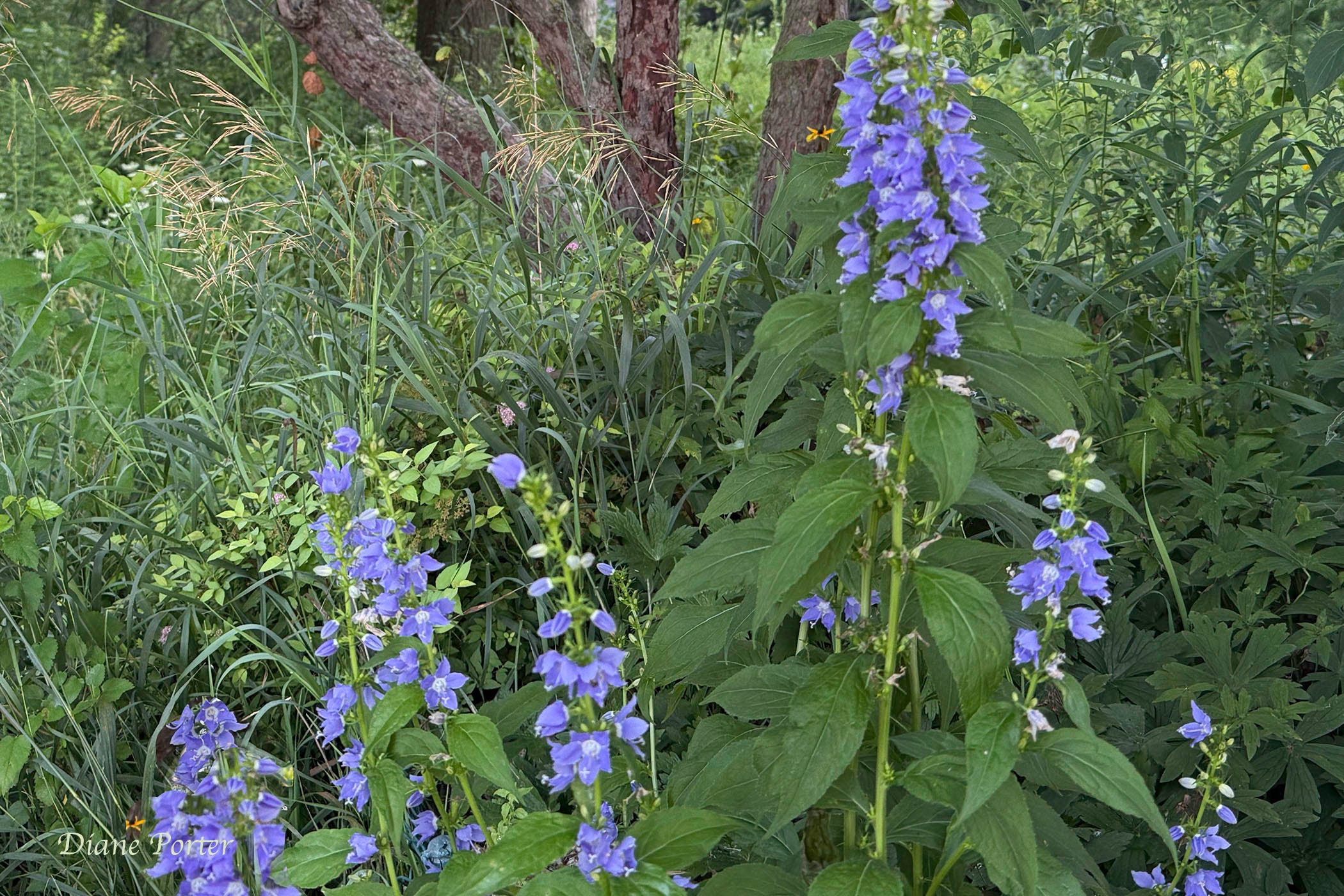
When it is in bloom, it draws bee visitors of all sizes, from bumblebees to tiny, jewel-colored native bees. Male bumblebees sometimes spend the night on the flowers. One cool June morning, I noticed a bumblebee clinging motionless to the petals of a dew-covered bellflower. I walked right up to him. He still carried the night’s chill and needed to wait for the sun to warm him enough to fly. I felt lucky. Truth be told, I felt blessed.
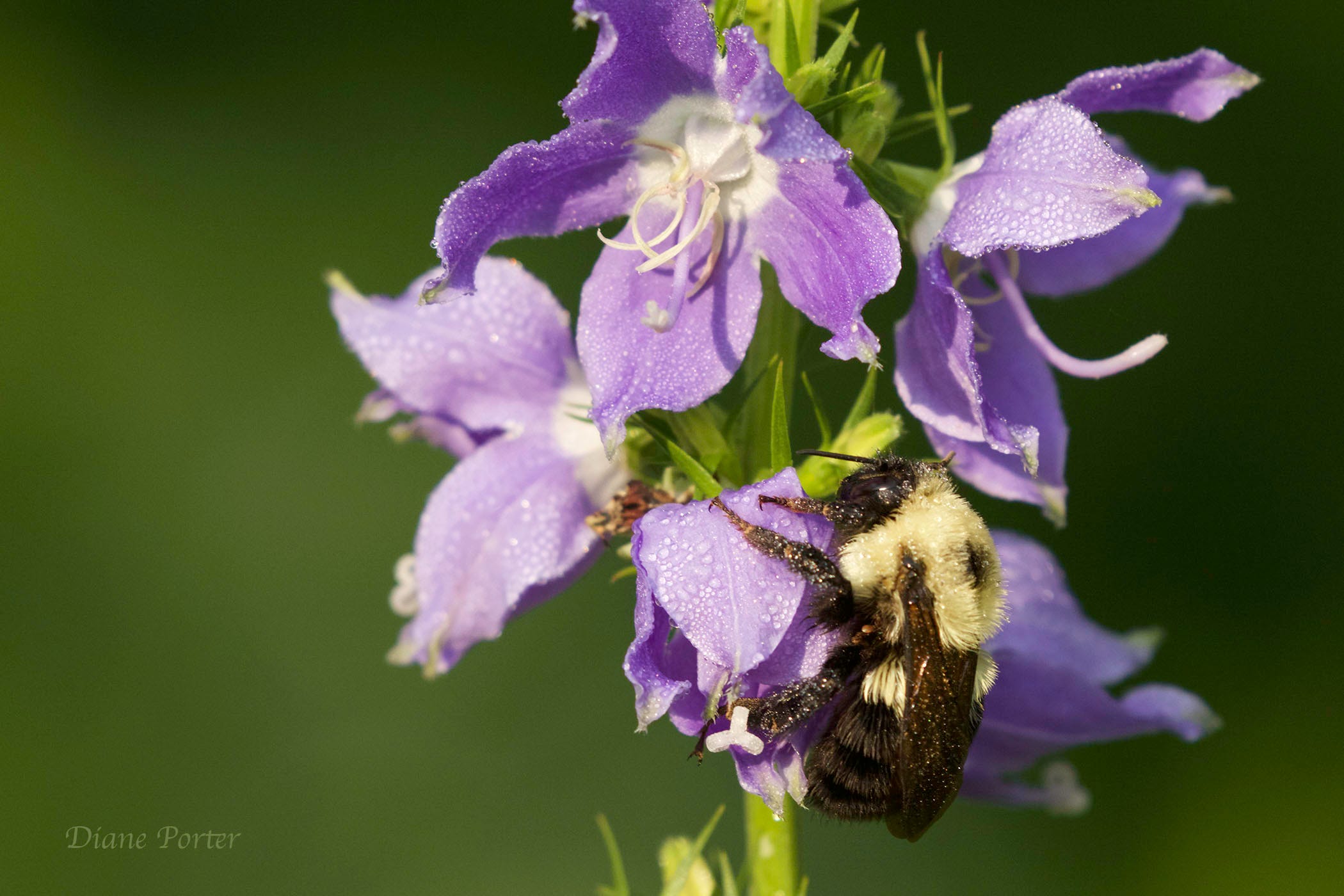
During the day, small native bees of many species forage among the flowering stems — some for nectar, some for pollen, and some for both.


The bellflower’s challenge is to get insects to carry its pollen away — ideally to a flower on another plant. Such cross-pollination combines genetic material from two individuals, creating new combinations of traits in the next generation. Those combinations may prove advantageous as the environment changes.
Pollination strategy
Many flowers have evolved ways to increase the likelihood of cross-pollination. Tall Bellflower accomplishes it through an ingenious trick of timing. Each blossom first enters a male phase, presenting pollen. Later, after much of that pollen has been removed, it enters its female phase and becomes receptive to pollen. This timing reduces self-pollination, although it does not prevent it entirely.
When the blossom opens, a thin, tube-shaped style projects from its center. Inside its tip and not yet exposed, the hidden receptive surface will later receive pollen.
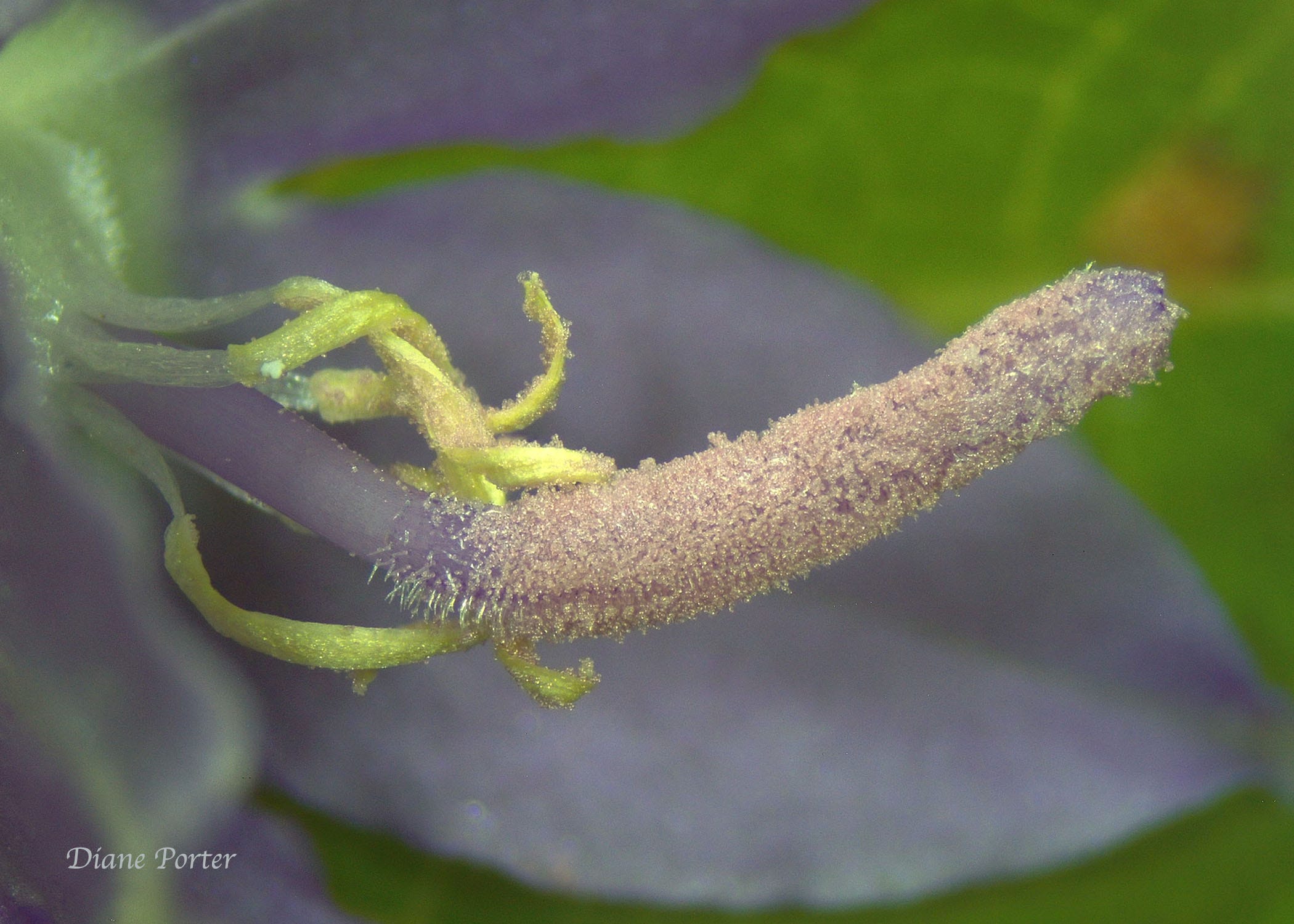
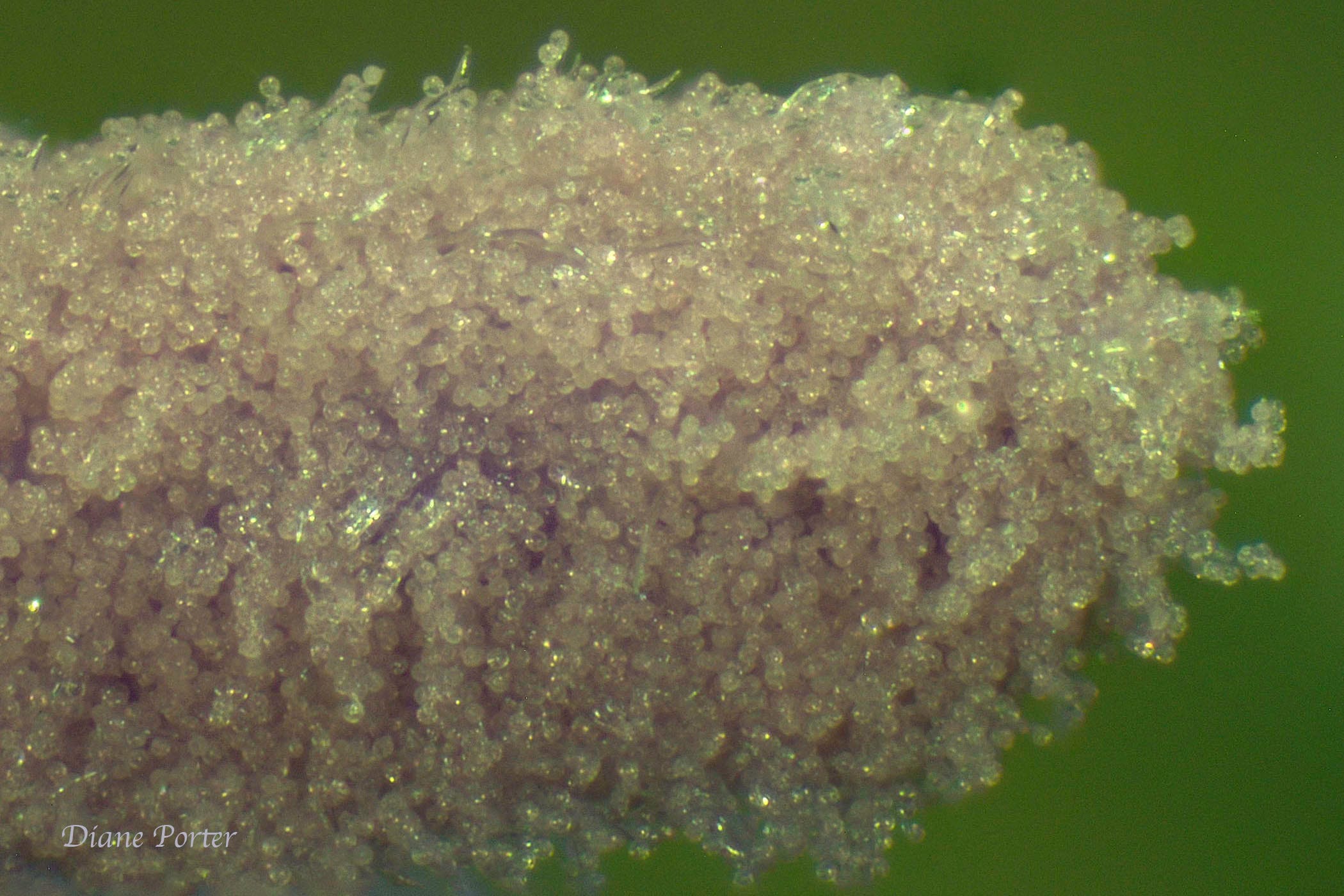
Before the flower opens, its anthers transfer their pollen onto microscopic translucent hairs covering the style. As the style lengthens, it carries this pollen out into the air, like a slender brush dusted with pale-gold sugar. Although the pollen is nearly invisible to the naked eye, it can easily be seen under a microscope.
At higher magnification, the pollen resolves into a countless spherical globes, each about 35 microns in diameter (half the diameter of a human hair).
Before the style has grown out to its full length, insects are already contacting the pollen. Some insects eat the pollen, getting part of it on themselves. Others simply bump into it accidentally while looking for nectar.
An insect can get covered with pollen while it is in a blossom, but it cannot pollinate that same blossom right then. The style is still closed.
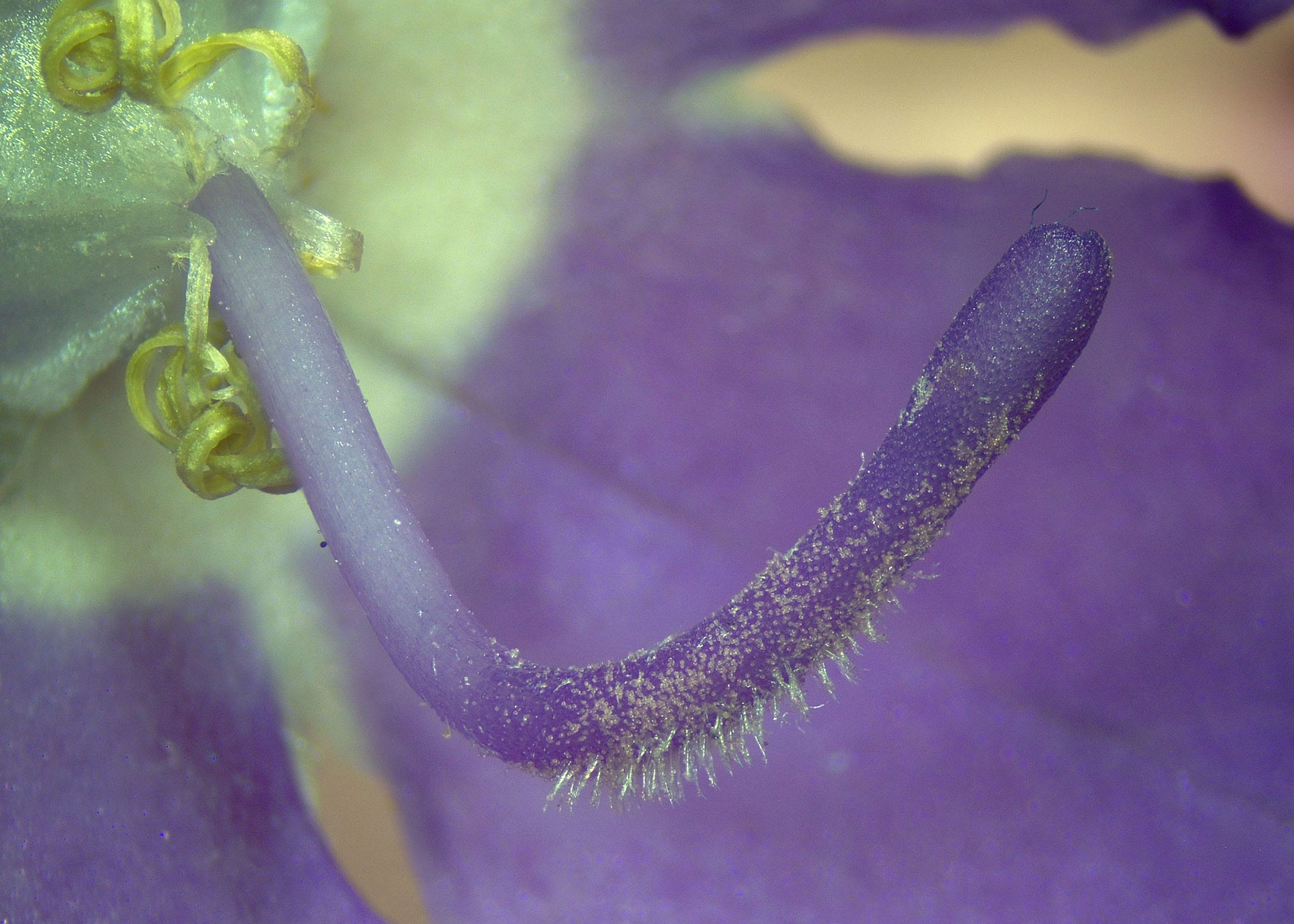
As the flower opens wider, the style grows longer. Its tiny pollen-collecting hairs retract into the style and release their hold on the pollen. That makes it easy for visiting insects to brush much of it off. After a bit, the style becomes smooth and bare.
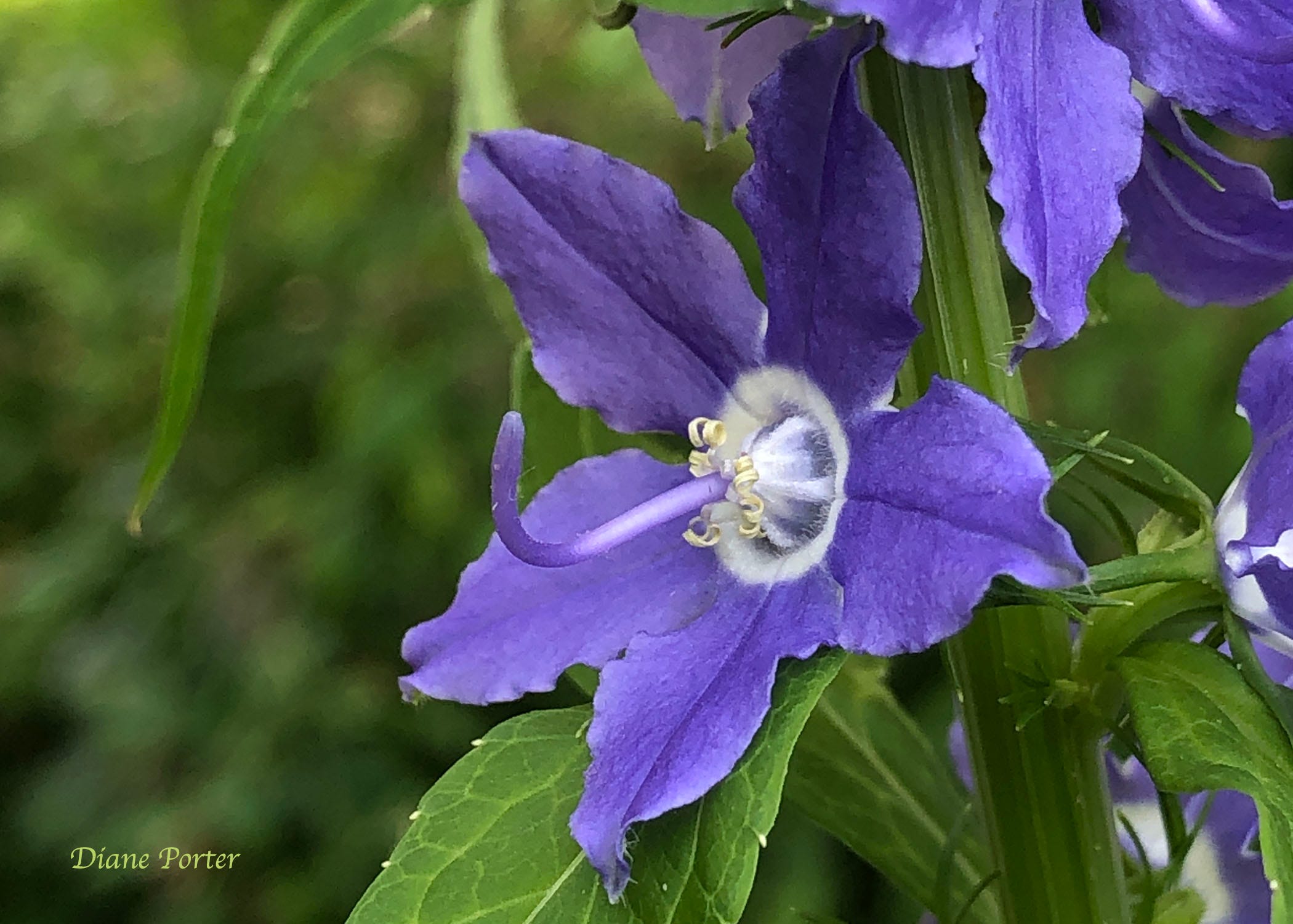
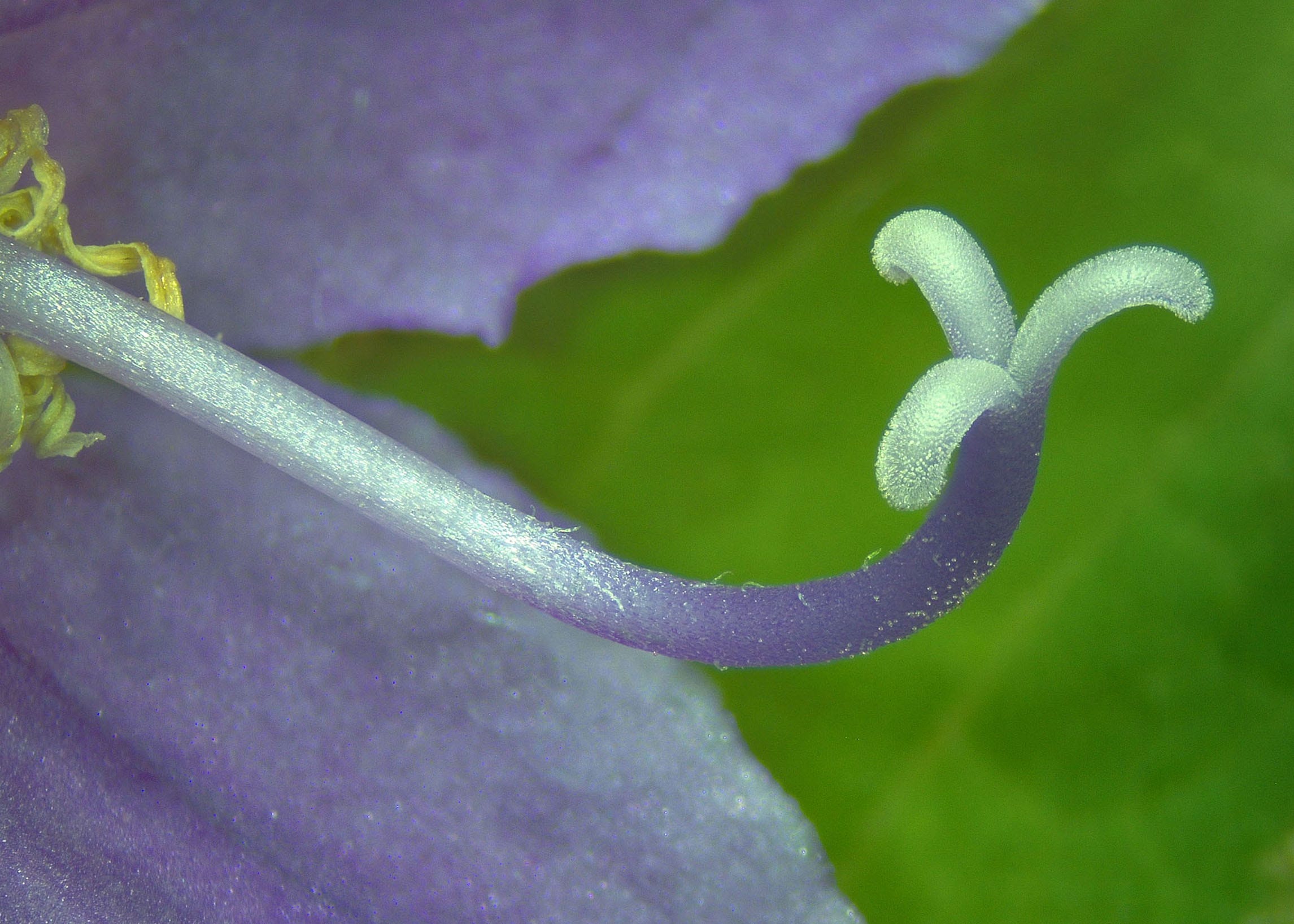
Soon the tip of the style separates into three lobes that curl apart, exposing their pale inner surfaces. These three lobes are the stigma, specialized to capture and receive pollen.
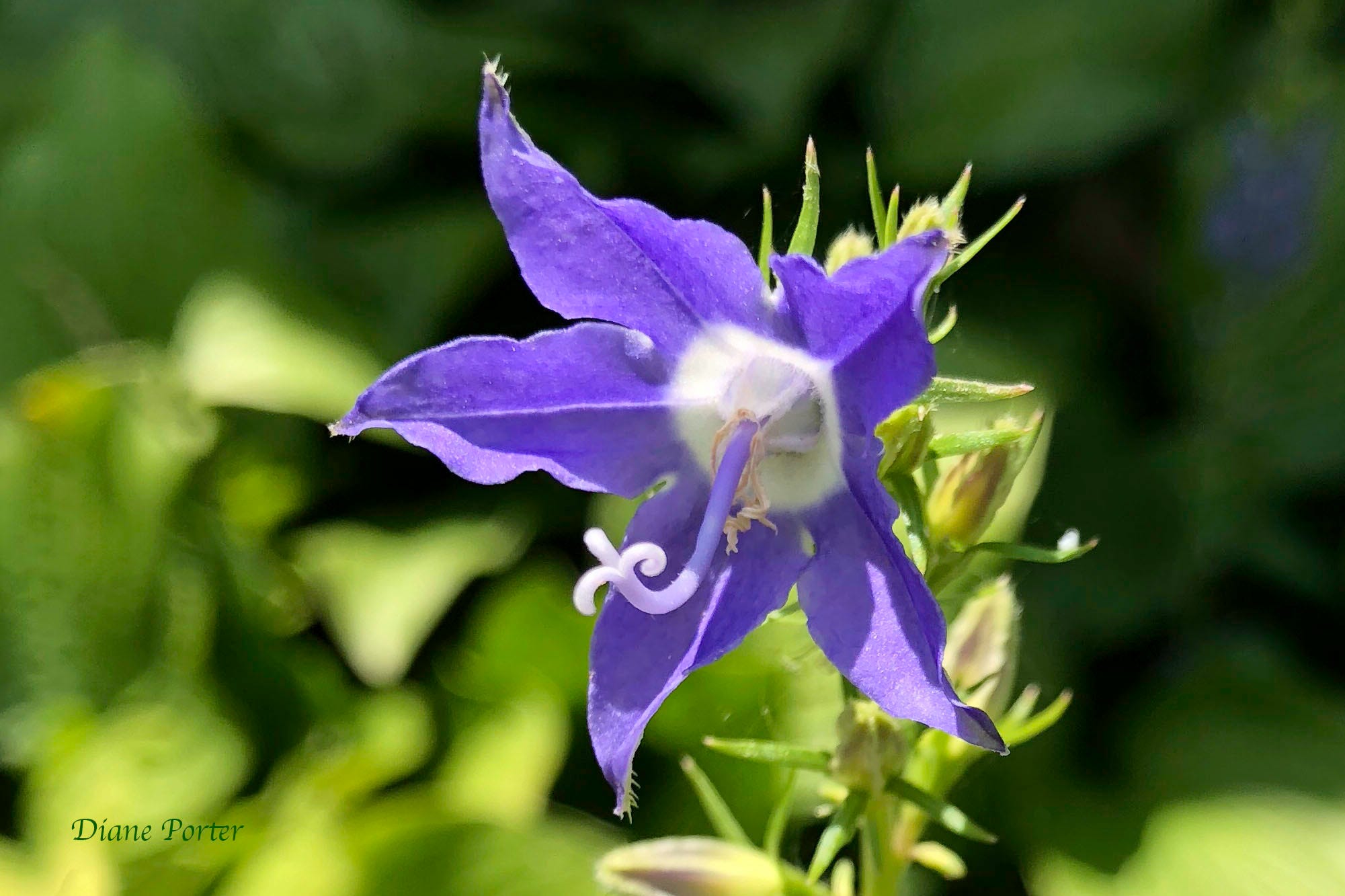
Once the stigma opens, a visiting insect can pollinate the blossom by brushing pollen onto it. Ideally, some of that pollen will have come from a flower on another plant.
And that is what the blossom was waiting for.
Once pollinated, each plant forms many seeds. In fall, the seeds scatter to the ground. Here in Iowa, the result is that by midsummer the shaded woods glow with blue flowers.
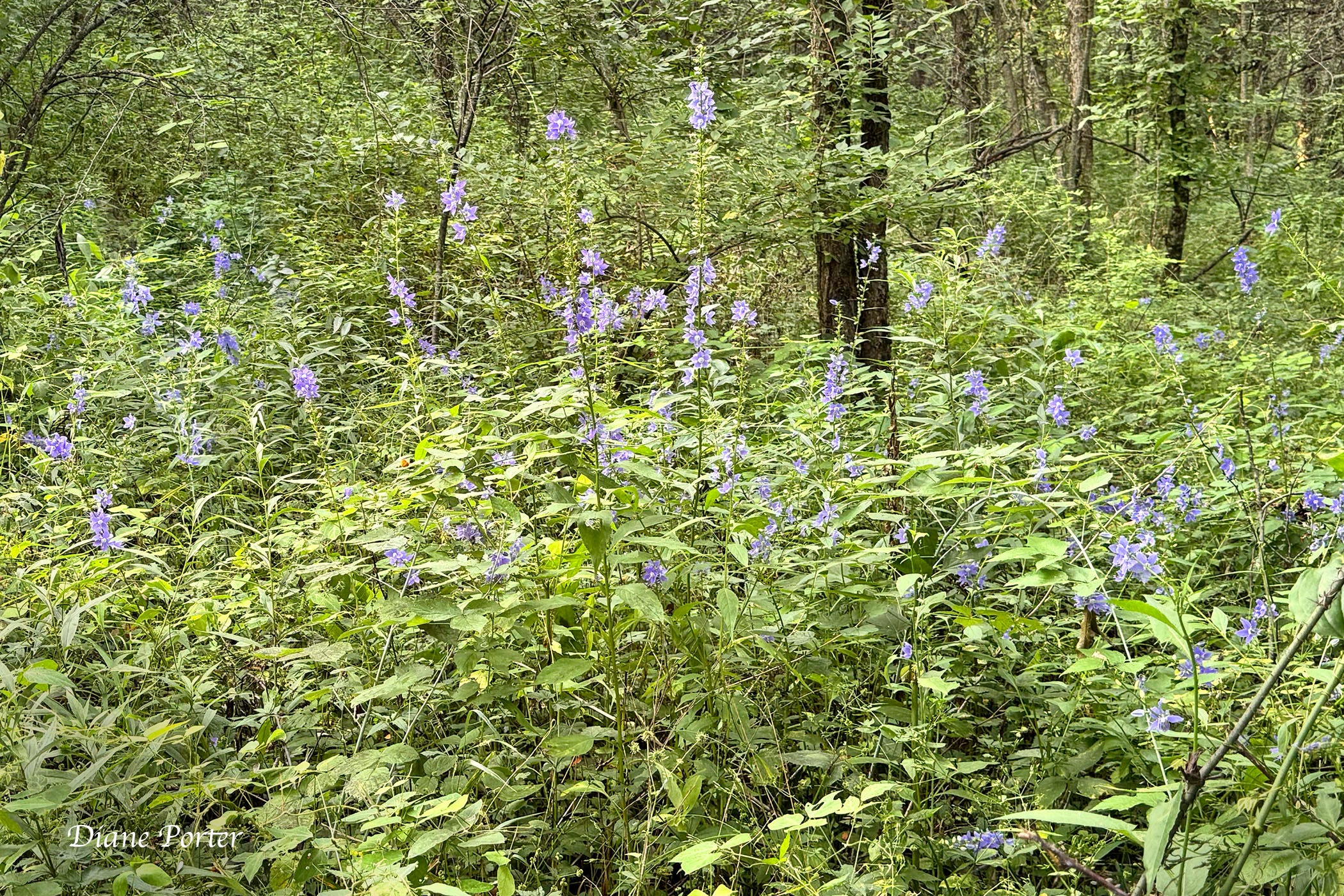
This campanula is one of the native-to-eastern-North-America’s versions of invasive European creeping bellflower, which takes over many yards and alleys in urban Minnesota. A lovely blue my iPhone cannot seem to capture.
what a fabulous sequence of photos, and informative text, Diane. Always such a feast for the eyes and the mind. Thank you!