

I found it blooming near a little sometimes-creek in July — the first time I ever saw a Swamp Milkweed in the flesh. I’d seen photos, but I wasn’t prepared for its opulence, for the display of pink, of lace and layered silk, of sheer beauty.
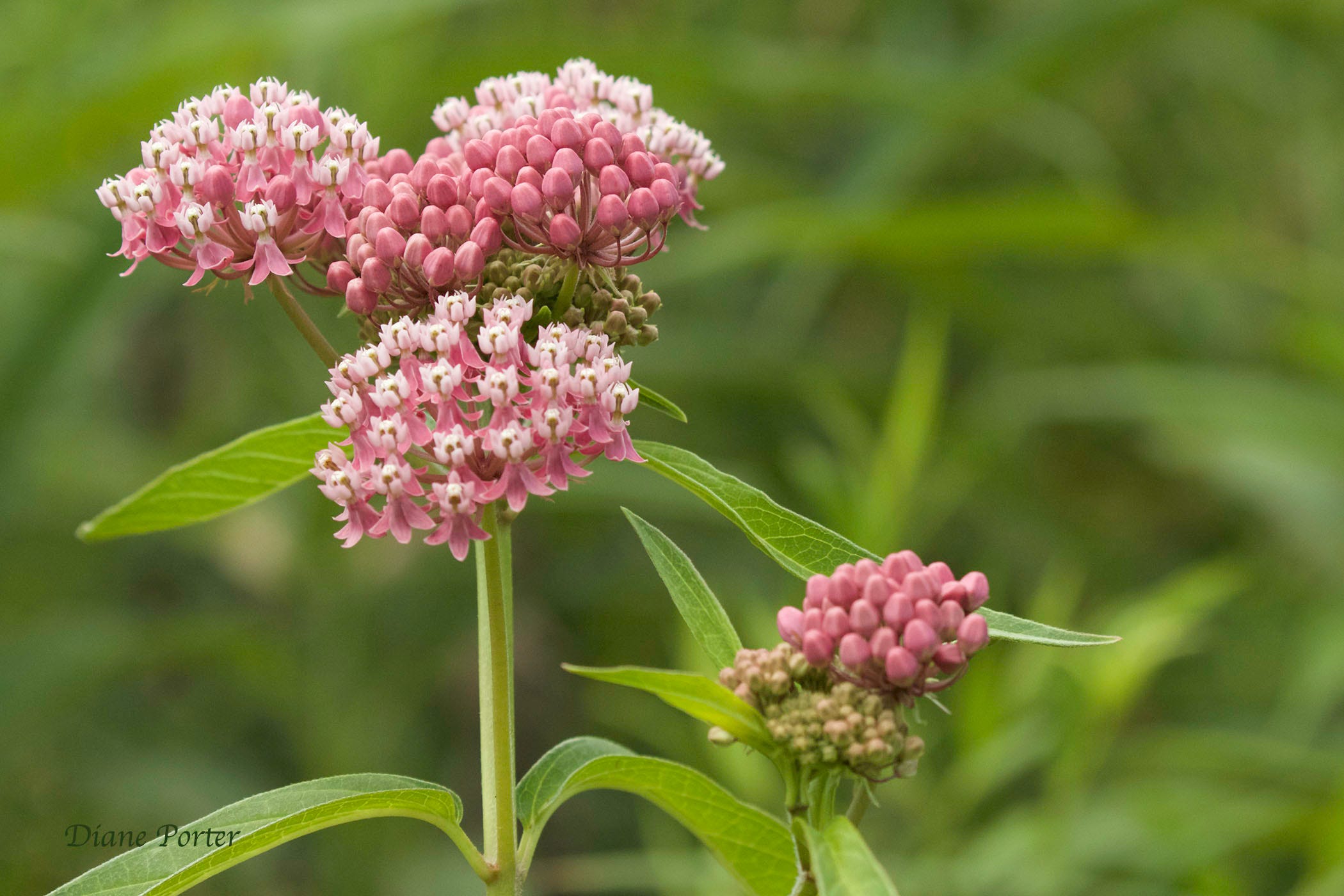
The plant was perfect. Each umbel, or cluster of blossoms, was a bouquet of flowers, each intricate as a ballroom gown from the Palace of Versailles.
A Giant Swallowtail flapped past my face and landed on a pink umbel. It settled lightly, half floating above the flowers, using its feet delicately for balance, wings stroking slowly.
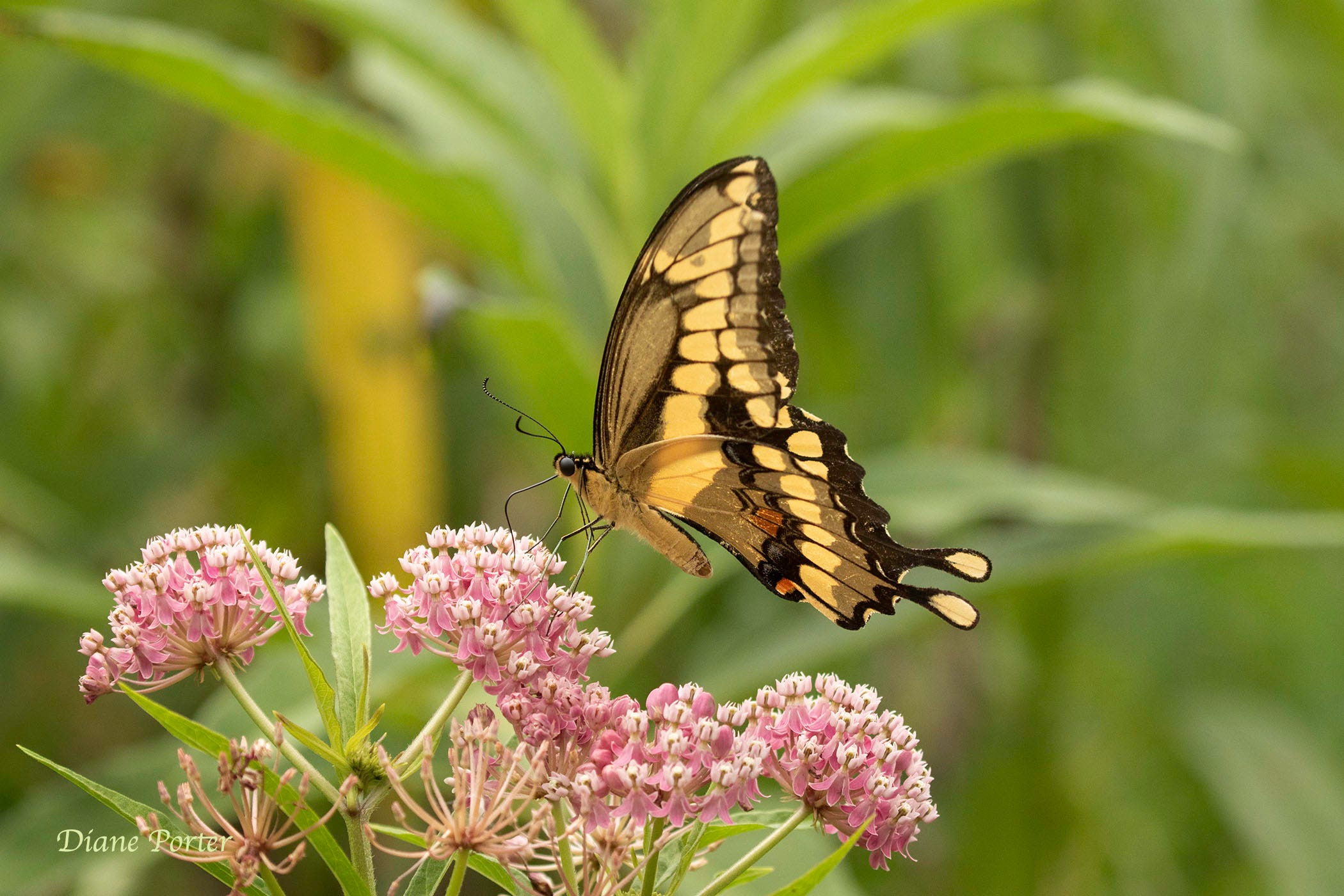
It inserted its proboscis into one small individual flower after another, drawing up nectar. Swamp Milkweed is generous.
After a few minutes, the swallowtail moved on, and several honeybees arrived right away, as if they’d been awaiting their turn.
They hurried from flower to flower in the umbel. They seemed a little clumsy after the grace of the swallowtail.
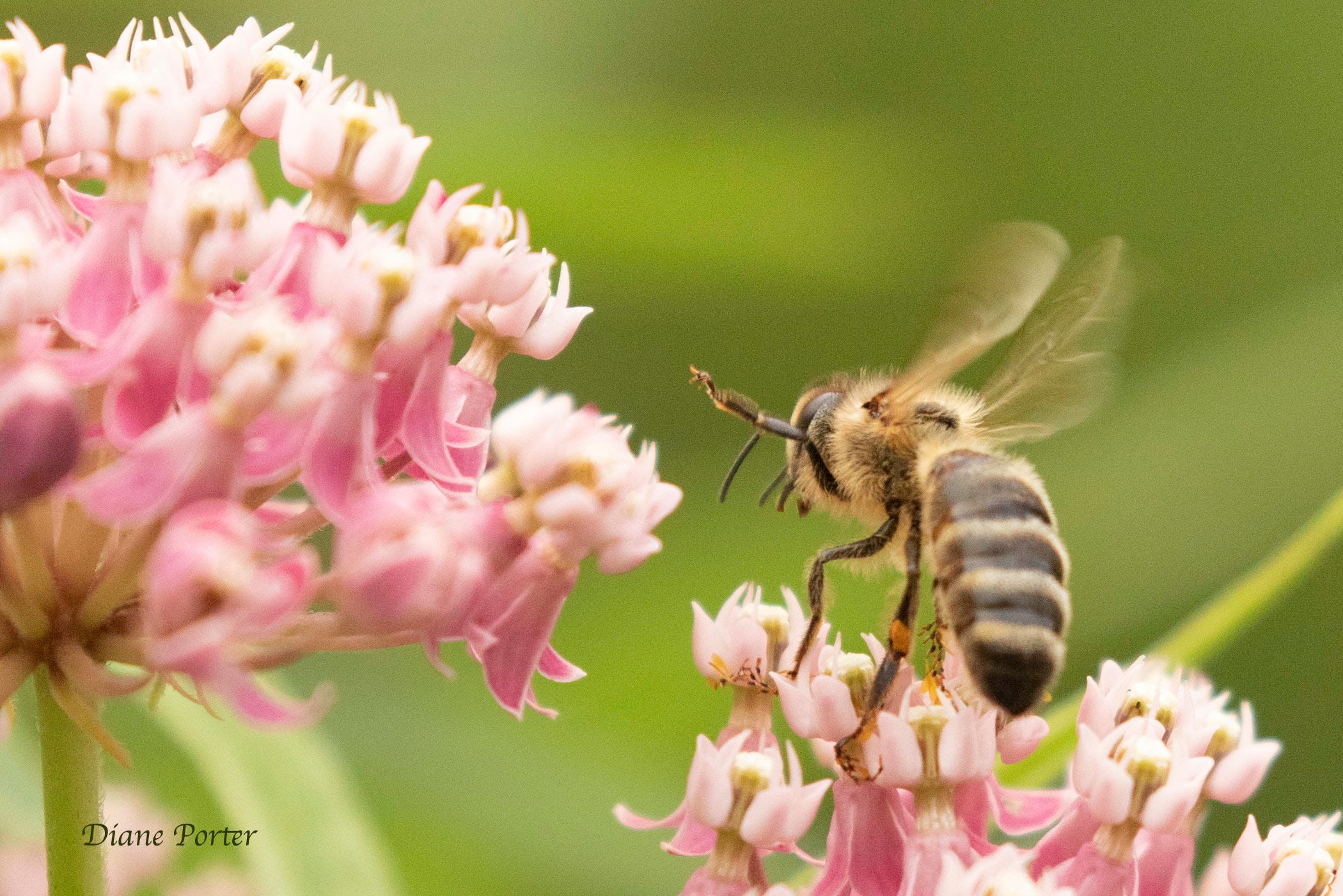
Maybe it was because their legs were ensnared.
Swamp Milkweed is all enticement. With color and a honey-vanilla scent, it coaxes insects to approach. Visitors win a lavish reward of nectar.
But there is a catch.
Each individual flower is a tiny trap. As a bee sips nectar, it gropes with its feet for purchase, and its legs keep slipping down inside the blossoms. Sometimes a foot gets caught.
I’ve watched honeybees struggle to keep their balance while trying to wrench a foot out of a milkweed flower. When the foot finally gets loose, it’s likely to be carrying some extra weight, which looks like dangling golden trinkets.
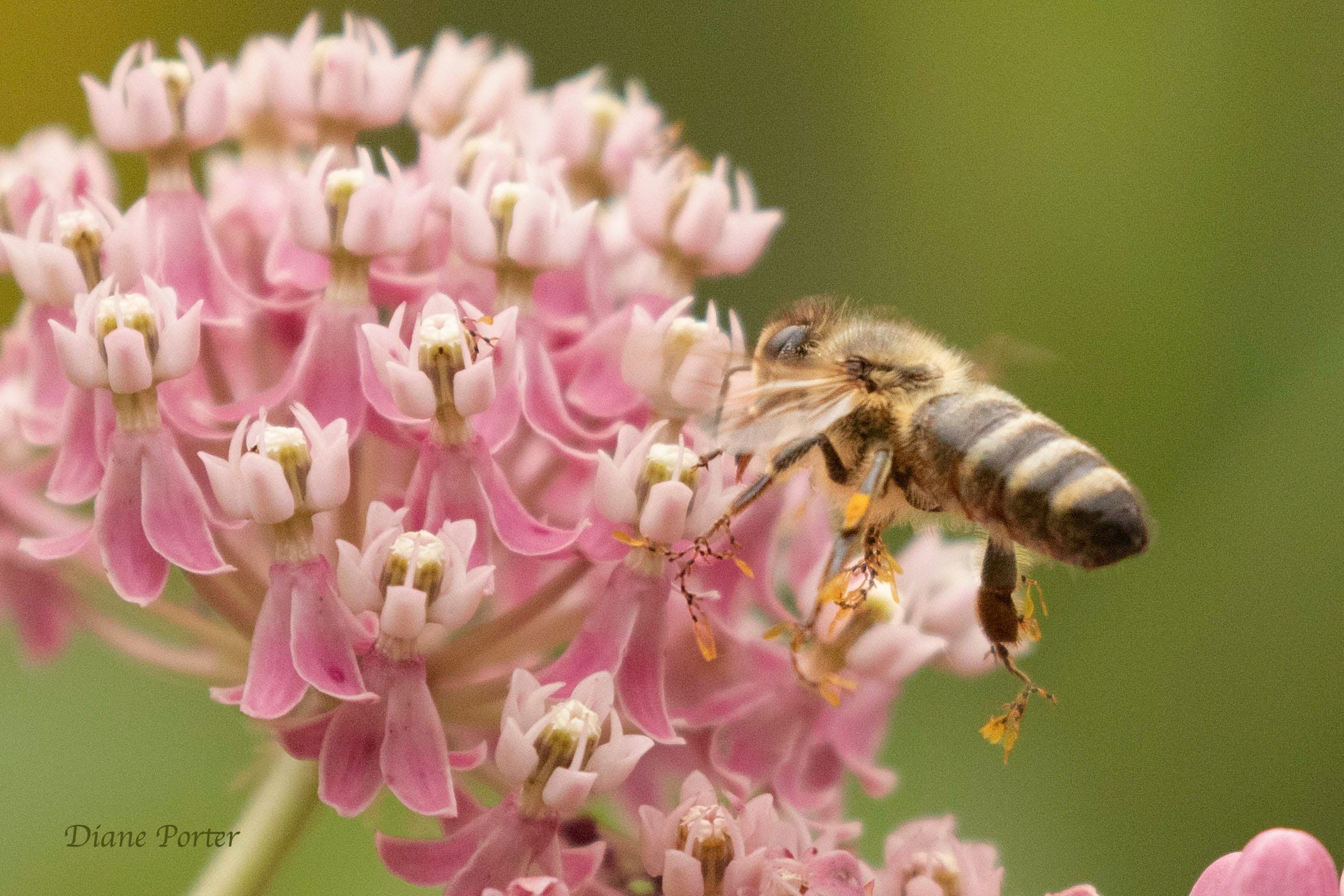
These “trinkets” are the milkweed’s pollen. Uniquely configured, the pollen packets are hidden in tight slits within the flowers. A bee’s leg slips into a slit. A pair of pollen packets gets snagged on the fine hairs of the struggling insect and is dragged out on the leg.
This is the strategy by which milkweeds are pollinated.
The bee gets loose and flies off. It may then visit another Swamp Milkweed, and the same leg may get caught again in the next flower. Only if the pollen packet comes loose inside a flower on a different plant is pollination accomplished.
The result will be a pod full of milkweed seeds.
Each pod forms where a pollen packet finds its mark.
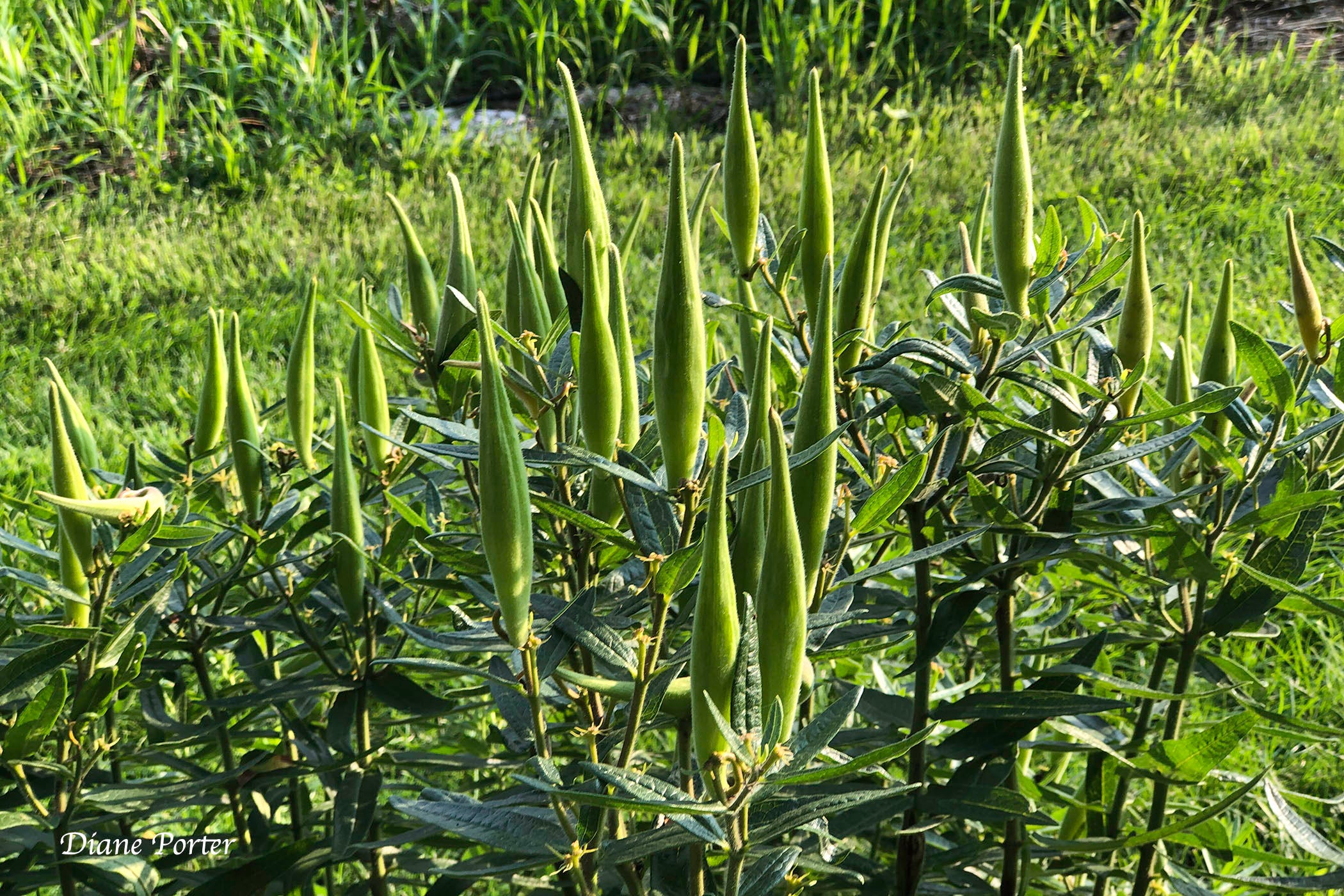
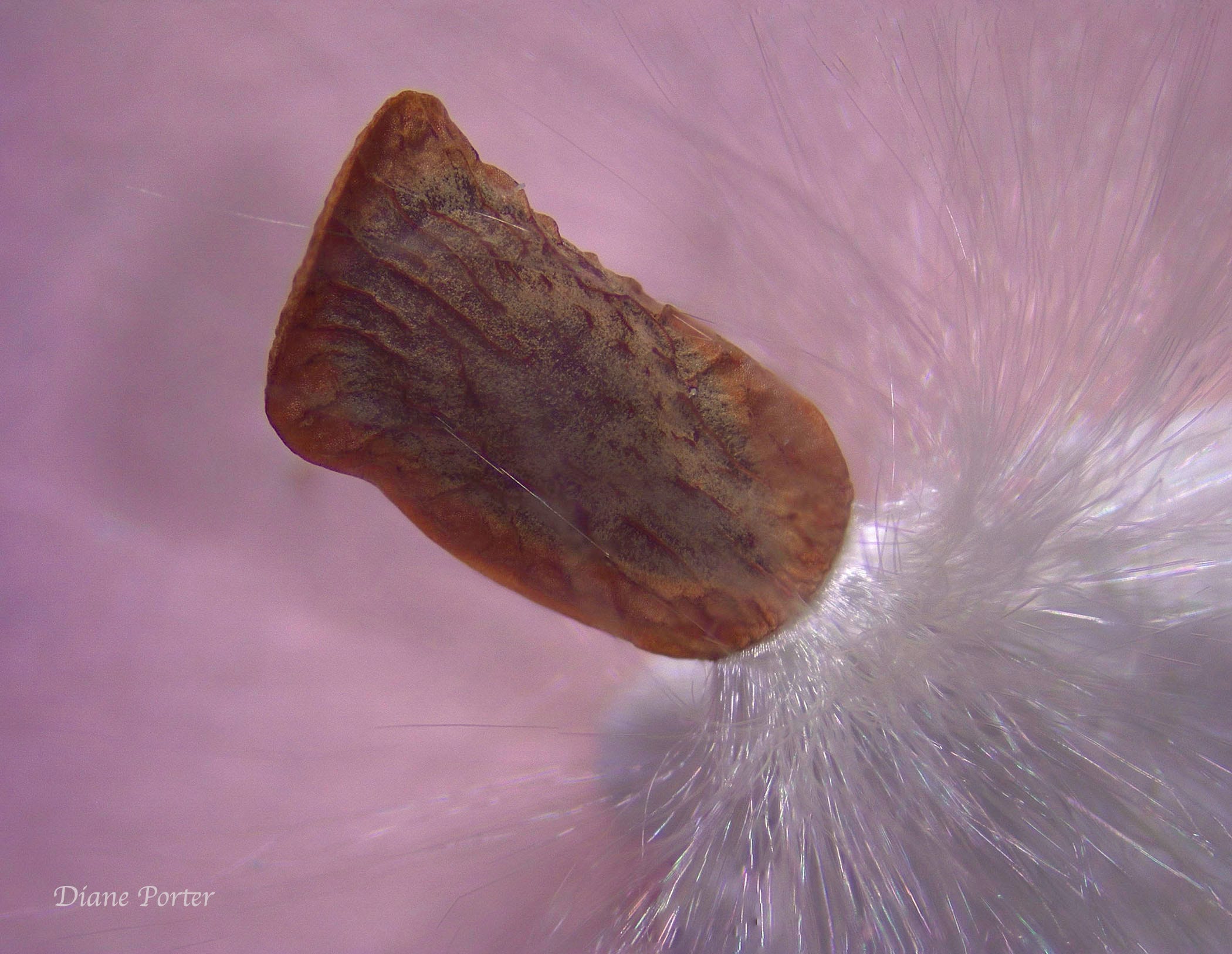
In every pod, about 200 seeds are forming. At one end, each seed has a silky coma, a white parachute that is carried on the wind. And the seed is on its way to becoming a new Swamp Milkweed.
Diane your posts bring joy and wonder in a dark time. Thank You!!
A beautiful science lesson to brighten a February day!