

It’s the color of Smooth Blue Aster that strikes me wordless. The extraordinary shade of pale purple gives me shivers. And I like this flower all the more because nature put it directly into my own hand.
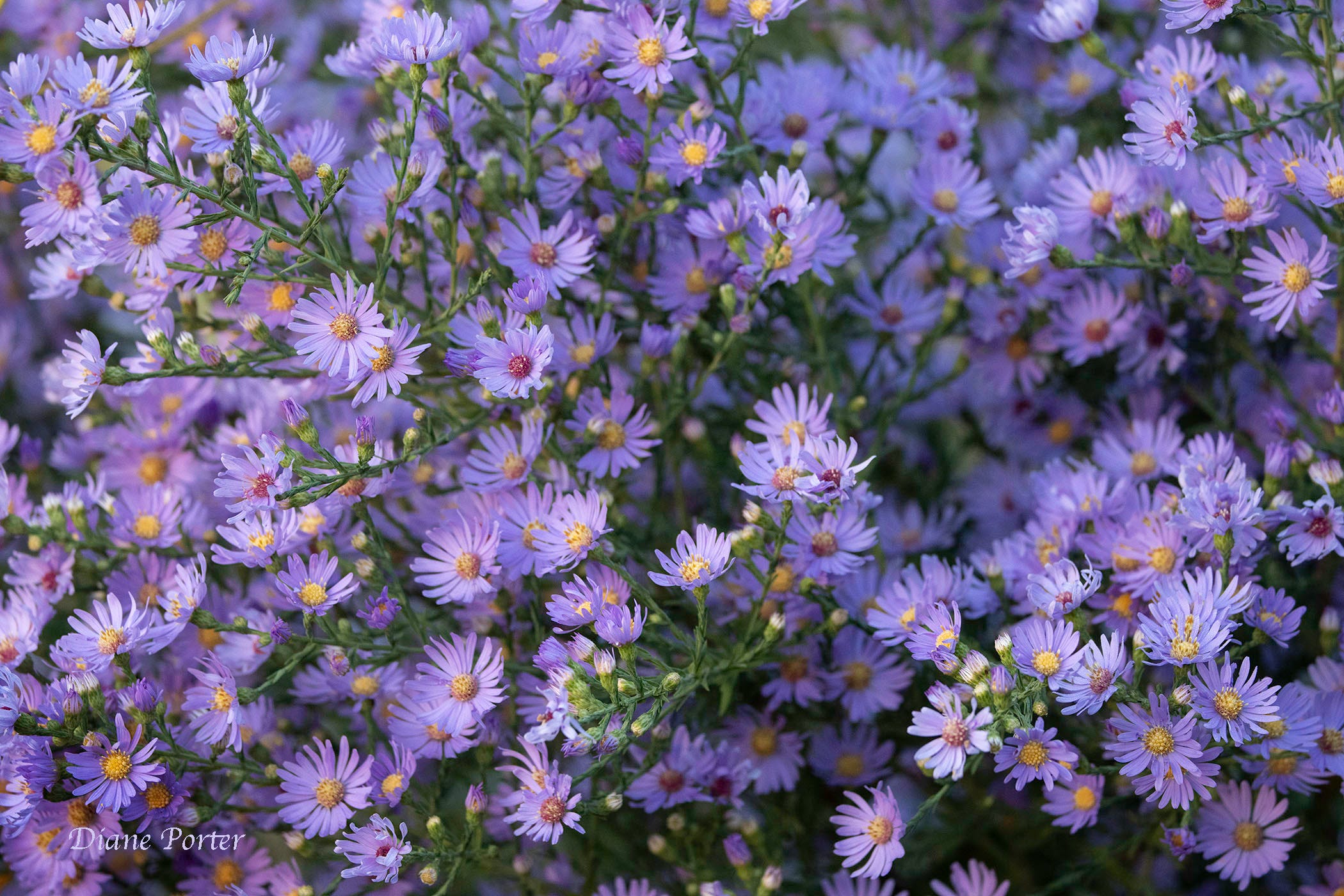
I first saw it blooming in a ragged patch 3 to 10 feet wide and not half the length of a regular back yard. A nothing-looking scrap of land, it was not planted, not watered or tended, not landscaped or even fenced. But a few native plants grew there, remnants of the tallgrass prairie that once filled this part of Iowa like a green ocean. And they were glorious.


Wild Quinine was in bloom, its flowers like miniature heads of cauliflower. Rough Blazing Star shot up tall as the clumps of Little Bluestem. Butterfly Milkweed had finished blooming and was opening its seed pods.
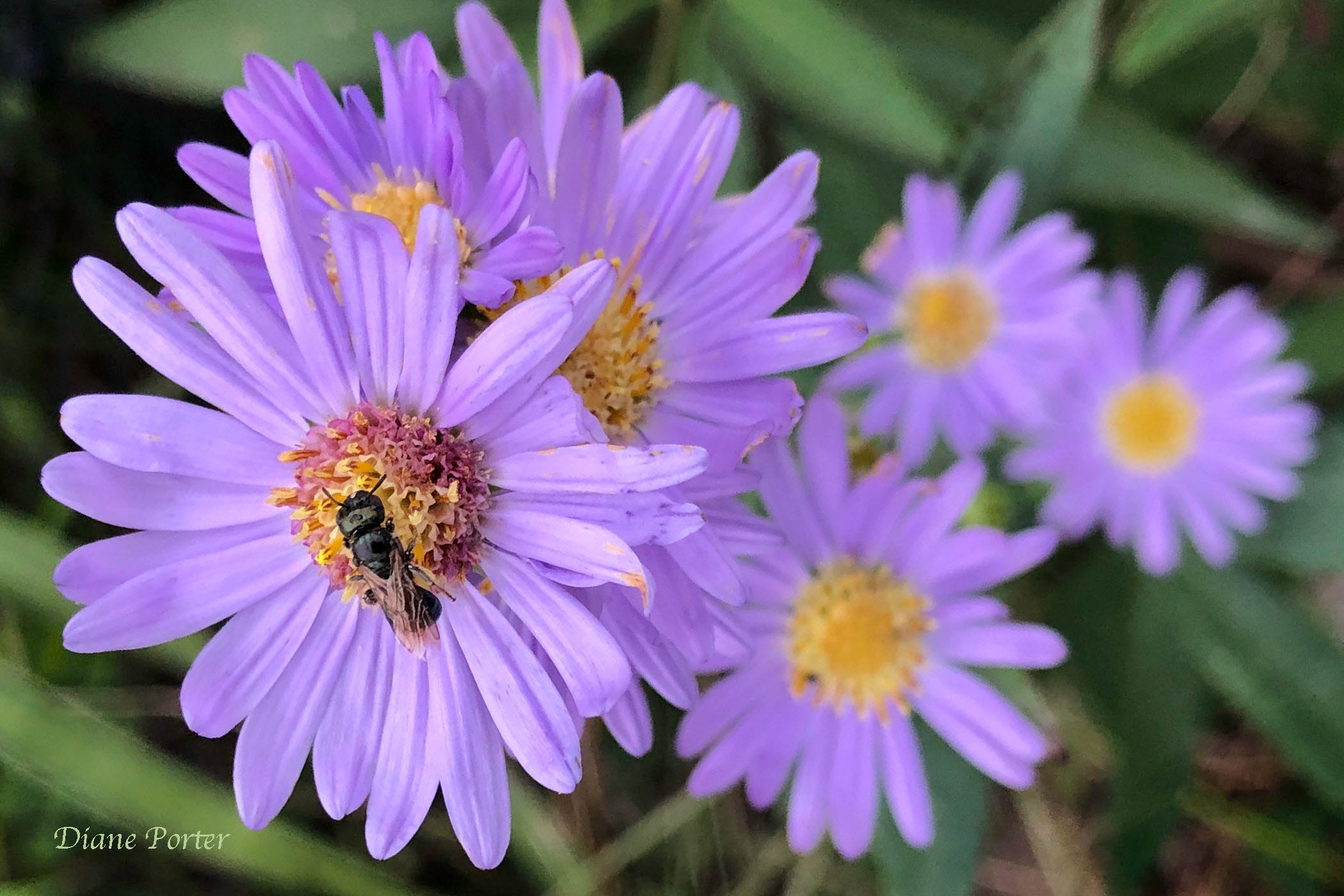
I had never seen Smooth Blue Aster before. Looking closely at the golden central disk, I saw how it was composed of tiny flowers (florets).


At the tip of each floret was pollen for the taking. And deep in the center of the floret, the aster offered sweet nectar, ready to be slurped up through an insect’s proboscis. Every plant had at least one butterfly or bee on it.


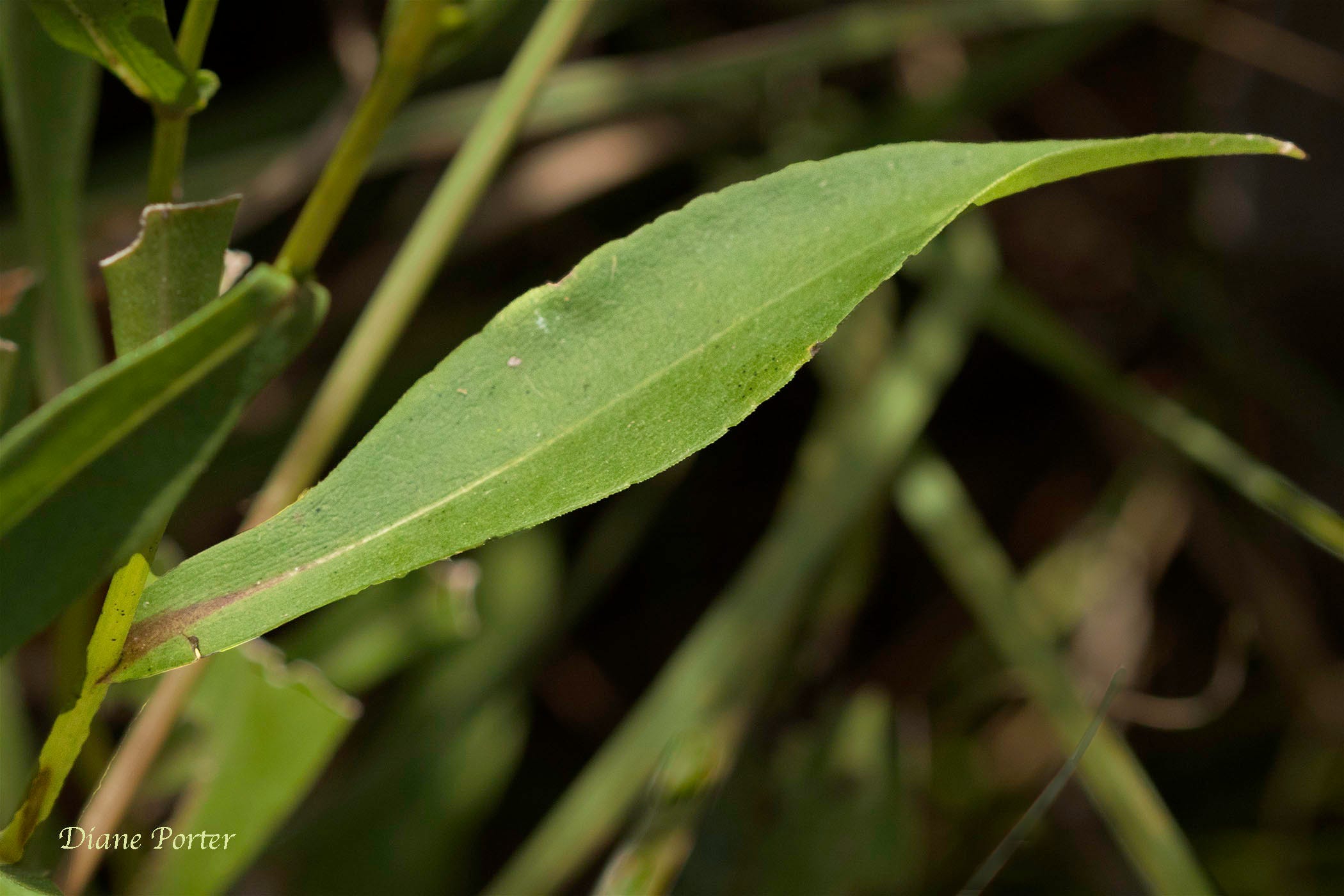
I rubbed my thumb over a leaf. Most asters have rough, raspy-textured leaves. This one was pliant, like warm, oiled skin. Smooth. For those leaves, the flower is called Smooth Blue Aster.
Why are Smooth Blue Asters still here?
The railroad first steamed through Fairfield in about 1858. Before then, the plow had barely touched the soil of southern Iowa. Over 300 species of wildflowers and grasses thronged the prairie and clothed most of the state. It must have been quite the view out the window for train passengers.
During the next 40 years, the view changed to agricultural fields, cities, and roads. Cereal crops became abundant, but wildflowers almost entirely disappeared. Even savannah areas, where prairie once thrived between sparse trees, turned into solid forest, thanks to the suppression of fire. Almost every speck of prairie disappeared by 1900.
What remained were small and isolated patches where the plow never reached. The wildflowers held on in old cemeteries, roadside ridges that were too hard to plow, steep and rocky slopes, and odd corners of farms.
Railroad rights-of-way are and always have been about 100 feet wide. The tracks usually run down the middle. On each outer side of the tracks, about 40 feet is kept clear.
Along most of the right-of-way, the native soil has been cut into, graded, scraped, ditched, sprayed with herbicides, or smothered with railroad rock.
However, a few spots escaped. Some were just beyond the reach of where rock was dumped. Others were too steep for equipment or lay in awkward corners. In those places of lucky neglect, prairie plants have survived.
We call these places prairie remnants, and they are irreplaceable. They take up less than a tenth of one percent of all the land in the original Iowa prairie.
In a prairie remnant like that, where train tracks keep a channel open to the sky, I came upon Smooth Blue Aster on a September day. The plant has lived right there in very spot for thousands of years, blooming, going to seed, creating itself again and again.
I love it all the more for surviving on its own, with no help from people or gardeners or garden centers. Just a native American citizen of the ancient prairie that has been here longer than any of us, or even our ancestors.
That may have been the moment I lost my heart to the virgin prairie.
Thank you for your evocative story. Our farm, on the western edge of the Loess Hills in Monona County, is one of those steep places where prairie survived. The hills were and are full of native plants and flowers. The gully has huge old cottonwoods, and the bottomland has wetland plants. I only wish I had known more about those plants when I was growing up and going over the hill after the cow every afternoon all spring and summer. It is now protected as the RT Reese Homestead Nature Preserve, and I go back to re-ground myself (pun intended) when I can.
Love those beautiful and persistent wildflowers!