

On a September morning, I rediscovered a plant that I was looking for in summer but never spotted. It’s not rare. However, it’s so inconspicuous that it can go unnoticed.
It is Seedbox (Ludwigia alternifolia), a native prairie wildflower that grows by the shore of my pond. I didn’t plant it, and I doubt that anyone ever did. It found that spot on its own, some time after the pond was dug, and colonized the bank.
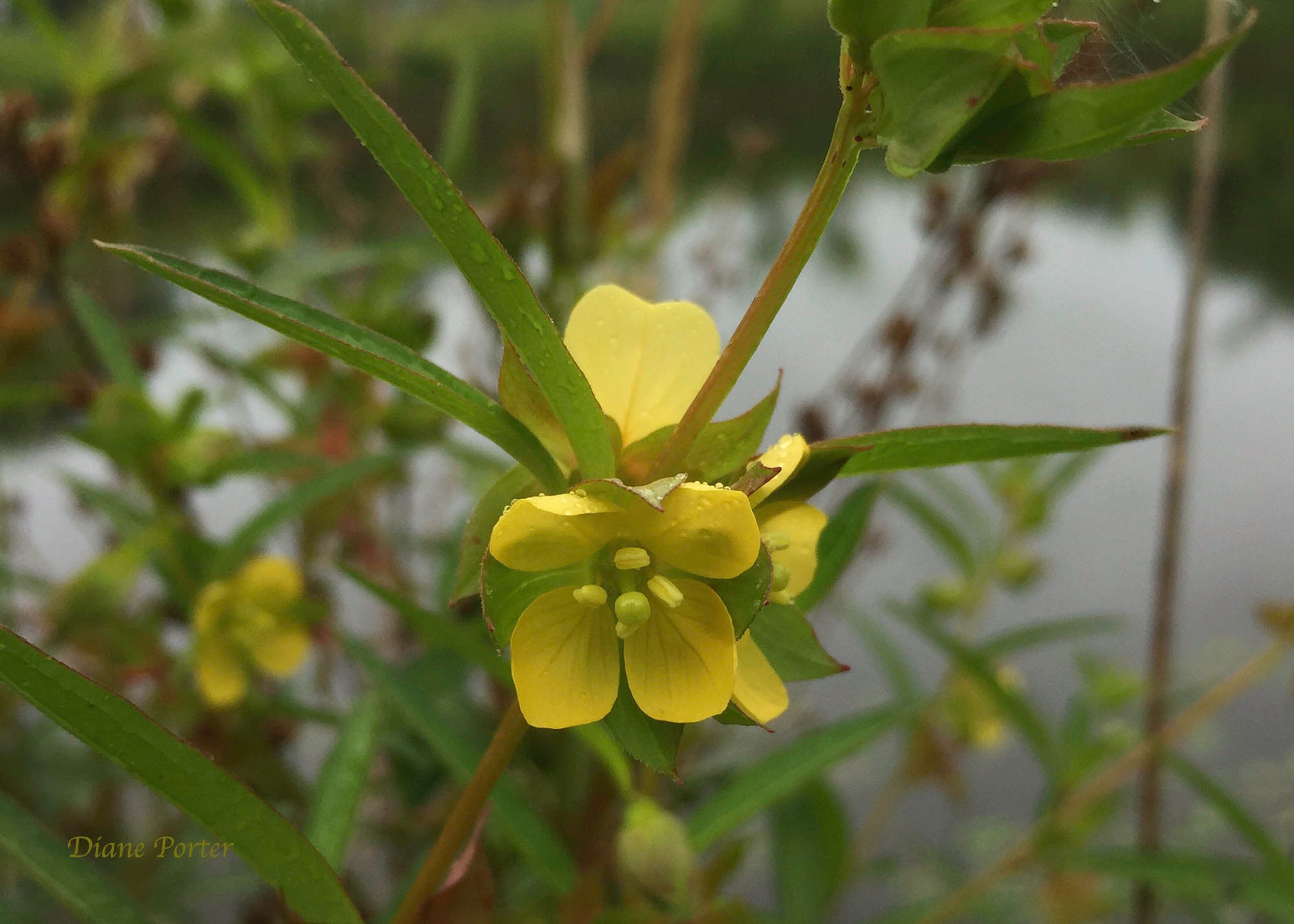
Flowers of the Seedbox
Although the stem stands up straight, the plant is spindly. And the yellow flowers are small, with only a few blooms scattered along the stem. Each blossom lasts but a single day. Amid the lush growth of grasses and more vigorous summer plants, Seedbox disappears into the background.
Now the blossoms are long gone. But now that some of the other vegetation has sagged, seed pods of Seedbox catch the attention.


Seeds of the Seedbox
The pods resemble little brown berries, the size of small peas. On stiff, slender stems, they show up silhouetted against the pond.
Examined under the microscope, a pod does not actually appear round like a pea. It’s like a cleverly fashioned box, with slightly bulging panels made of suede. The panels remind me of the way my favorite suede gloves are sewn together, using a seamstress’s overhand stitch. Fine hairs add to the illusion of some surpassingly delicate animal hide. The pods look to me like microscopic treasure chests.


Although it appears soft, like fine leather, the seedpod is brittle when dry. Looking closely, I see a tiny hole at the top. I hold a pod in my fingers and turn it over, and microscopic seeds pour out.
The seeds are the color of cinnamon, tiny, each slightly longer than 1/2 millimeter, which is fine as dust. They could float away on a breeze.
Seed strategy
The seeds rest loosely down in the pod. The pod is like a salt shaker, but with only one small hole. The seeds do not disperse all at once the moment they are ripe, as many flowers do. They must wait until some animal bumps the plant or a strong wind bends it. Then the seeds emerge, a few at a time, over the weeks or months.


I’m pondering the plant’s strategy. The minuscule seeds may ride on the wind or scoot across the ice of a pond, landing far from the parent plant. Each seed has a very tiny supply of stored food. To survive, it must land where its roots will find soil and its first emerging leaves will be in sunlight and can start photosynthesizing immediately. Mud is good, but drowning is not.
It is the rare seed that happens to land favorably. But they are abundant. A single plant might create tens of thousands.
Seedbox plays the odds, and the odds have kept it replicating itself for a very long time. Its ancestors are known from the Eocene epoch, some 40–45 million years ago.
Where it lives
Seedbox is native to roughly the southeast quarter of North America, with the exception of most of Florida.

The map is from the BONAP (The Biota North America Program, North American Vascular Flora). The light green areas are counties where Seedbox is native. Jefferson County, Iowa, is one of them. Dark green just means it’s found somewhere in that state. Yellow means it’s found in a county, but it's rare.
The role of Seedbox
Although Seedbox isn’t showy, it matters to a number of insects, including little green bees, who feed on its nectar and pollen.
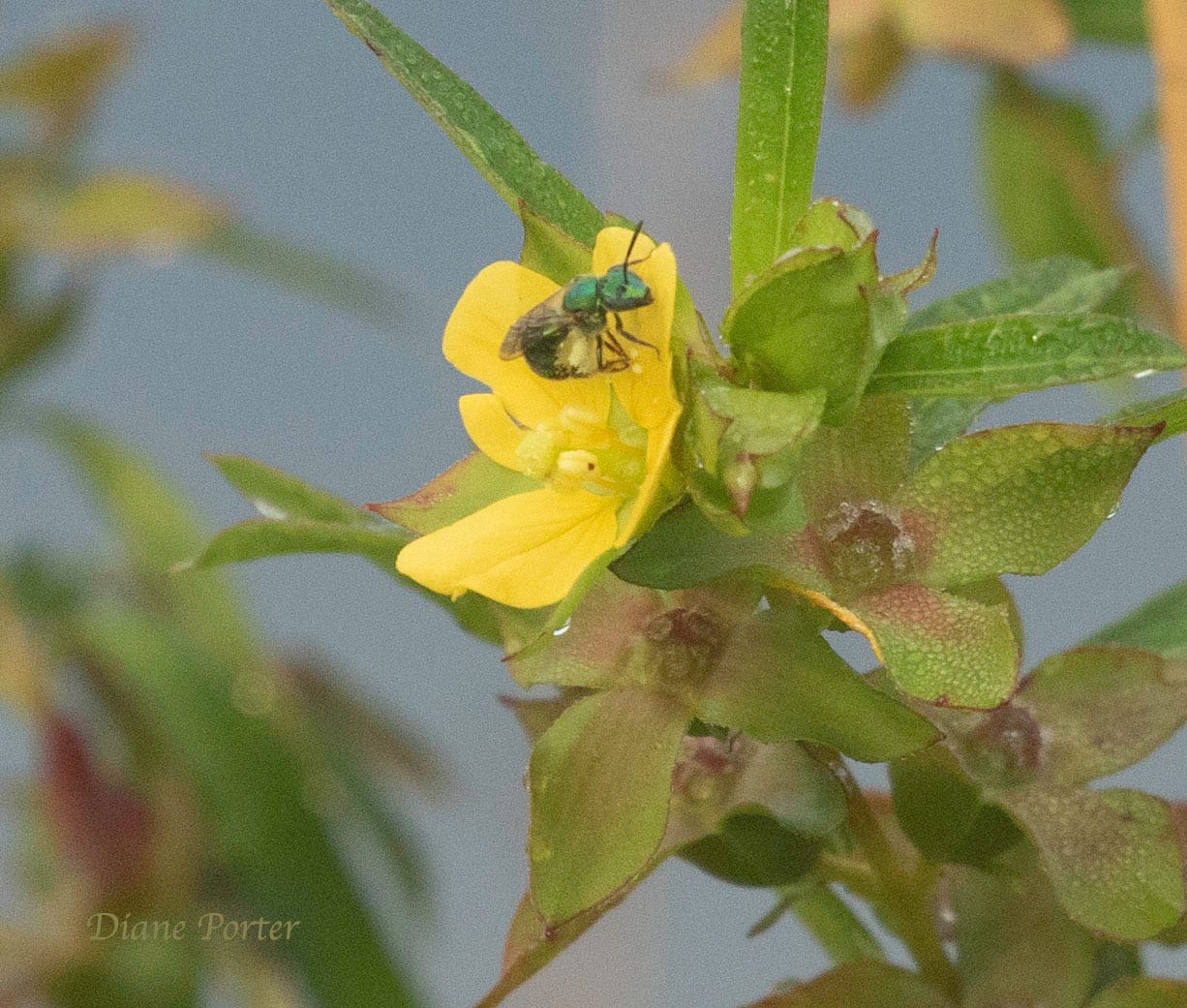
Insects of many species require a constant supply of food. Nature provides a sequence of many kinds of flowers so that there is always something for the insects.
And something for us to notice.
Your posts bring me so much joy and I learn a lot, thanks!
I love the photos of the magnified seed pod!