

My eye caught a slow, guarded movement. Someone was almost concealed on the other side of a tree trunk. I froze, watching.
Then a small, shy face peeked around at me, through the branches. An opossum! Pink-nosed, Mickey Mouse–eared.
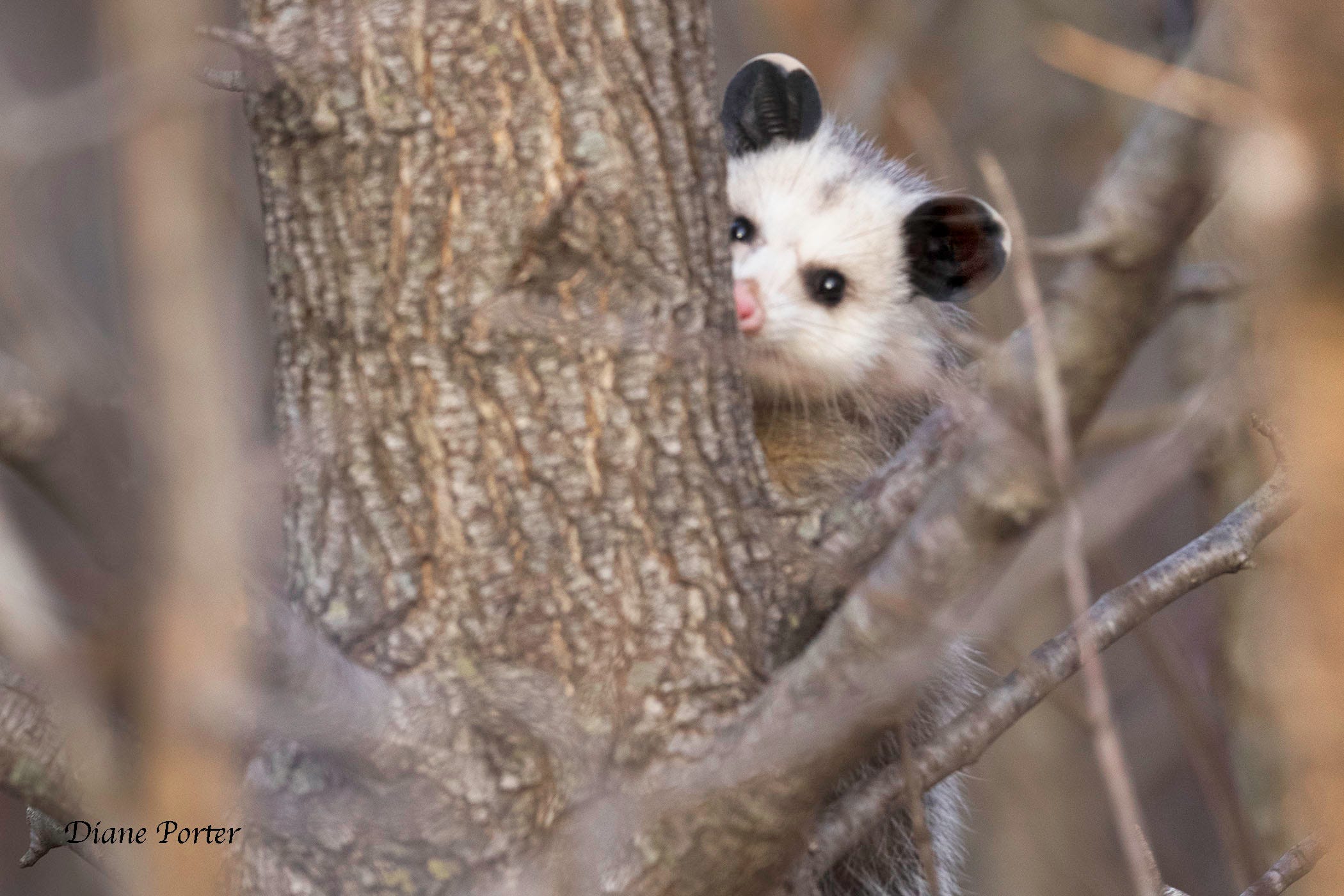
I was flushed with affection for this fellow spirit on our miraculous planet.
I don’t see often see opossums during the day. Night is their active time, when they are out scavenging for food. They eat almost anything. They are the nighttime cleanup crew of roadsides, devouring animals killed by traffic. They also feed on winter-killed rodents, fish, and birds. They like fruit, too. And sometimes they assist with a bit of aeration work in compost piles.
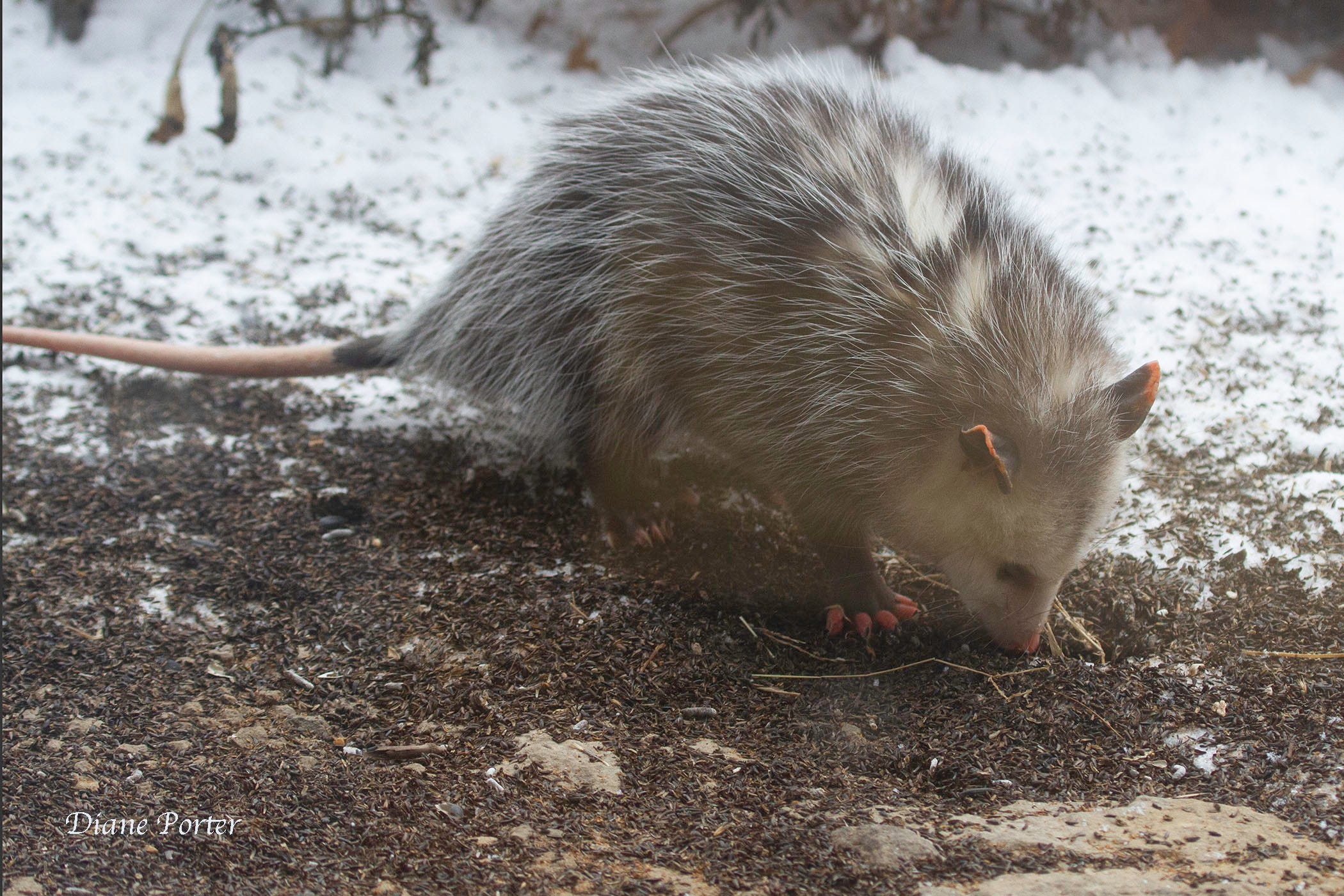
Opossums live here year-round, but Iowa winters are tough for them. Their fur is not thick, and they don’t have much subcutaneous fat for insulation. Sometimes you’ll see one with ragged-looking ears, where they’ve suffered frostbite. Their bare tails and sensitive toes also suffer damage from extreme cold.
They do not hibernate. Instead, they may hole up in one of their several dens and enter a shallow torpor for a few hours, or even for a couple of days. A good den is a dry spot out of the wind — a brush pile, a hollow tree, an abandoned groundhog burrow, or the space under an outbuilding. The animal uses its prehensile tail to carry dry leaves, grass, or other bedding to line its dens.
In extreme cold, an opossum may remain denned up, even at night, until it becomes desperate for food. Then, when daytime temperatures rise a bit, it risks coming out to forage. If the severe cold doesn’t go on too long, it might survive. But January and February can be too much for opossums. During the Iowa winter, more than half may die from the cold.
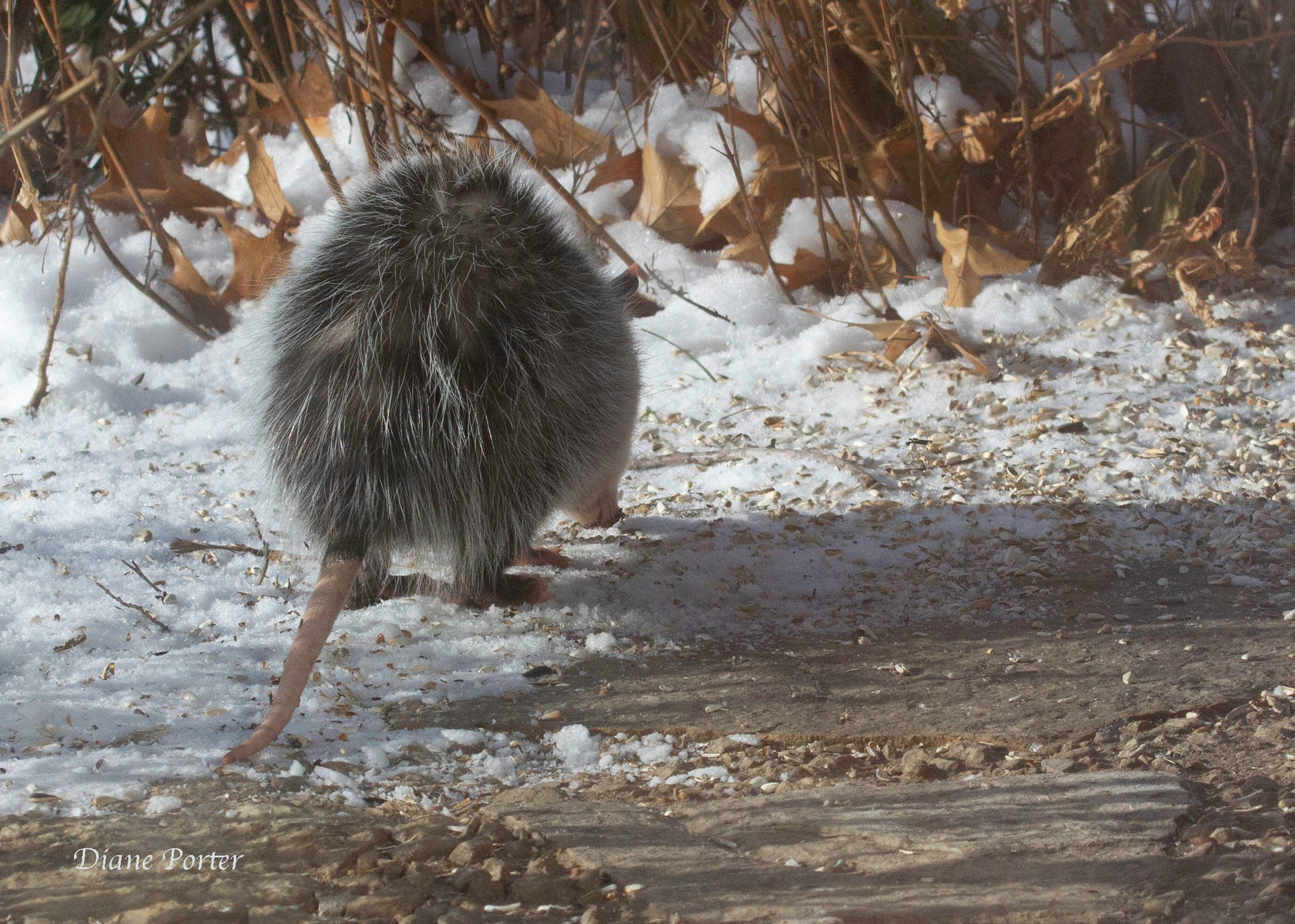
Until the early 1800s, opossums rarely found their way north of the southeastern United States. Then the climate warmed slightly. Human settlement provided food in the form of garbage dumps, grain, and livestock feed. Opossums edged northward. When cars arrived, traffic provided a bonanza of roadkill.
Their gradual dispersal into the Midwest and even into eastern Canada has been natural. Timid and quiet, opossums are among the least troublesome of wild mammals in North America.
They don’t compete much with other native species. They cause little harm to birds, fish, or other mammals. They don’t degrade the environment. In fact, they help it by removing carrion, consuming ticks, and dispersing seeds of many native plants. Nor do they overpopulate.
They don’t dig burrows in lawn or garden. They carry far fewer fleas than stray cats. They virtually never get rabies, because their temperature is too low for the virus to replicate effectively.
Although they may shelter under a deck, they don’t structurally damage buildings. They might steal an egg from a poorly secured chicken coop, but they don’t kill hens. They do not attack people, cats, or dogs. If there’s a question of whether a cat or an opossum gets to eat something, the opossum defers to the cat. If a dog grabs an opossum, the opossum may hiss or show its teeth, but then it plays dead. An opossum runs slowly. It is a poor, weak fighter, and it does not want trouble.
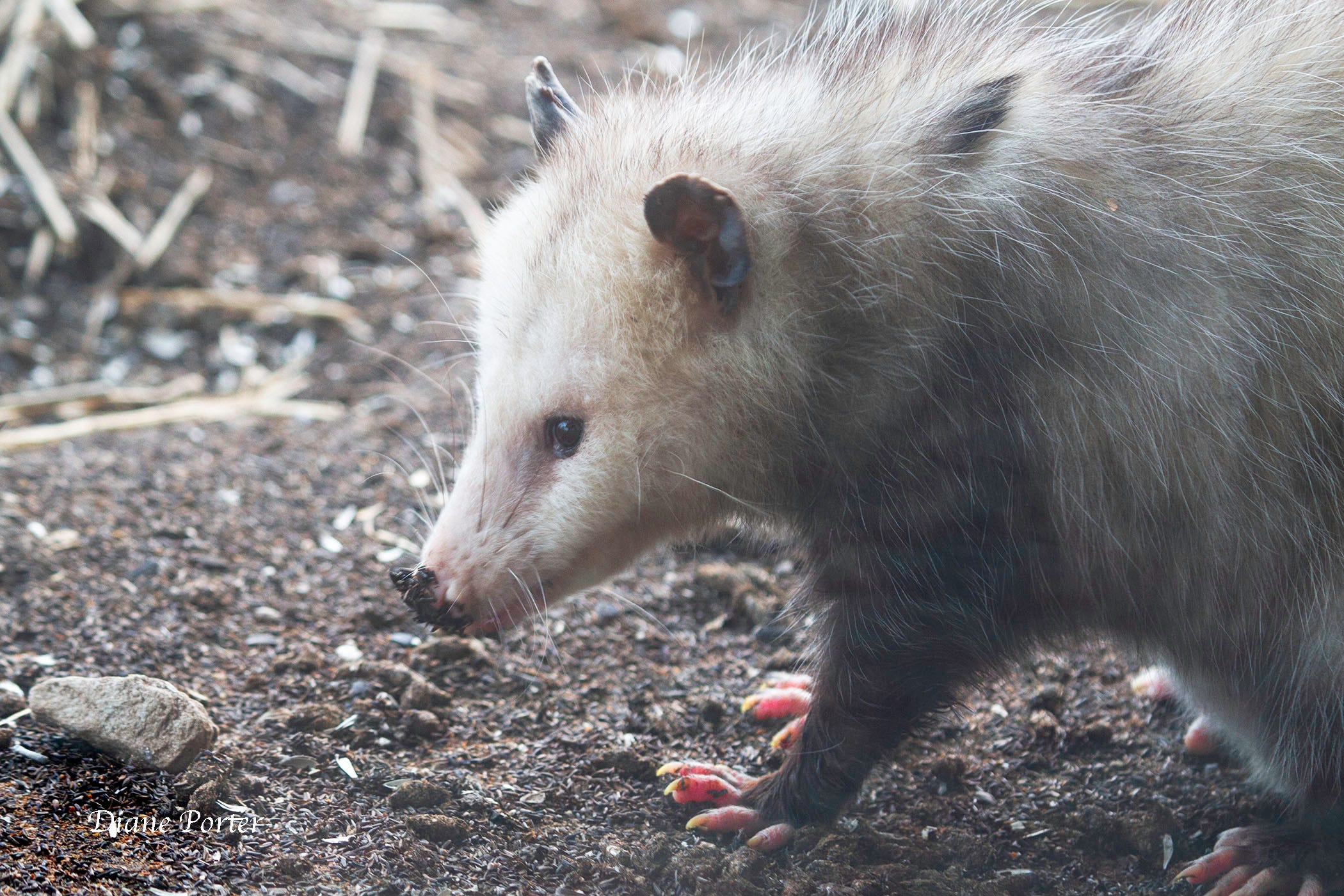
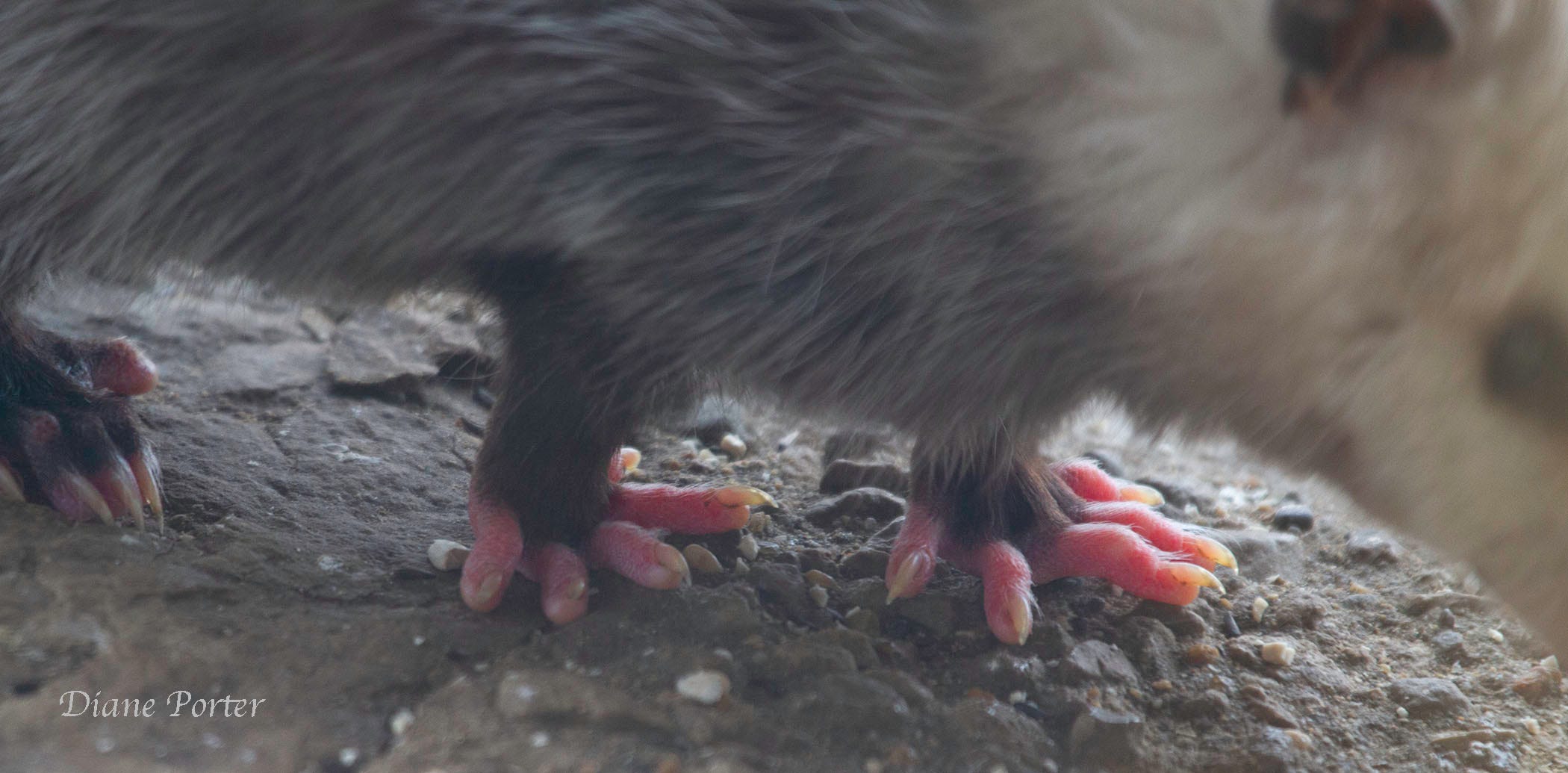
I think they are adorable. And their toes look like fat, pink, little sausages.
Naming the animal
According to the Oxford English Dictionary, 2nd edition, opossum comes from an Algonquian (Native American) word recorded in 1608 as opassom or aposoum. It meant white animal.
Formally it is Virginia opossum, though it is often called possum.
The scientific name is Didelphis virginiana.
Didelphis means two-wombed: di- (two) + delphys (womb).
Opossums are marsupial mammals: mothers carry their babies in a pouch, which functions like a second womb.
The Virginia opossum is the only marsupial mammal native to the United States or Canada. Its ancestral range was South America. It migrated to North America about 800,000 years ago.
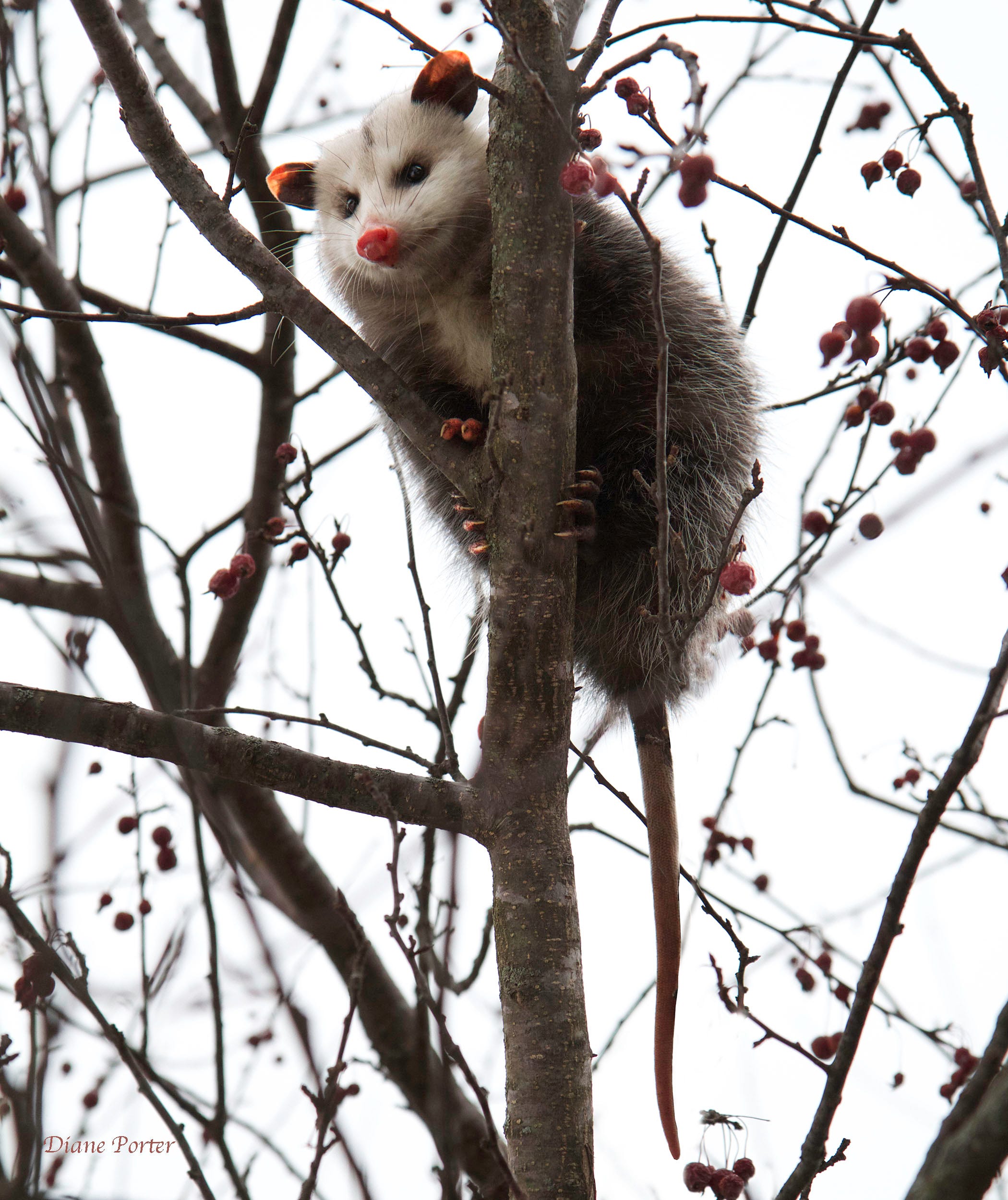
The little pink-toed opossum in my garden saw me before I saw it. Perhaps it has watched me many times.
As winter comes on, how heartily I wish it good luck.
Hey, humans! If you don't love opossums, I don't want to know you.
Your opossum pictures are adorable! Loved the article :)