

Back and forth she flies, looking downward. She quarters the field, searching, left-to-right, then right-to-left. She’s looking for small prey — mostly mice — who are preoccupied with their own lives and not aware of her yet.
She flies low over the field, and slowly. Now and then she gives a languid flap and then glides on poised wings. Her style reminds me of a skater, pushing off with one foot and coasting.
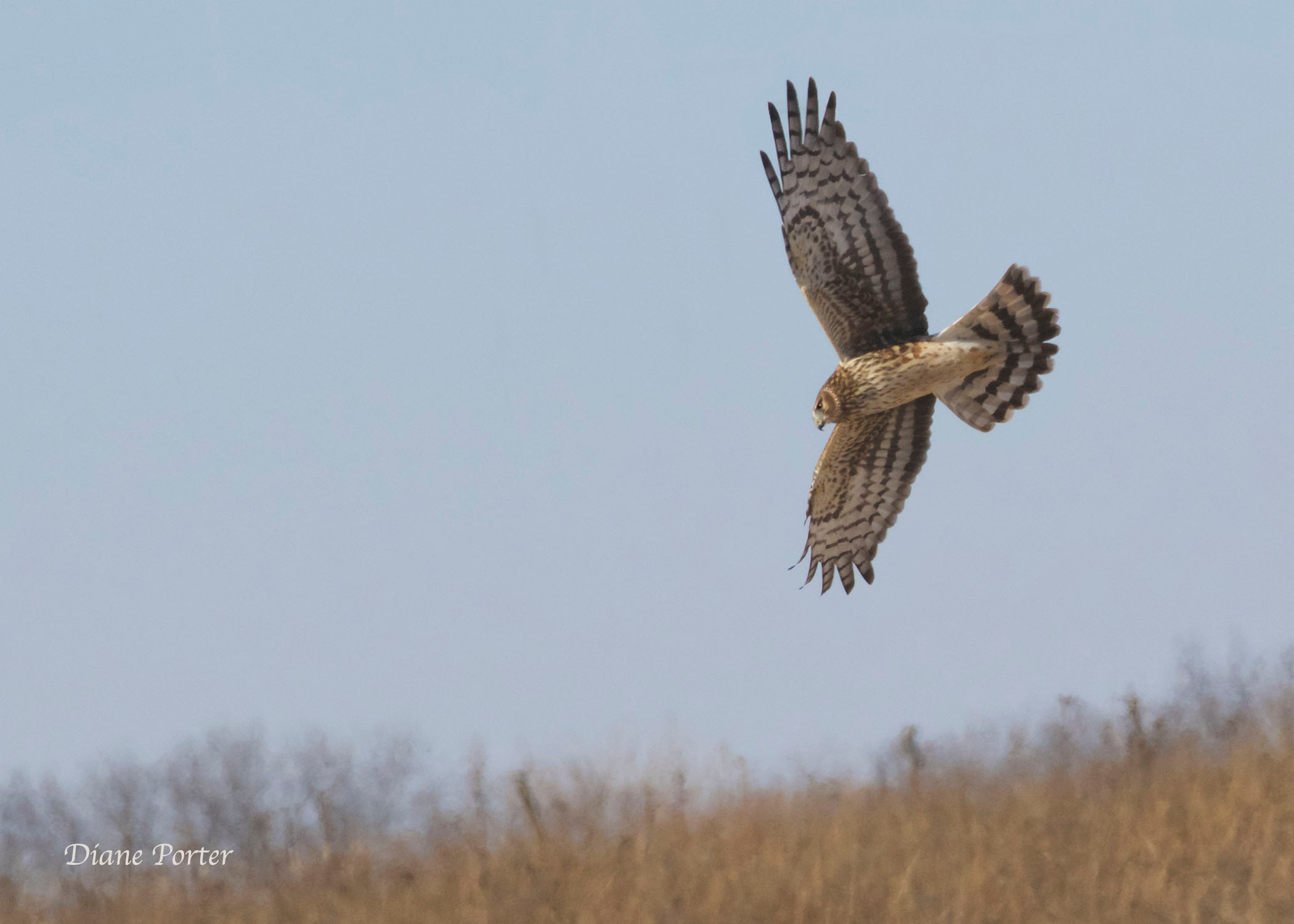
Low altitude gives the hunter the advantage. A rodent in the grass has scant time to register the hawk silhouette in the sky. A momentary shadow comes from nowhere, and then talons.
I see the harrier flutter down, but instantly she rises again, like a leaf lifted by wind. Did she miss?
She drops again and disappears into tall grass. This time, she got the mouse. I can just make out her back as she hunches over her kill. Three minutes later, she is flying again.
Her tacking brings her gradually closer to me. Her head tilts down, eyes fixed on the ground. I feel my breath get quicker.
You can recognize a Northern Harrier by the low, buoyant flight style. Sometimes the wings slant upward in a shallow vee, and the bird rocks side to side in the air.
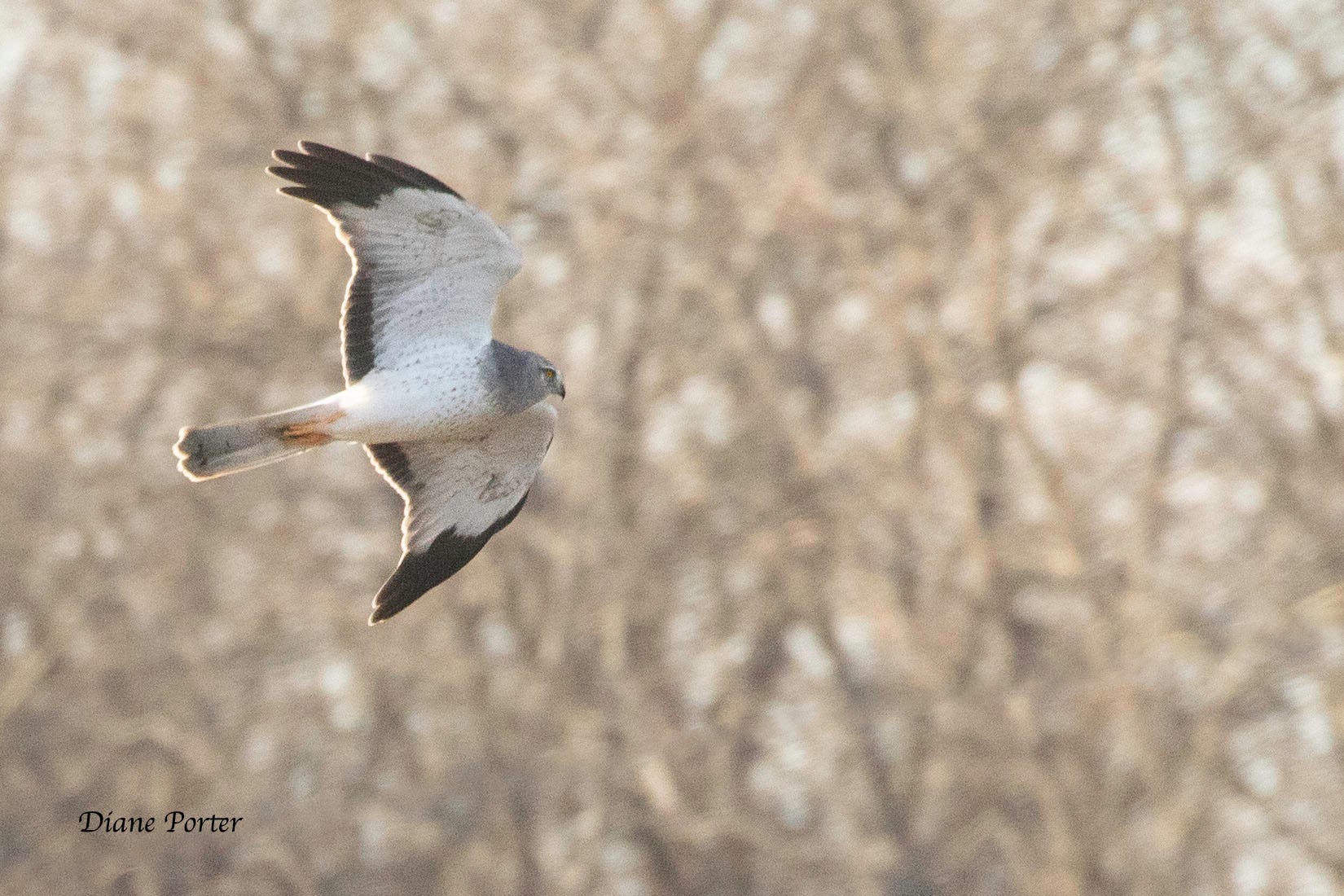
To keep them skating free
Northern Harriers generally avoid urban areas, but they forage along roadsides and over grassy pastures, anywhere that mice can make a living.
Northern Harrier is listed as endangered in several states, including Iowa, and as threatened in some other eastern states. It is tied closely to grasslands and wetlands—habitats that keep shrinking or breaking apart. Protecting and restoring such open grassy spaces is one of the simplest ways to keep this low-flying hunter on the landscape.
Where the Northern Harrier lives
Northern Harriers live across most of North America, shifting north and south with the seasons.
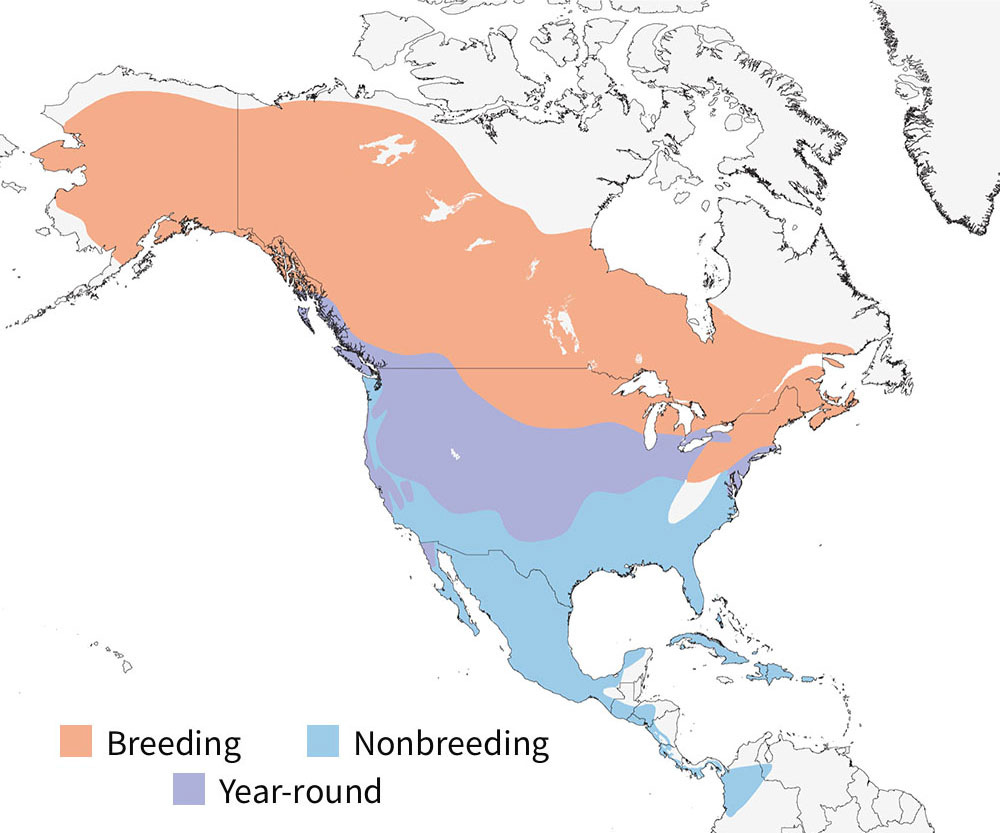
The Cornell Lab’s range map shows the breeding range in orange and the winter range in blue. Purple means year-round. Iowa sits in that year-round zone, but I most often notice harriers on leaf-bare winter days.
Unfortunately, I worry for all of them as the protection is being removed in so many ways.
Great descriptions of harriers on the hunt! One of our favorite birds, too!