

Two Mourning Doves flutter into the redbud tree in my backyard. They settle close to one another, closer than most other birds sit. They look into each other’s faces, as if fascinated.
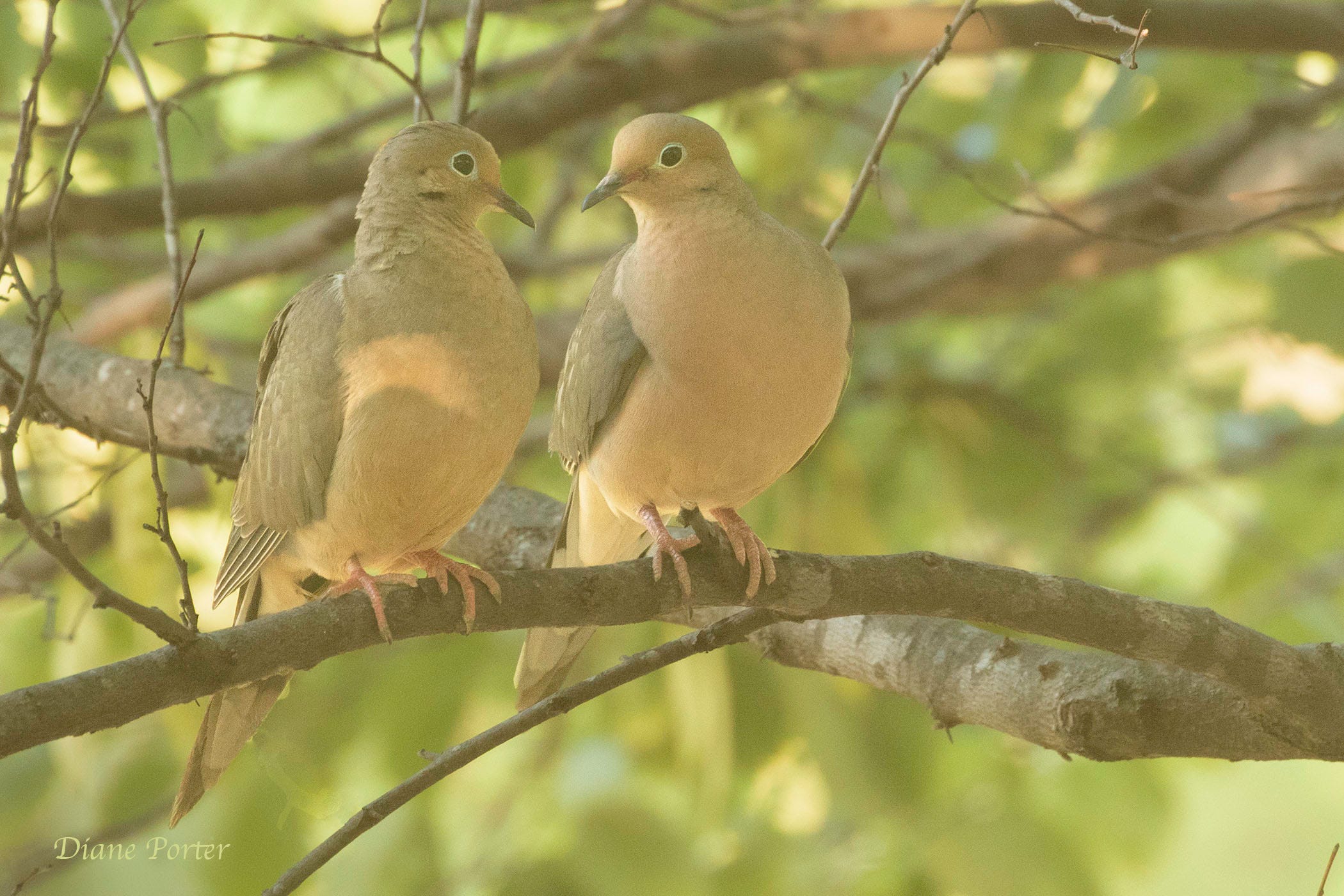
It’s a hot day in late July. For most backyard birds, this is the season of raising young, finishing up nesting, and molting — not the great season of wooing. Mourning Doves, however, are still courting.
A Mourning Dove pair may make five or six nesting attempts in one year, in a whirlwind of parenting that goes on all summer.
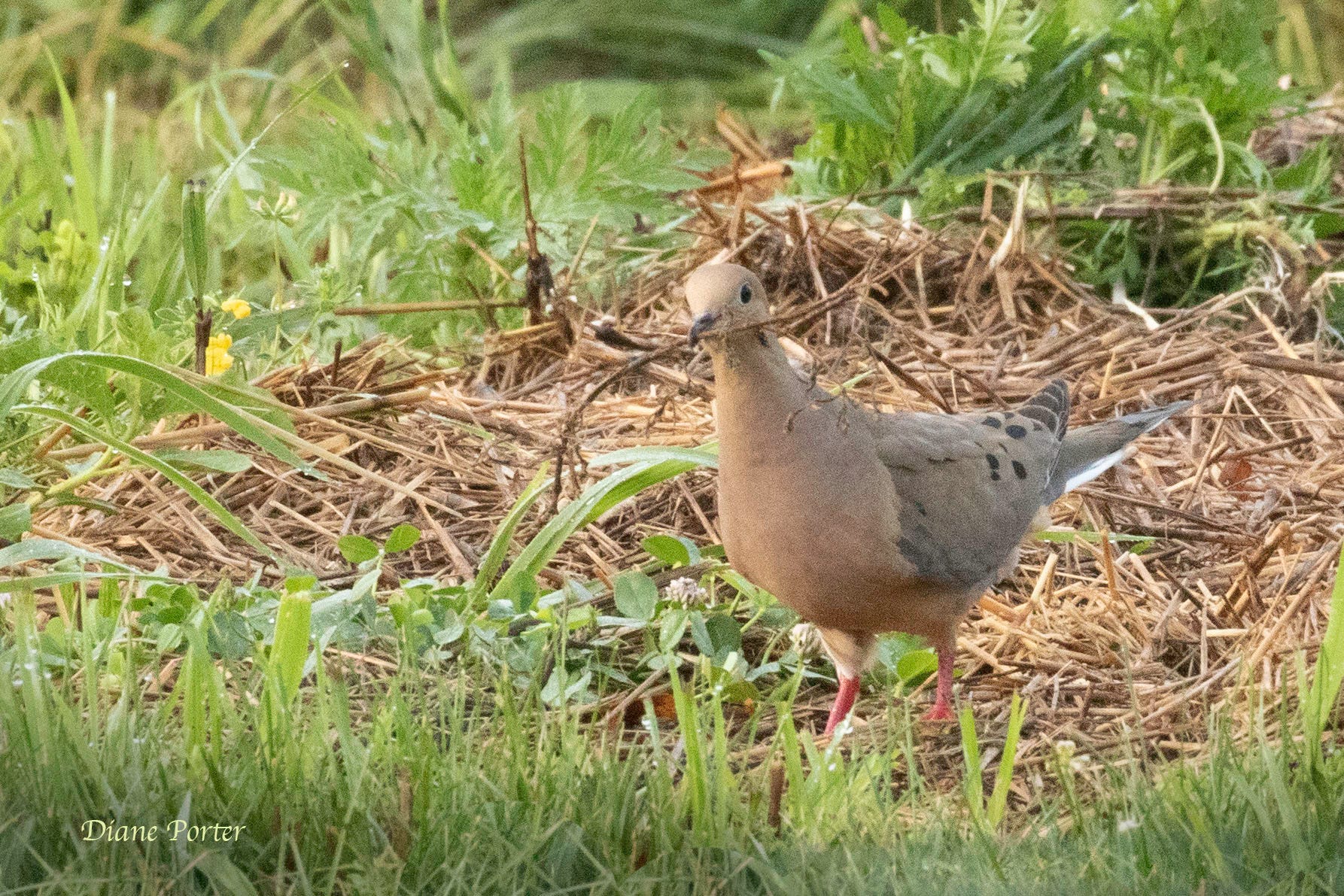
He finds twigs and brings them to the female at the nest. She arranges the twigs into a sort of bowl.
It’s not elaborate, not tightly woven nor particularly secure. It may look like a few sticks tossed quickly together. I once discovered a Mourning Doves’ nest because I happened to look up while standing under the branches of a juniper tree. I saw the white eggs, visible through the flimsy bottom of the nest. There was virtually no lining.
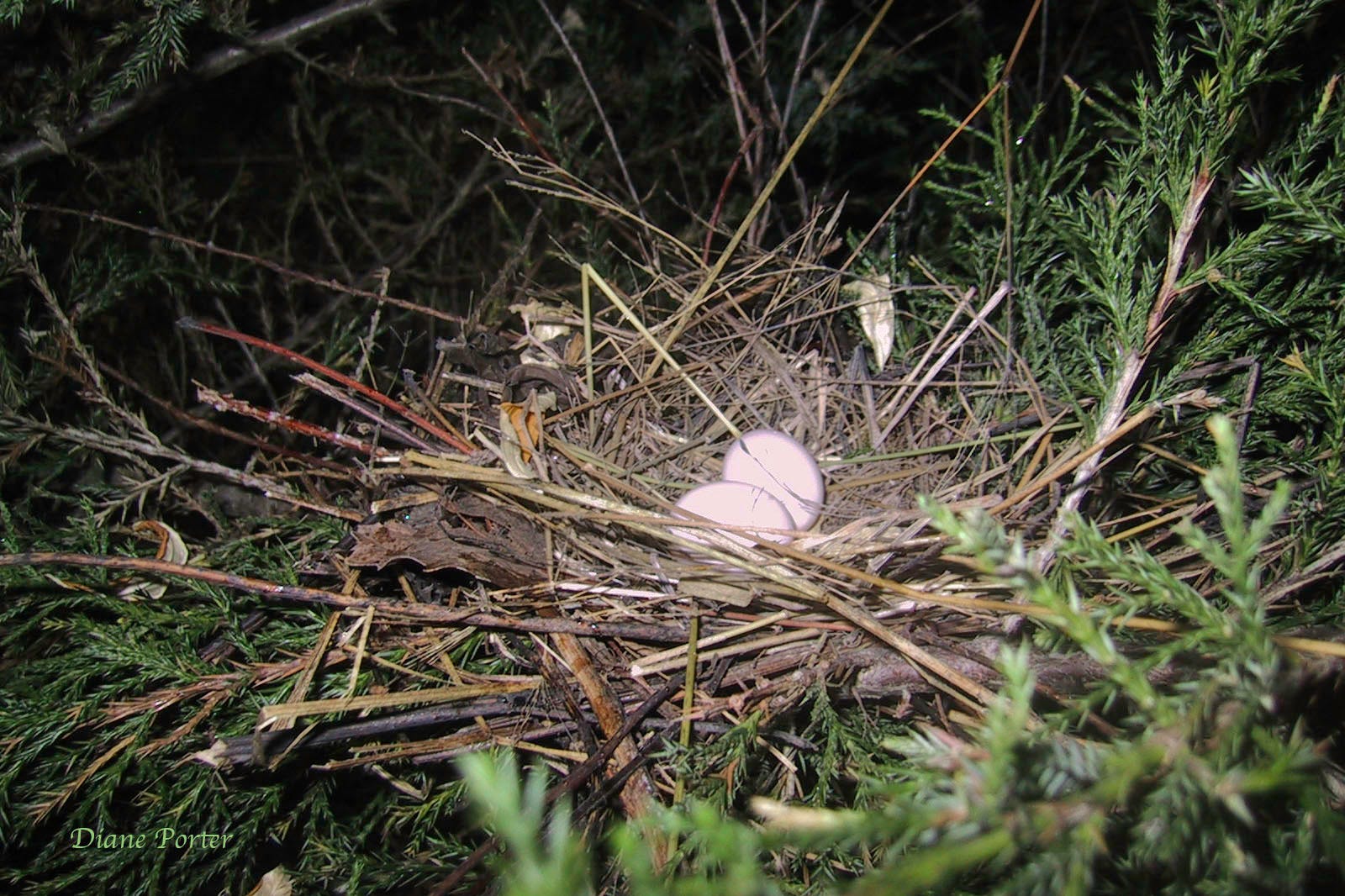
There were only two eggs in that clutch, which is normal for Mourning Doves. It is their strategy to get baby birds into the world fast. The nest progresses speedily from two eggs to fledged young in a scant month.
The parents take turns sitting on the eggs, and both feed the nestlings.
Like other doves, young Mourning Doves put their beaks into their parent’s mouths to receive crop milk, a rich, custard-like food produced by the lining of the crop. Both parents make it and feed it to the nestlings. Because the adults live largely on seeds that are abundant through summer, they are not tied to the brief peak of insect abundance that limits many songbirds. They can therefore continue nesting from spring into September.
Sometimes they start so early that if they nest in a deciduous tree the leaves are just starting to form. The foliage appears as the young are growing in the nest.
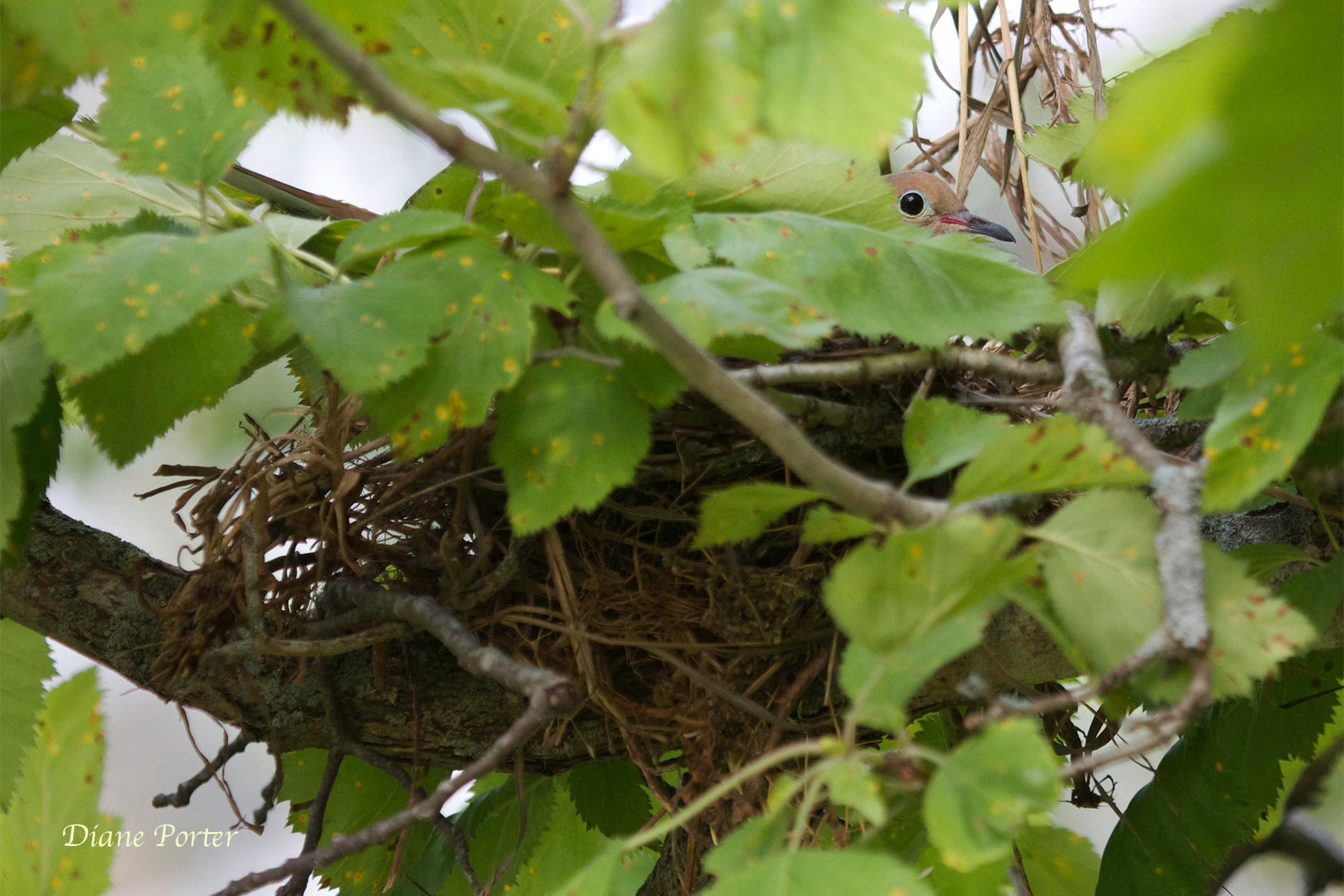
The parents are tenacious about brooding the eggs, Once, when we had flooding rains, we had an emergency and had to install a drain for our well pump. The pump was in a cement pit next to an ancient crabapple tree that held a Mourning Dove nest. We could not delay putting in the drain, or our house would flood.
The trencher arrived and commenced digging. It roared. The ground and the tree shook all day. Nevertheless, one of the doves stayed on those eggs.
Soon after, the eggs hatched. A few weeks later, a young dove showed up looking quite fit in my back yard. Meanwhile, two more eggs appeared in the same nest.
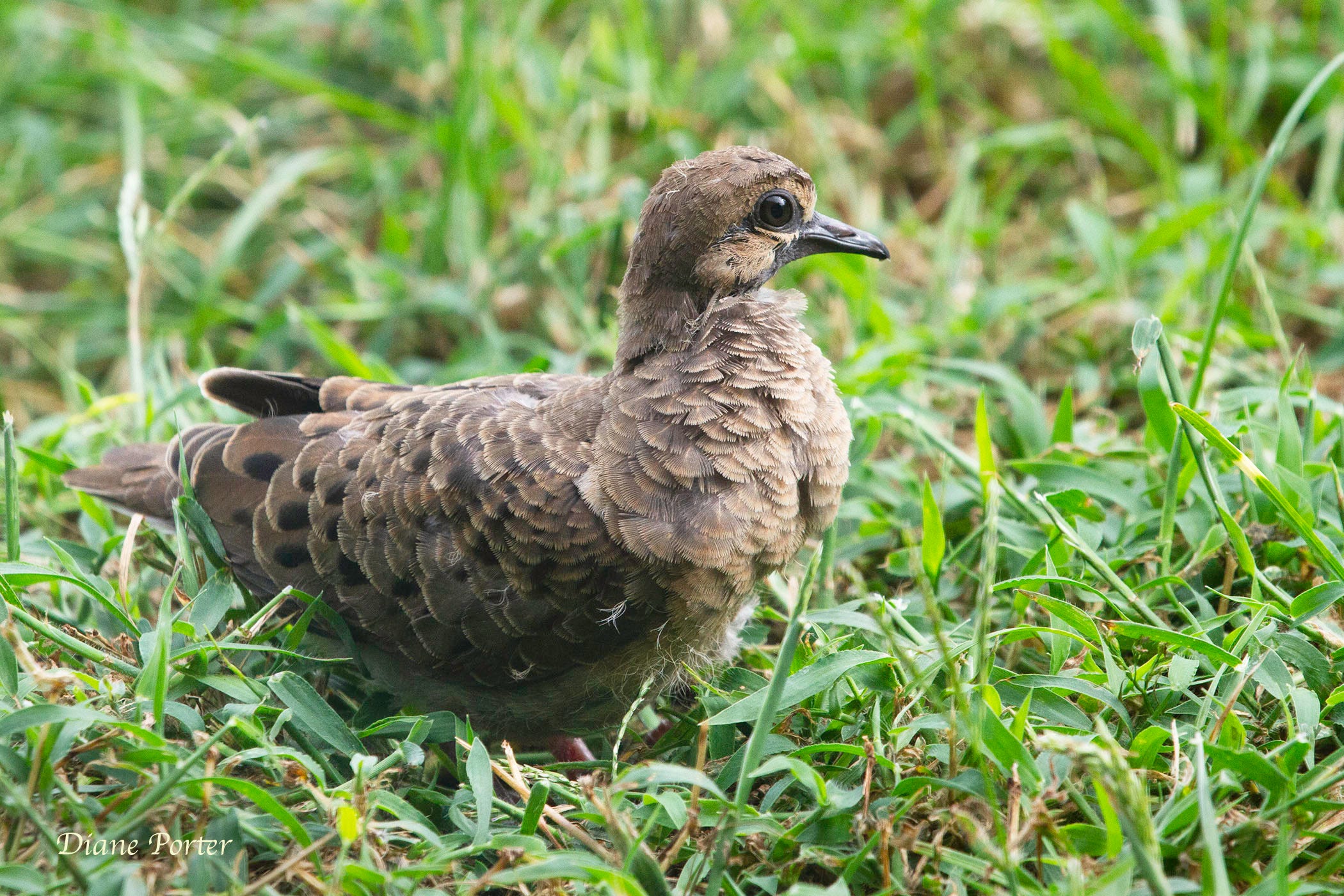
Between clutches, the parents don’t waste time courting new partners. A pair stays together through the whole nesting season. Some of the cooing that we hear all summer may be Mourning Doves renewing their vows.
Recording by Diane Porter
In Iowa we have Mourning Doves all year around. Sometimes it looks as if two doves might be finding comfort in each other’s company during the worst of the weather.
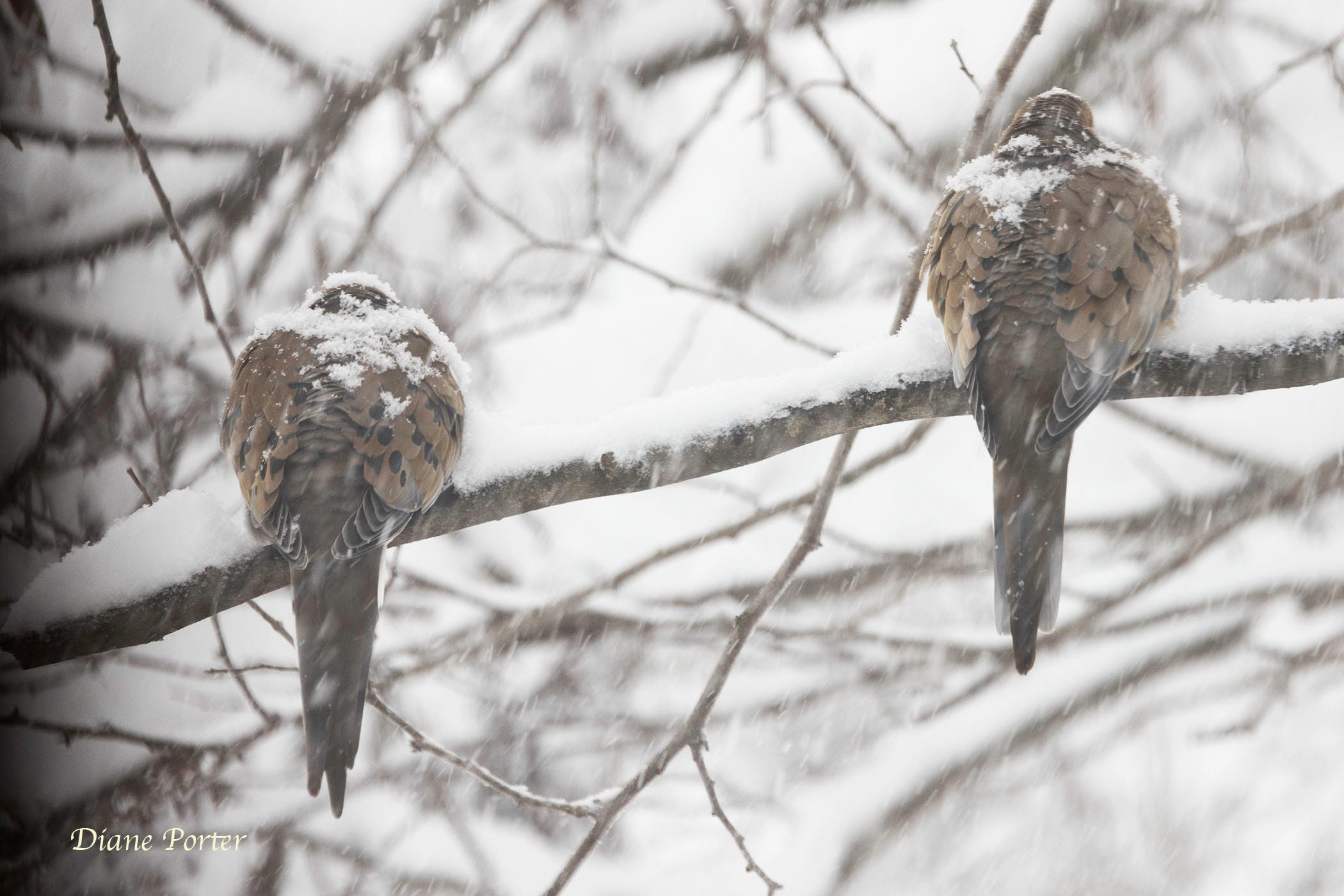
There is some speculation that the same two parents may remain bonded over the winter. I have seen doves acting lovey-dovey very early in spring, like a pair that once courted outside my living room window in the snow.
It was February 14.
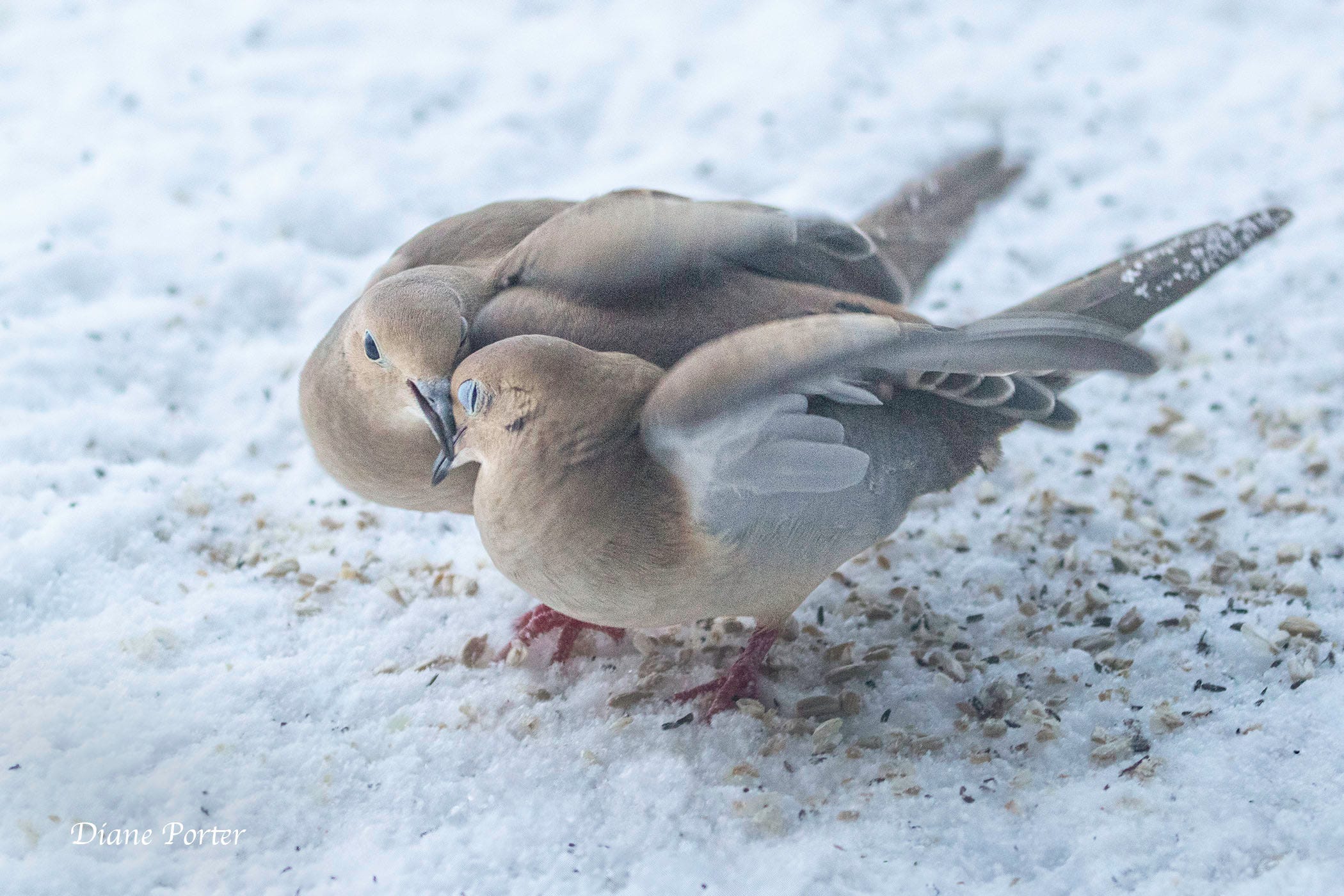
One nibbled gently around the base of the other’s bill, as the recipient of the caress closed its eyes and lowered its body into a semi crouch. One is tempted to say she looked enthralled.
I was a bit enthralled myself.
I know quite a few people don't like to have them around, especially on feeders. They do eat a lot and drop a lot from both ends. Still, I like them. I have Mourning Doves and White-winged Doves.
Love your February 14th pic! I have been putting scant amount of seed out for any and all ground feeding birds under fruit trees at the perimeter of the yard for a few years. It attracts several Mourning Doves as well as other ground feeders. I used to put it out at the crack of dawn. But I have found waiting until late morning, gives the birds a chance to find it later in the day and maybe not be so predictable to the predators? For several months I have had a single Mourning Dove quietly hoot through the night. At first I thought it was an owl. But, on paying closer attention to some Mourning dove hooting, I do think it is a morning dove, perhaps missing a lost mate?