

I reached down to touch the yellowing fruit. I only noticed it because the leaves it was hiding under were withering away.
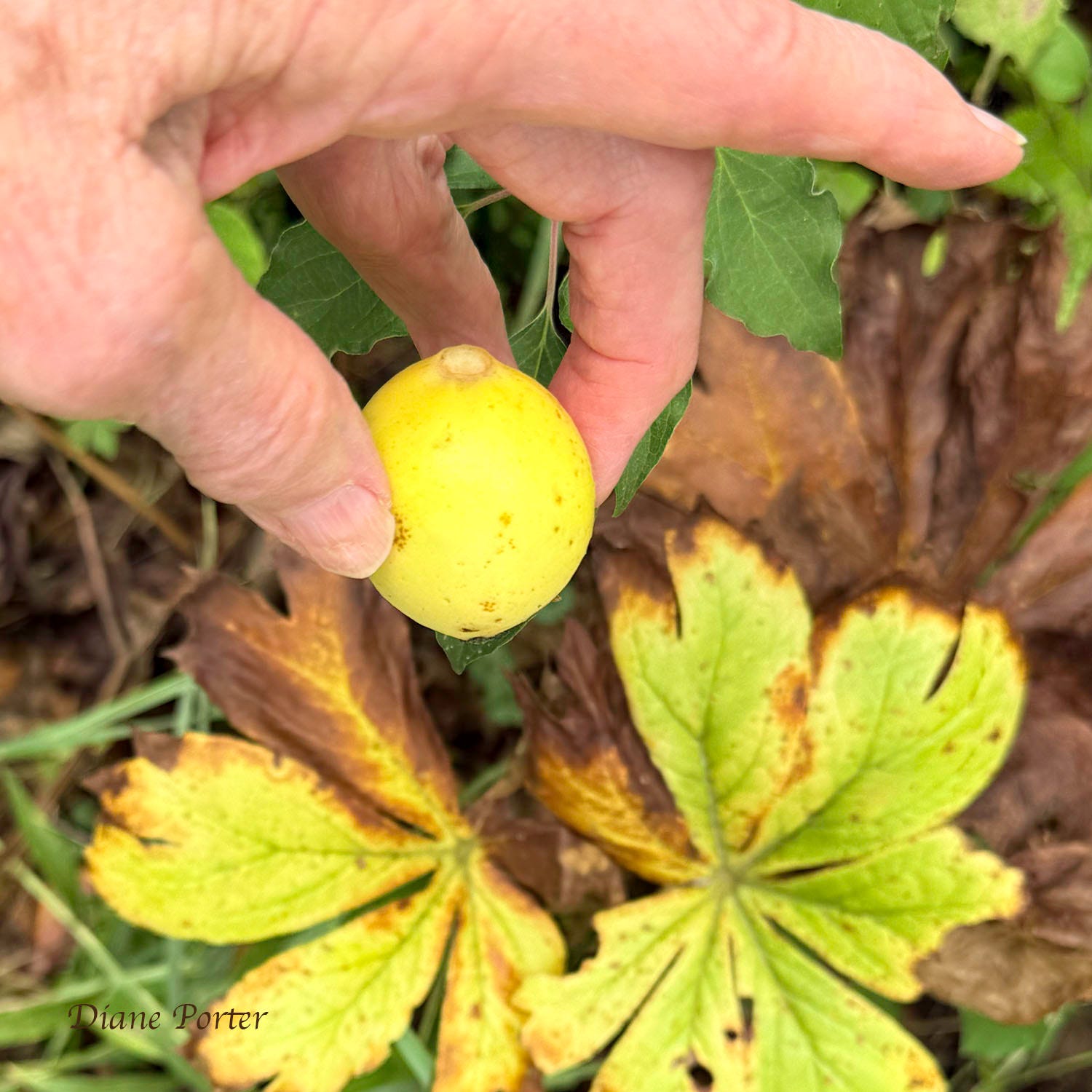
At my touch, the fruit dropped into my hand. It was soft.
So the Mayapples were ripe.
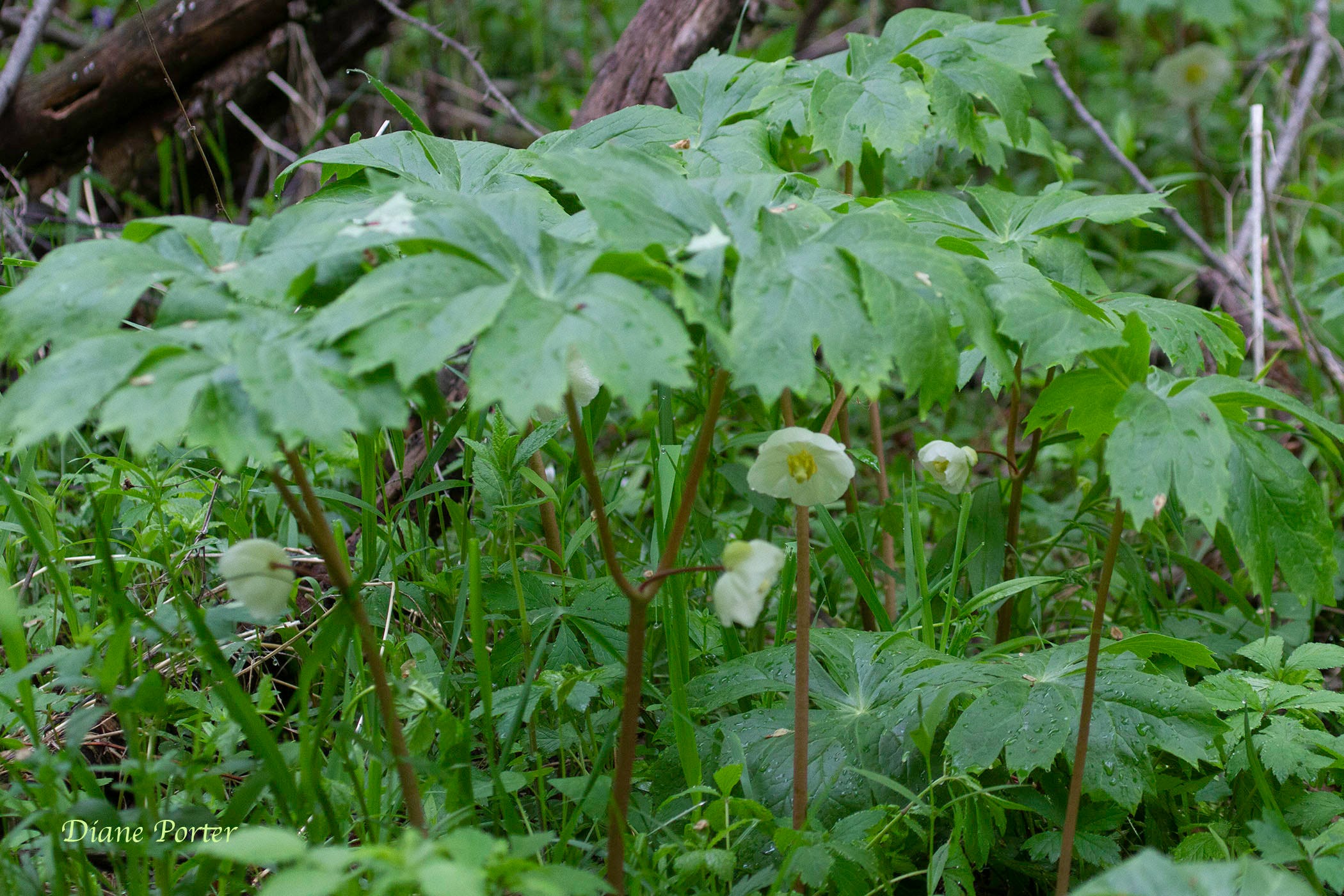
A month or two ago I had seen quite a few fruits hidden beneath the Mayapple leaves.
Now they were gone.
Clearly, someone ate them. I won’t say stole, even though this happened right in my garden. Raccoons and deer have been eating Mayapples in Iowa since long before this was called Iowa.
Box turtles are reported to eat them too, in some places, although we don’t have box turtles around here.
I took the fruit into the kitchen and started to cut it with a sharp knife. The skin came away like a loose jacket, and wow, what a pronounced odor! Something like pineapple, but with a musky, earthy undertone. It was rich and tropical and so distinctive that I know I’ll recognize it instantly next time I smell it.
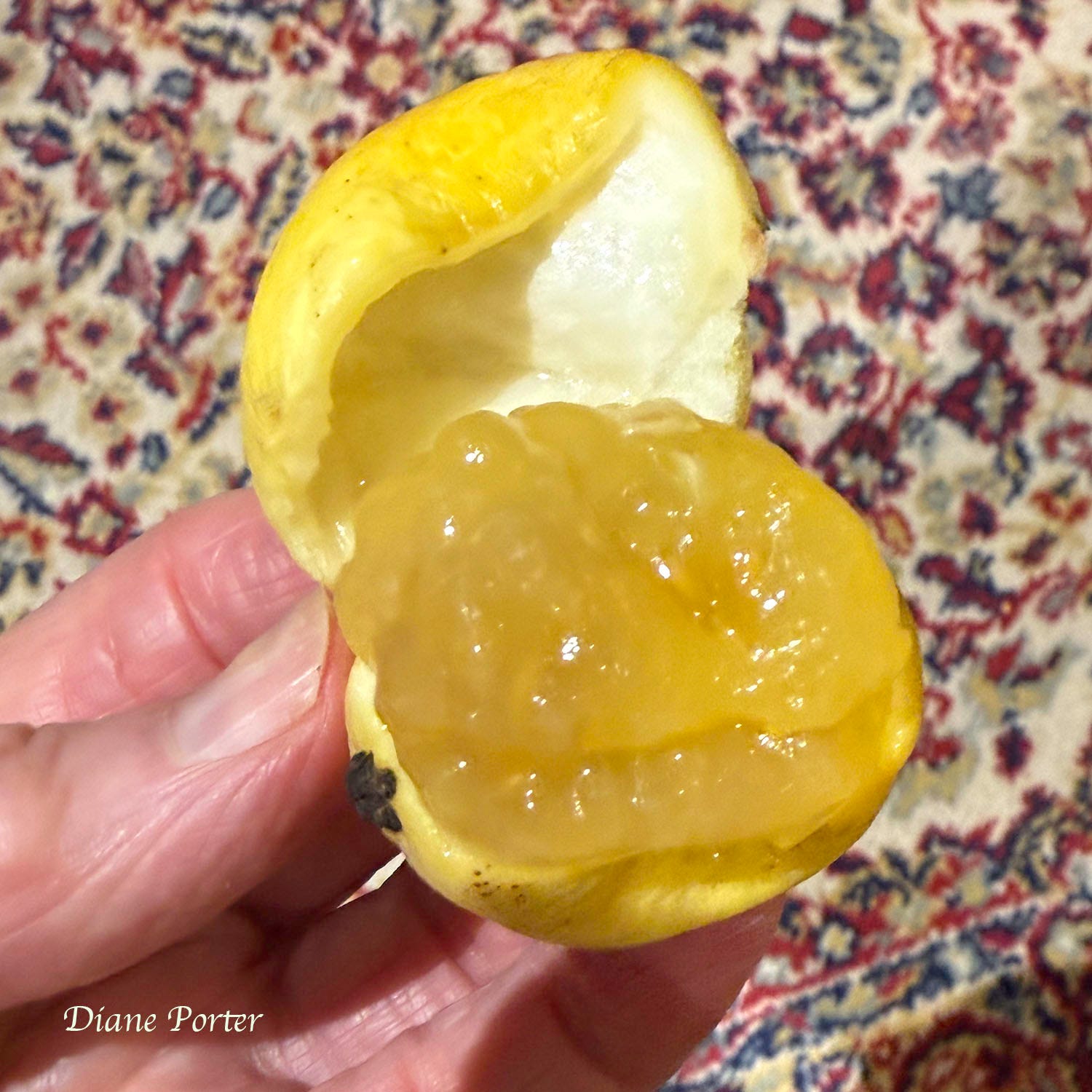
The flesh of the fruit was a soft, yellow sphere. It was globby like tapioca but translucent. It looked and smelled like it was meant to be eaten.
I know that people make jelly from the ripe Mayapples. I also know that every other part of the plant is poisonous, including seeds, stems, leaves, and even the fruit before it ripens. Fully ripe fruit pulp is the one part generally considered edible. Nevertheless, I was too timid to touch my tongue to it.
Now that I’ve been reading recipes for Mayapple preserves, and the rave reviews about its flavor, I wish I had tasted the fruit I opened.
Mayapple’s tricks
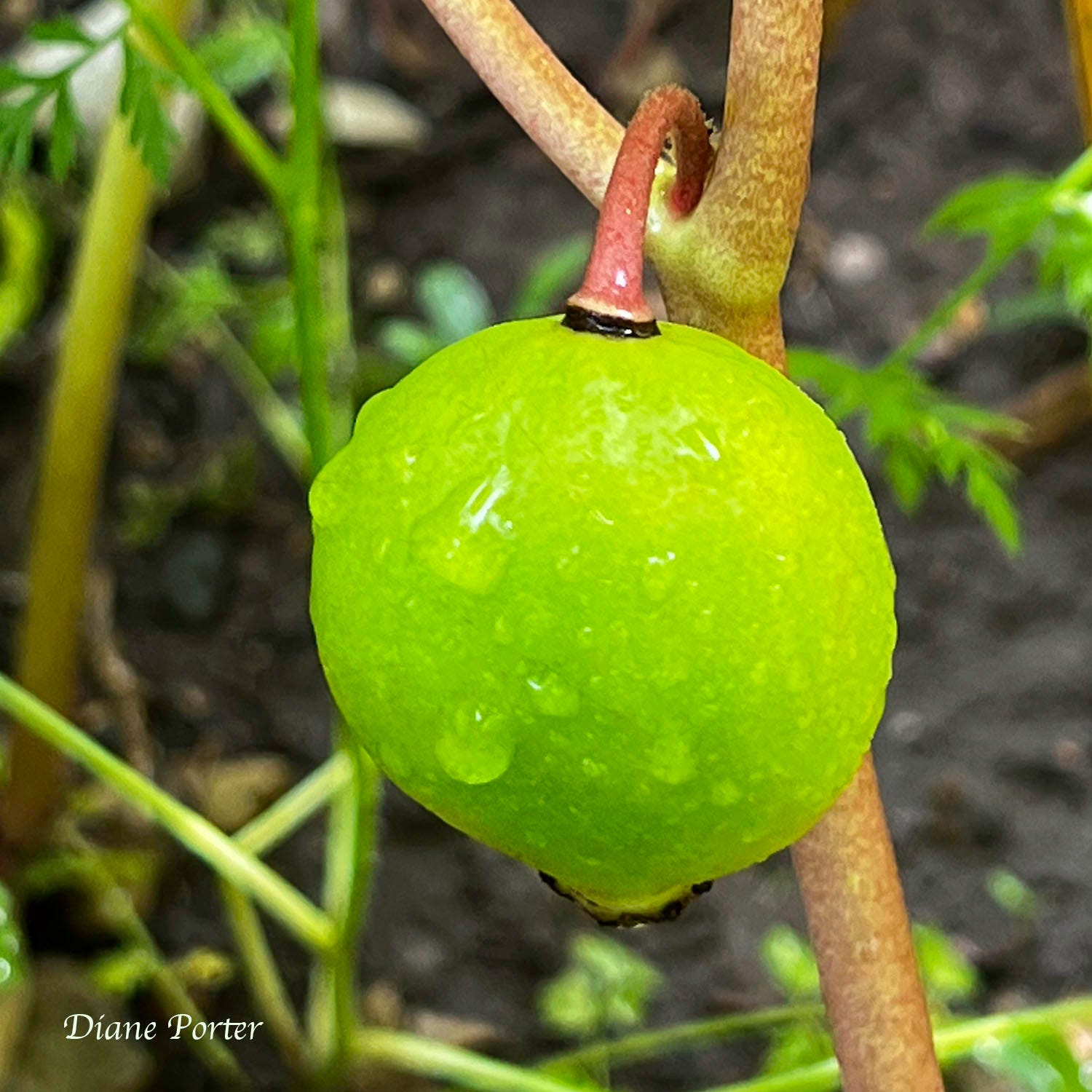
Not a bad strategy. While the fruit is green, it is hidden under the leaves. When the seeds are ready to be dispersed, the fruit softens, turns yellow, and advertises itself with its Come-eat-me aroma.
I’m imagining a raccoon poking its inquisitive nose under the Mayapple leaves and detecting the scent of ripe fruit. Raccoons are good partners. Some Mayapple seeds survive passage through a raccoon’s digestive tract and actually germinate better afterward. The raccoon also carries the seeds away and disperses them at a distance from the parent patch.
Deer eat Mayapple fruits too, often before they ripen, but they are mostly seed predators. Very few seeds survive passage through a deer.
And the seeds?
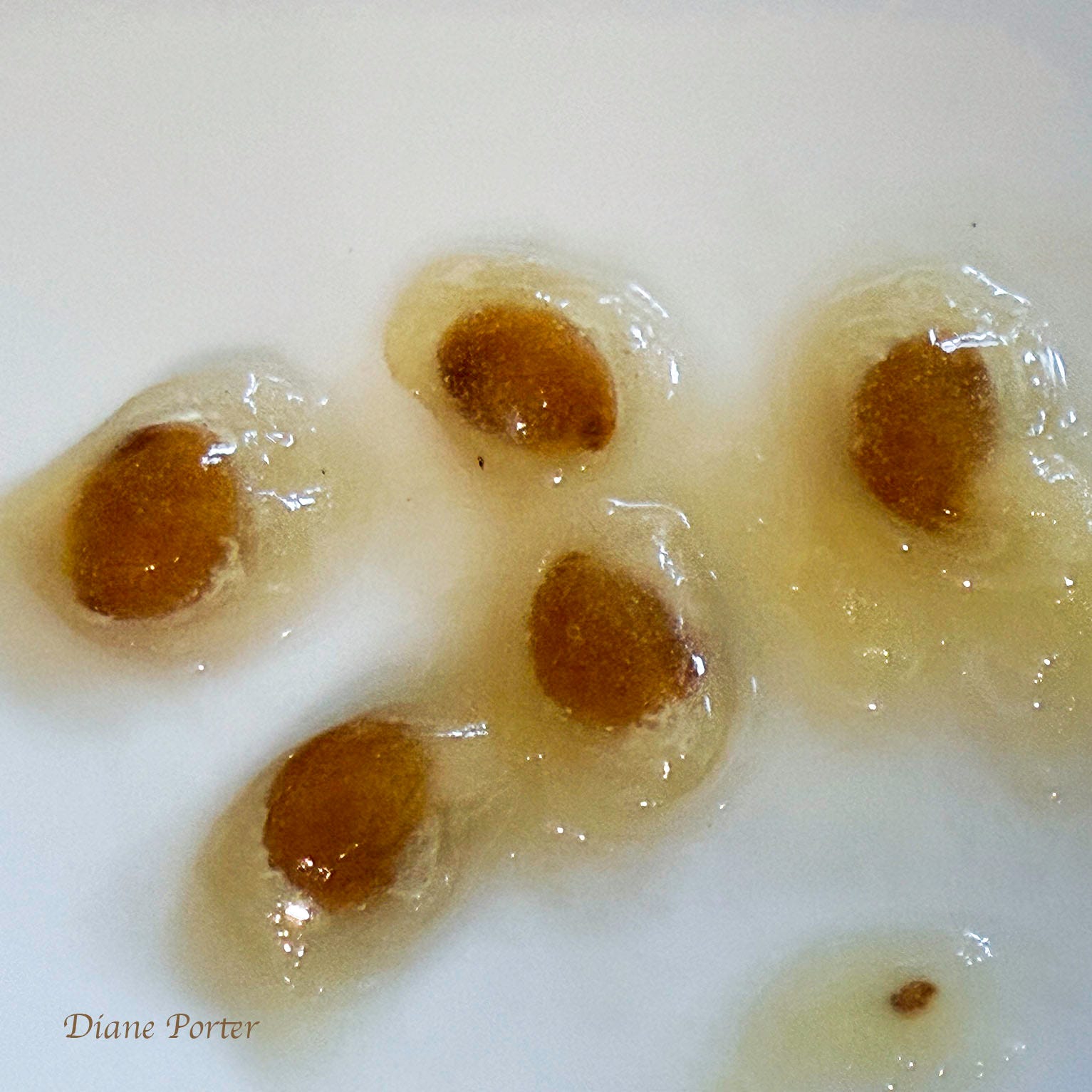
I separated out 26 seeds, cleaned away the clinging pulp as best I could, and never let them dry out. Mayapple seeds lose viability if they are allowed to dry.
I planted them immediately, one or two to a cell, in six-packs of seed-starting mix and covered them with about ¼ inch of soil.
My growing box is like a cold frame with a wire-mesh top. It lets in rain and snow but keeps chipmunks and other diggers out. The seeds will spend a normal Iowa winter there, much as if a raccoon had planted them in the woods.


Some may sprout next spring; others may take longer. Sometime in 2027, or perhaps 2028, I hope to find small new plants.
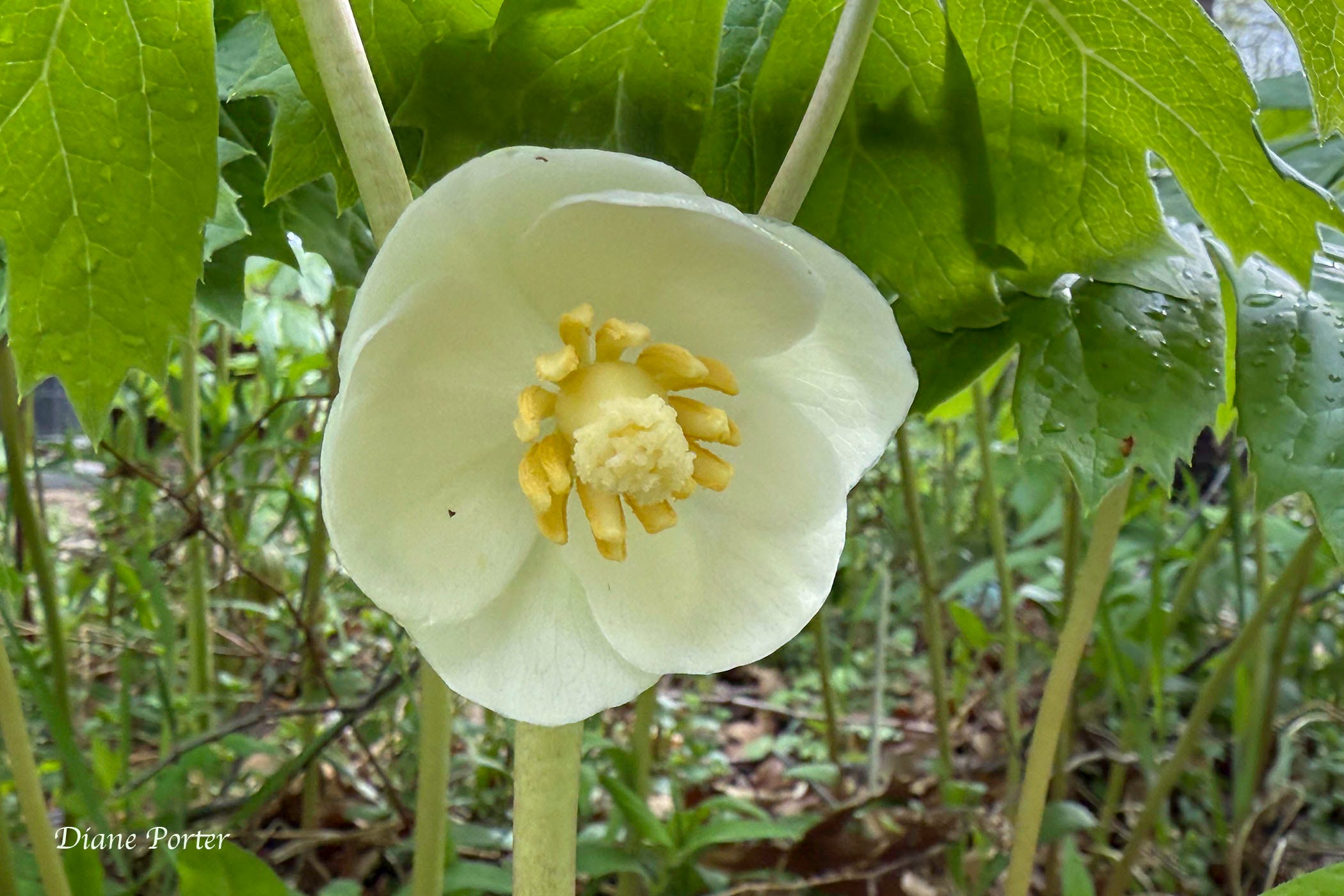
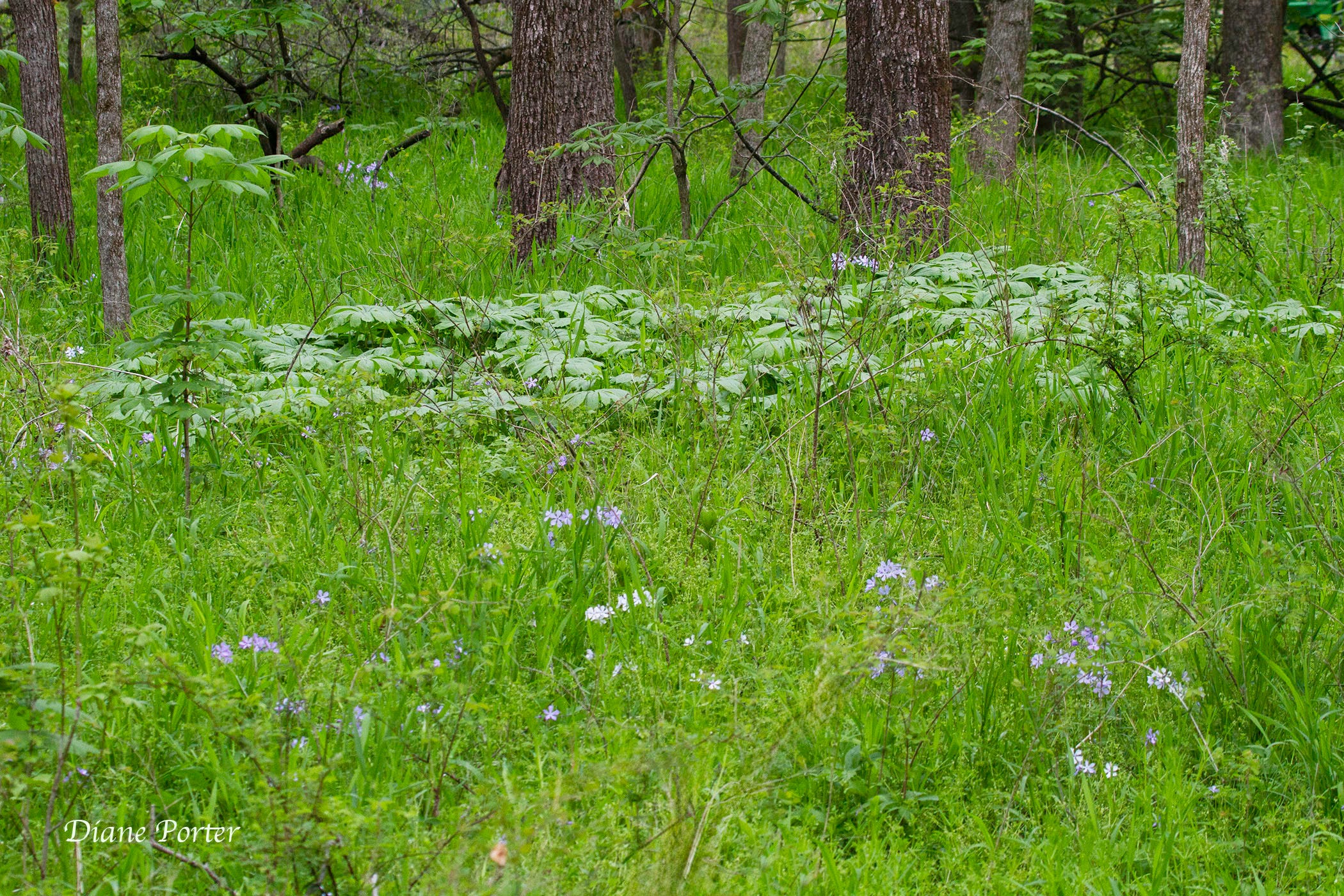
If they thrive, I’d like to start a few new patches of Mayapples in the woods around here.
There’s no such thing as too many Mayapples.
I remember that odor too, from my Illinois years. And like you, was too timid to taste. You made me wish I had.
I find the Mayapple such a fascinating plant. And find their plant patches whimsical as it ferries might live under them. Thanks for sharing about the fruit. I like how you bring things in and cut them open to take a closer look. I have been curious why some Mayapples have flowers and others don’t. I have noticed that those that have a branched set of twin leaves have the flower ensconced. Perhaps there are male and female plants? Or maybe just mature and less mature plants? I would have been tempted to taste the fruit, but avoided it as well - no need to get sick.