

How I met Jacob
One April day few years ago, I was down by Crow Creek with my binoculars, and I saw a new blue on the cliff across the water. A blue whose exact shade I didn’t recognize. A new wildflower.
How I wished I could transport myself over there and get a close look. But there was no way. The creek was close to flooding. Even if I could wade across, the vertical bank was a wall of moss and ferns, rising higher than the tallest oaks. Impossible to scale.
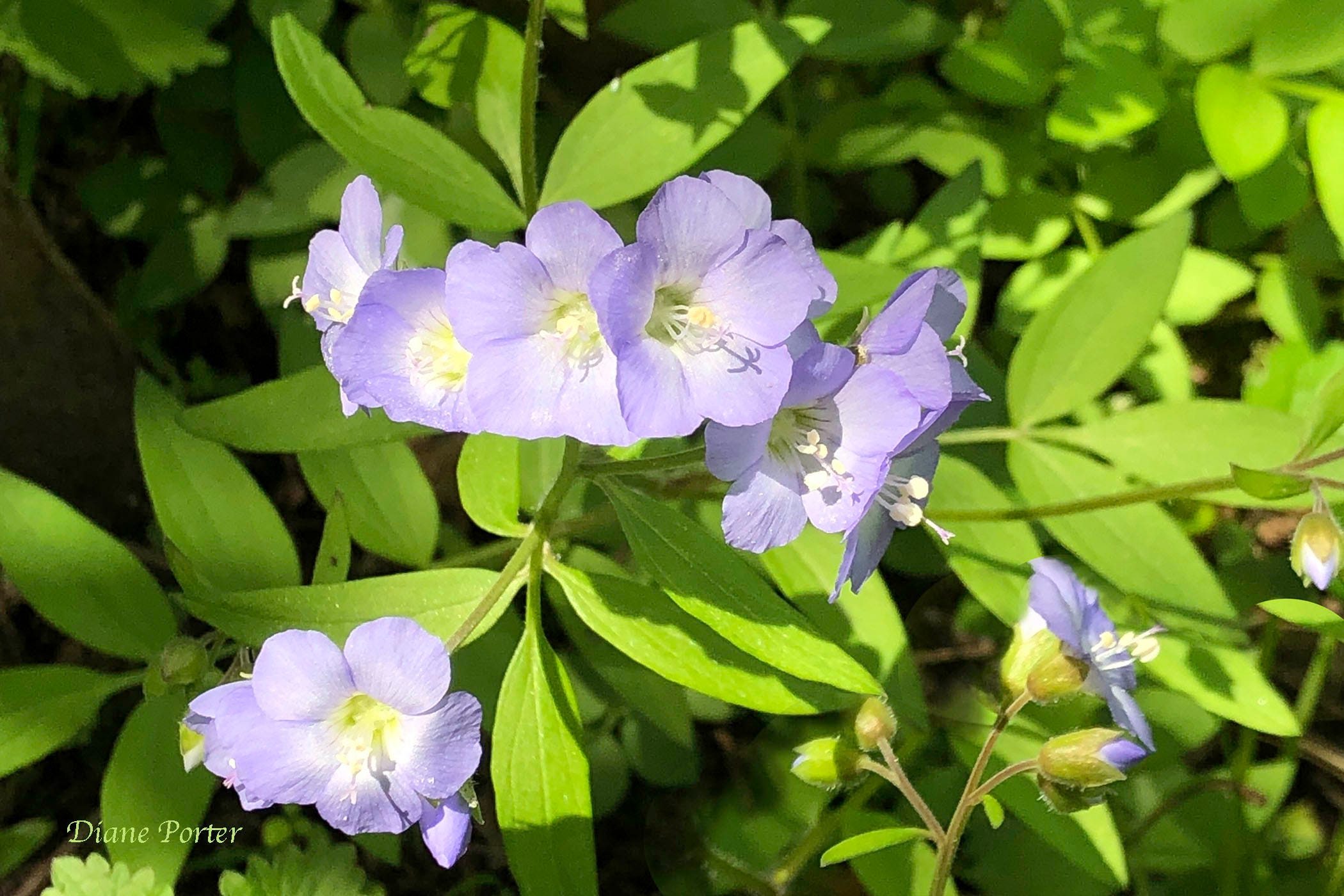
The next day I found a plant on my side of the creek. It was small, with only a few flowering stems. Its blue was pale and unique. The leaves were in matched pairs on either side of the stem, as if reflected right to left.
It was Jacob’s Ladder, and it was new to me.
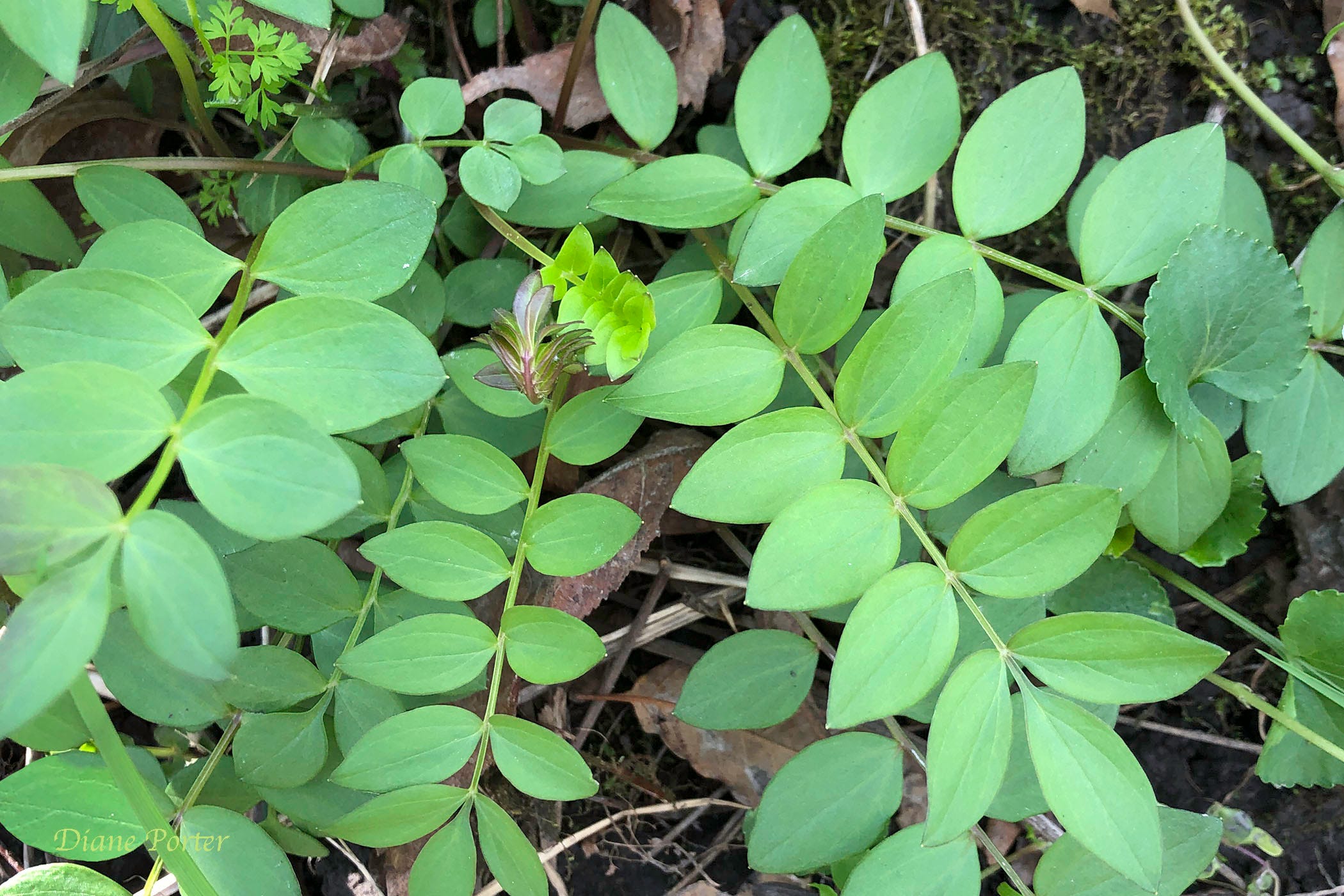
I loved the little blue flower on sight.
Would it grow in my shady flower garden? I started visiting the plant almost every day, watching for the seeds. After the blossoms faded and the petals fell, the calyxes looked like miniature paper lanterns. Inside each lantern were several seeds, still green and not ready to be collected.


I enclosed one of the clusters in an organza drawstring bag while the seeds ripened. Good thing I did. One day I found the seeds had already scattered, but my bag had saved some for me. Those seeds founded the Jacob’s Ladders in my garden that I’ve enjoyed ever since.
Jacob in the woods
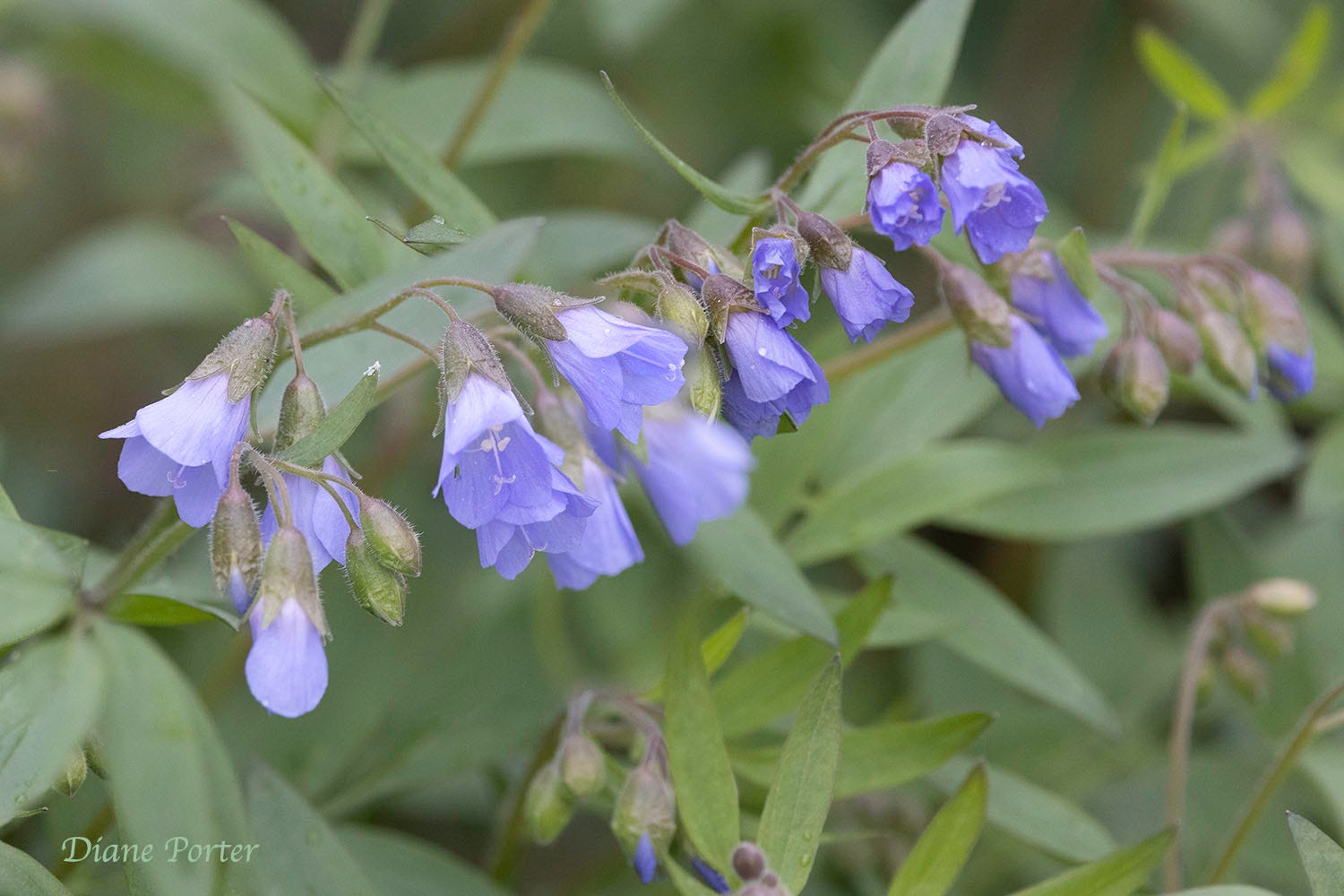
Jacob’s Ladder is a native plant of eastern North America woodlands. It flowers in early spring, taking advantage of the strengthening sun before the trees leaf out and claim all the light.
Jacob in the garden
Unlike many spring-blooming wildflowers, Jacob’s Ladder’s leaves stay green all summer, given enough water. It’s wonderful for a shady garden, because it doesn’t leave a gap when the flowers are finished.
Who doesn’t like it?
Mammals. Many treasured native plants have fared ill at the teeth of deer and rabbits. Not Jacob’s Ladder. While there is no guarantee that any plant is immune, Jacob’s Ladder is still standing on mornings when other garden plants have been grazed to the ground.
Who does like it?
Bees of many kinds visit when the Jacob’s Ladder is bloom, including bumblebees. A native bee, Andrena polemonii, specializes in flowers of this genus (Polemonium). If you grow Jacob’s Ladder, you could be doing your bit to preserve biodiversity by feeding a bee that depends on a small number of closely related plants.
What does Jacob like?
If Jacob gets these three things that it loves, it’s a wonderful garden flower.
Protection from weeds. Jacob’s Ladder appreciates having the weeds cleared around it. It’s not aggressive, and it shrinks from competition.
Water. With sufficient water, the leaves stay green all summer and into the fall.
Shade. Jacob’s Ladder thrives in partial shade from mid spring through summer.
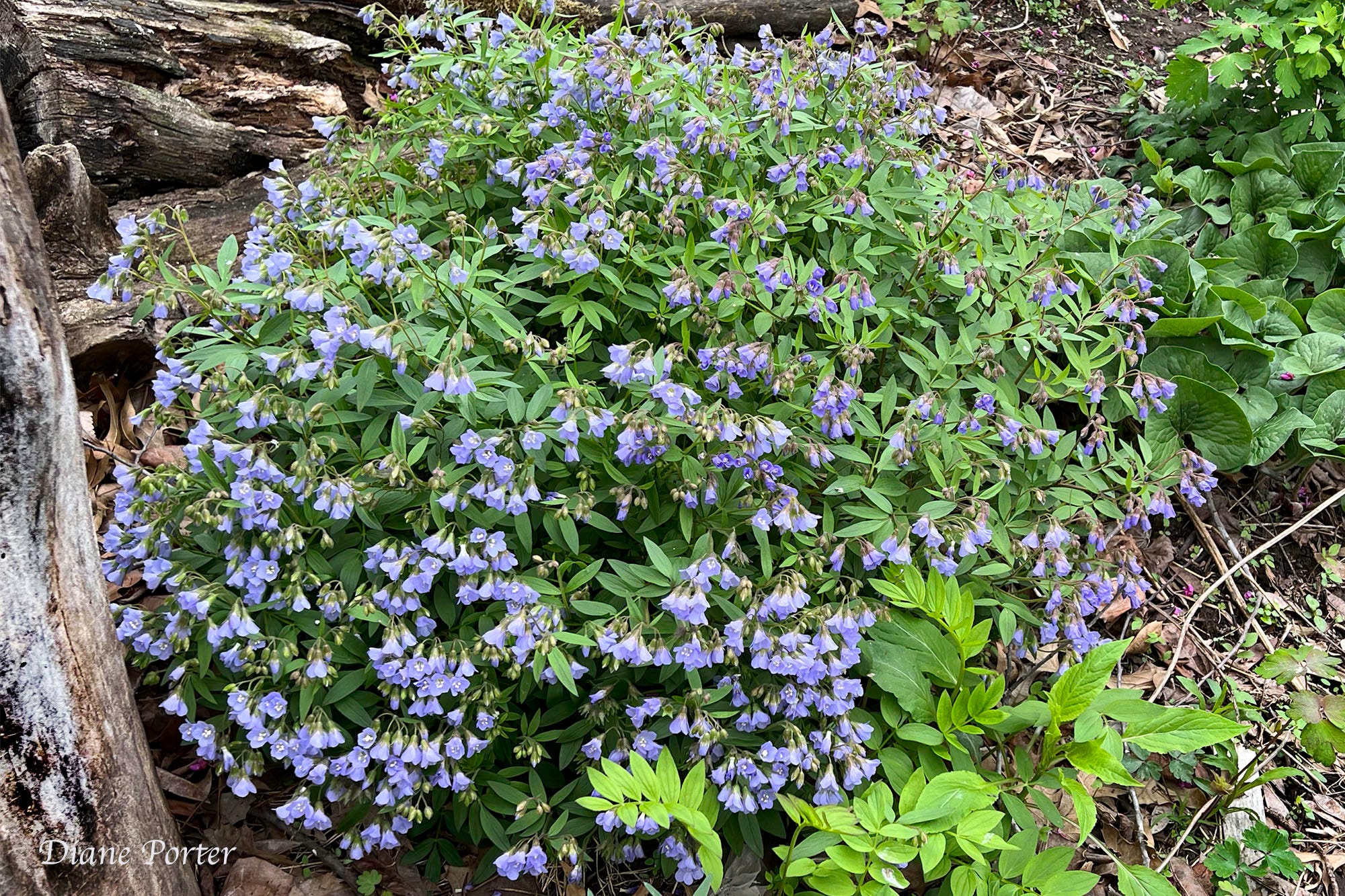
It’s easy to grow, starting with seeds. Once established, a colony will slowly expand. Collect some seeds, and you can bestow Jacob’s Ladder on your friends.
Whence the name?
In 1597, John Gerard, a London barber-surgeon and garden superintendent, published a massive book that was rather like a modern field guide: Herball or Generall Historie of Plantes. One plant he named Jacob’s Ladder (Polemonium caeruleum), because its paired leaves looked like a ladder and put him in mind of the Genesis story of Jacob climbing a ladder to heaven.

He described the leaves: “leaues set vpon a middle rib one against another…paired leaflets along the rachis… like the rounds of a ladder.”
When the closely related American version of the plant (Polemonium reptans) was discovered and classified a century and a half later, the name Jacob’s Ladder was applied to it.
I find myself addressing the plant simply as Jacob.
There's a. lovely song, probably called "Jacob's Ladder". Lyrics begin: "We are....climbing....
Jacob's Ladder. We are...climbing.....Jacob's....ladder. etc. Soldiers of the cross. Every
step goes higher, higher....." I believe it's a Spiritual. Anybody,
out there, do you remember singing this? Cecilia Riddell
Yes, what a sweet relief to read about this lovely plant with the biblical name, gives a sense of peace. Reminds me of the prayer plant I brought from Fairfield to Carmel, that sits on our kitchen table. As the leaves unfold they show a pattern like praying hands, coming together.