

All summer long, Indigo Buntings sang from Iowa treetops. Now they’ve become quiet. Fall migration is underway. But they’re still in our backyards and parks.
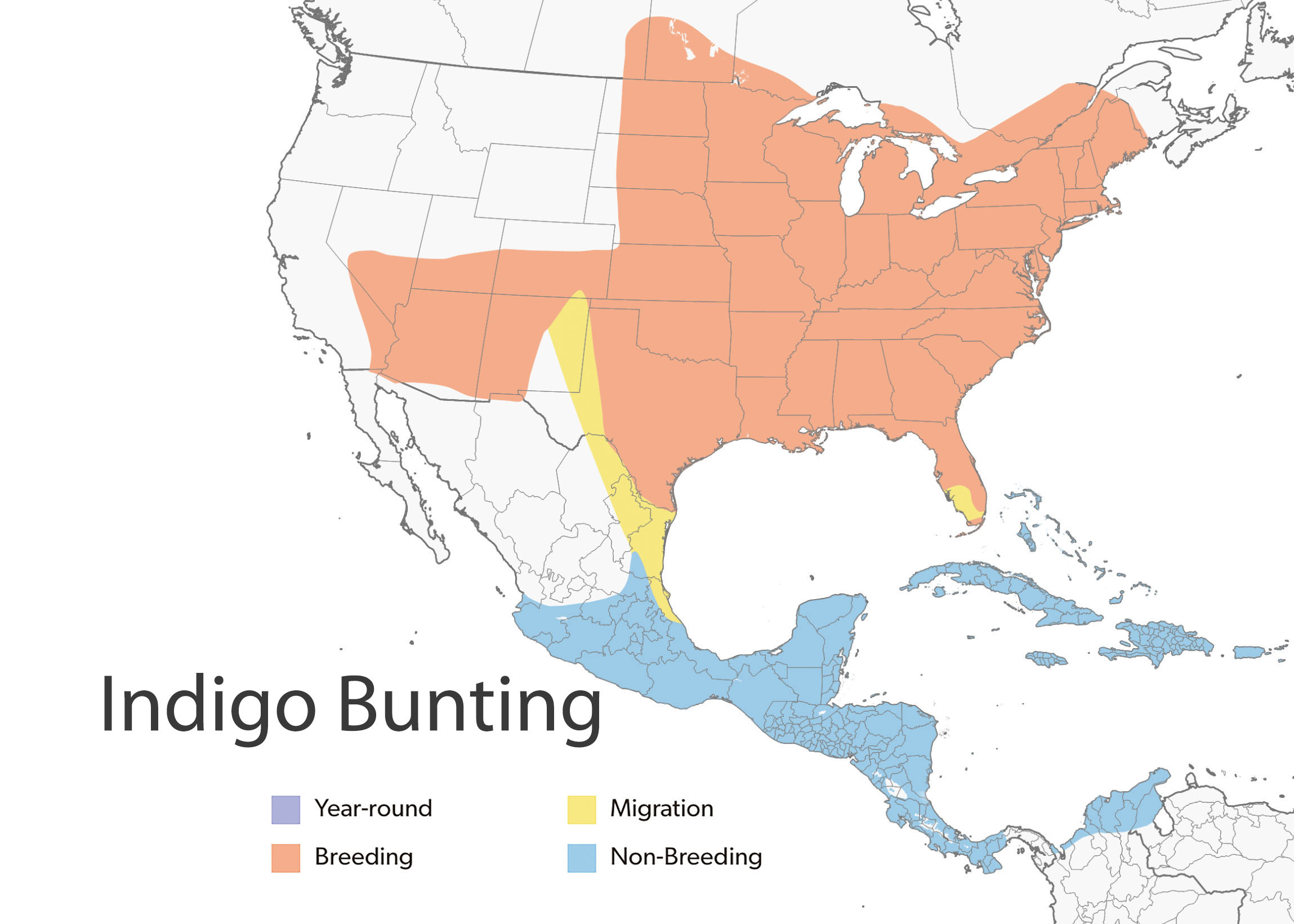
The ones we see now are probably travelers, just passing through. They will spend the winter in southern Mexico, the Caribbean, and Central America.
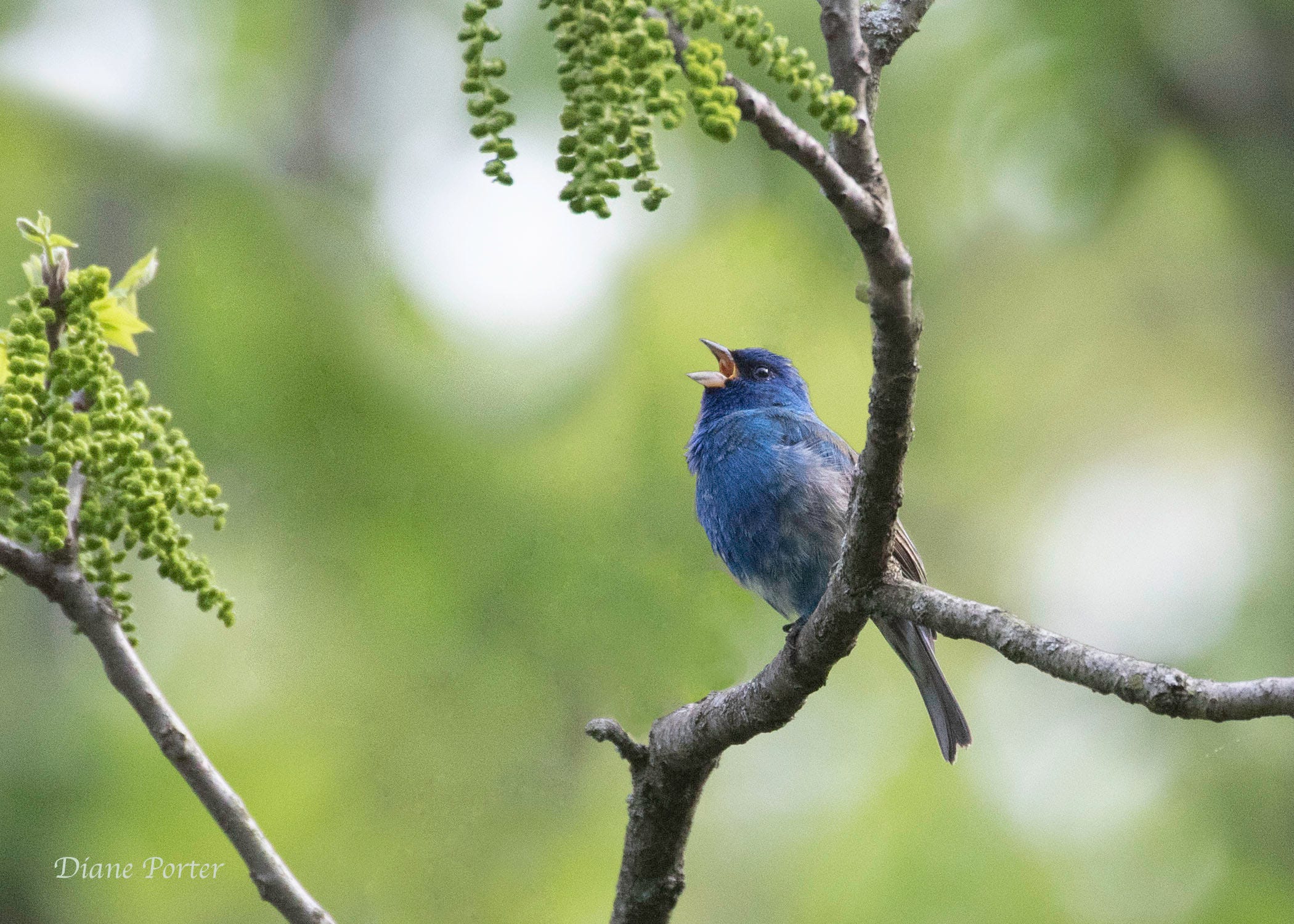
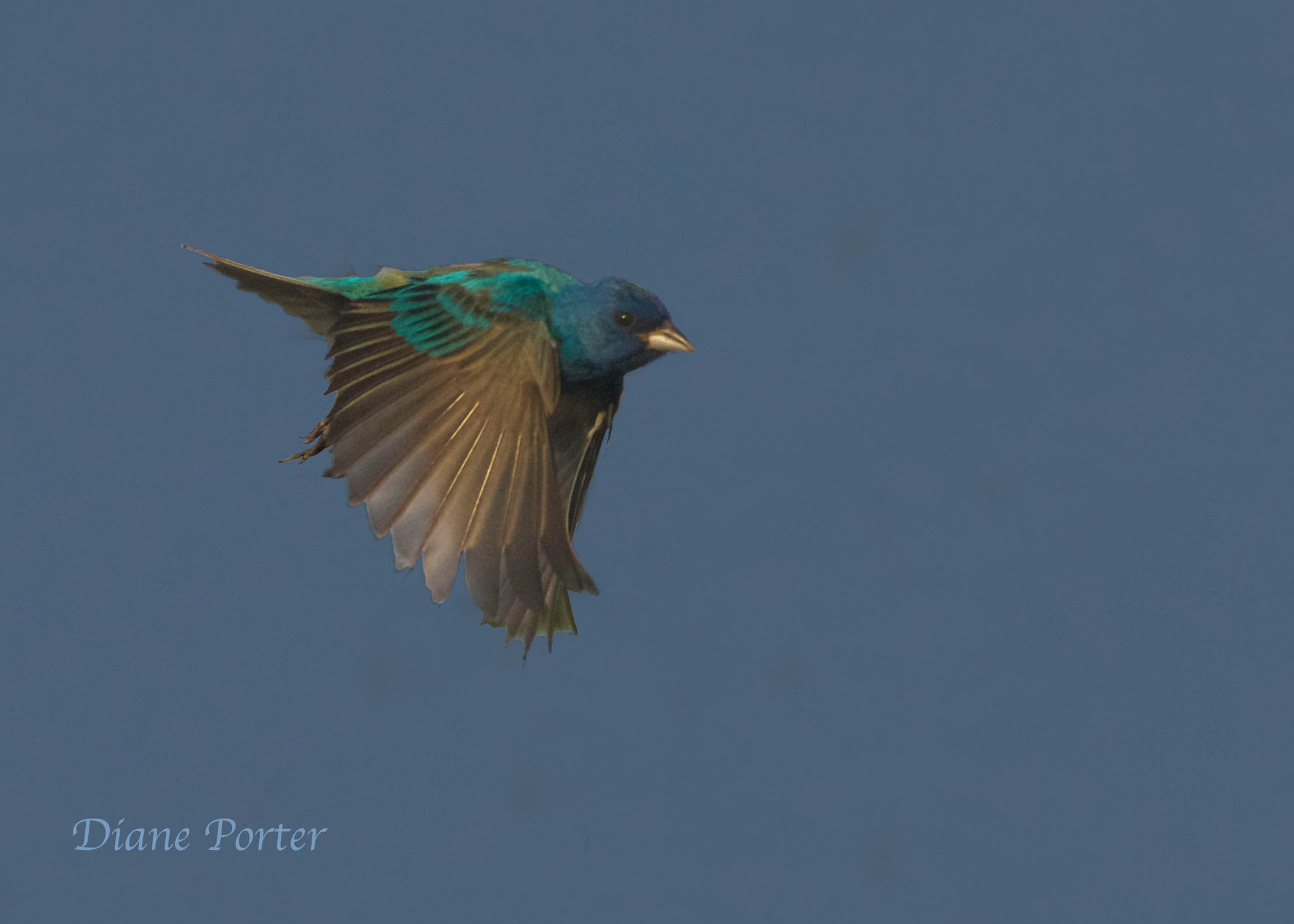
Indigo Buntings migrate only at night, to avoid being caught by predators. When they reach the Gulf of Mexico, they may have to wait for favorable weather.
Then one evening as darkness falls they fly across 500-600 miles of ocean. It is a nonstop journey of 15-20 hours. Scientists long have pondered how birds find their way.
Babes on their own
It’s remarkable that any birds can navigate such a journey. It’s doubly surprising that Indigo Buntings can do it the very year they hatch.
They do not learn the route by following experienced birds. The adults depart for the south as soon as they’ve raised their babies. The young remain behind for another month or so, putting on fat and developing their strength. Then one night they take off and head for Central America. It is their first migration.
They go it on their own. In the dark.
Bird navigation
The world’s birds use many navigation techniques for migration. Young Sandhill Cranes migrate with the adults and thus learn the route. Birds who migrate by day can also recognize land features, such as lakes and mountains, suggesting that they have a mental map. Many birds can orient by the sun, somehow accounting for and keeping track of its changing position over the course of a day.
Now we also know that Indigo Buntings and many other species are guided by the stars. They use the night sky as a map.
Learning the map
They learn to do it when they are still infant birds. Indigo Buntings nest near the ground, in tangled vegetation. When the hatchlings open their eyes, they start watching the sky, as revealed in studies by Stephen Emlen in 1967.
The nestlings notice that some stars move slowly, tracing a short, tight arc in the sky. Others follow a much longer path in same night.
The area where the stars move the least is near the Pole Star. Due north. The little birds memorize the pattern of stars around the still point. That point will be the birds’ lodestar, for all the migrations of their lives.

But what if clouds form, and the stars disappear from view while the birds are flying over the Gulf of Mexico? They can’t land and wait until the next night. They are committed to keep going, in the correct direction, or fall into the ocean.
Seeing earth’s magnetic field
There is an additional method of bird navigation, magnetoreception, which some birds who migrate at night use in addition to their star map. A theory on how it works is still in development but is now gaining scientific credibility. (See scientific article.)
Indigo Buntings perceive the Earth’s magnetic field. This is thanks to special molecules, cryptochromes, in the retinas of their eyes.
Cryptochromes enable birds to sense the earth’s magnetic field. That helps them recognize where they are on the planet. With that knowledge, Indigo Buntings can continue in the right direction even when the stars aren’t visible.


Where Indigo Buntings live
This map by the Cornell Lab of Ornithology shows the winter range in blue, the breeding range in orange, and yellow for the areas where the species is seen in migration. Most migration takes place across the Gulf Coast, but some birds follow an inland route.
I like to imagine a nest of baby Indigo Buntings, peeking out from beneath their mother's soft feathers to drink in the night sky. I am filled with awe for a young bird in fall, taking its bearings from the stars as it begins its first migration to a land it has never seen.
Next spring, relying again on its internal astronomy and ability to see things hidden to us humans, it will return.
I trust I’ll hear its bright song of doubled notes from a treetop at the edge of the woods near a small town in Iowa.
Fascinating! I wasn't familiar with the word lodestar, so I looked it up. What's so interesting is that Lodestone is another name for the mineral Magnetite, which has natural magnetism and is found in the brains of migratory animals. It's one clue as to how they navigate using the Earth's magnetic field.
Buntings are fabulous birds. I have seen the indigo and the painted.