

It’s a white lichen that looks like pastry dough, rolled out and sprinkled with powdered sugar. Hoary Rosette lichen.
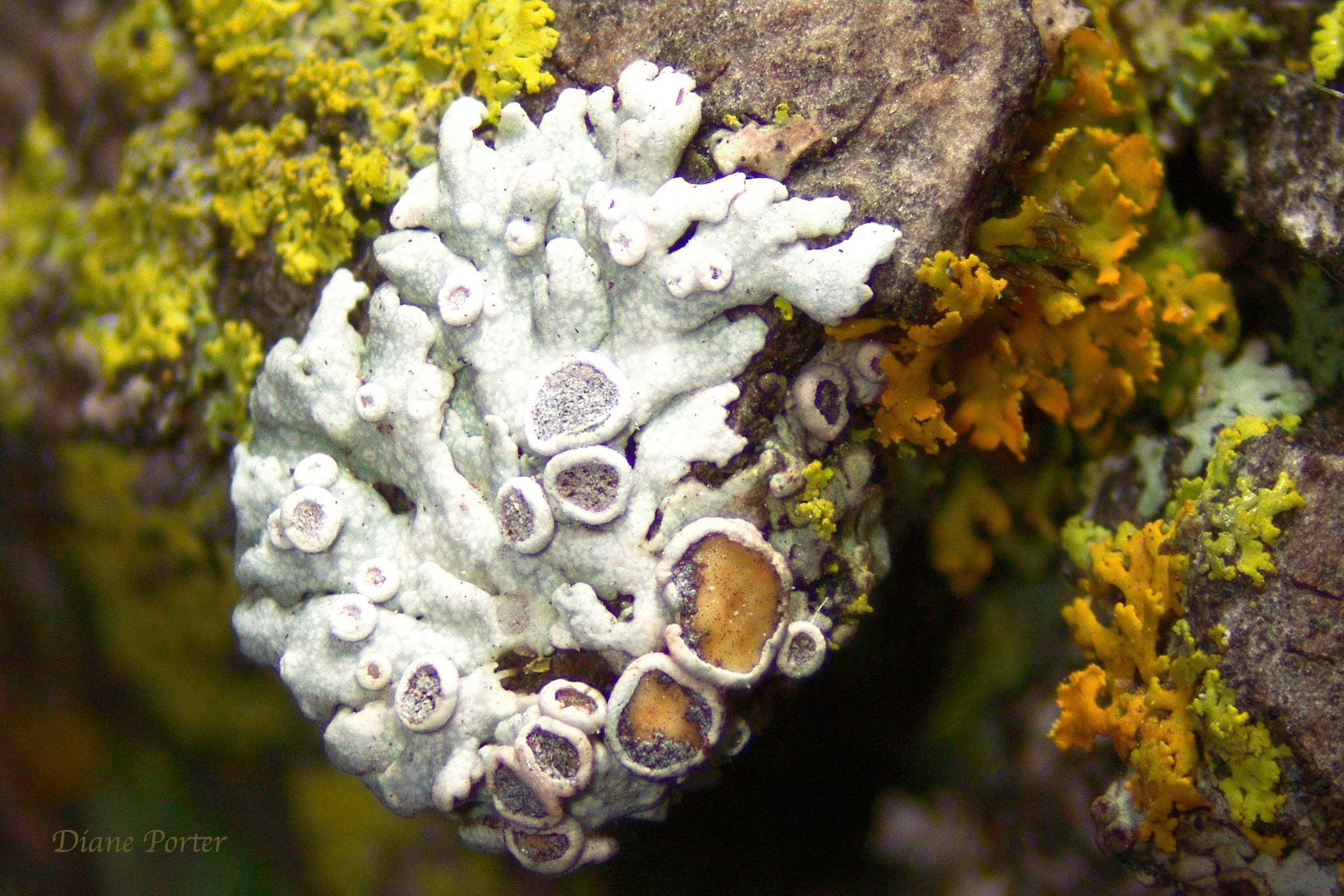
Hoary Rosette lichen grows mostly on bark. I find it on tree trunks and fallen twigs in the woods near my Iowa home. It stands out against darker, more colorful lichens around it, making it easy to spot.
As it grows, chalky-white lobes spread outward, forming a circular patch, a sort of frosty-looking rosette.
Being close
A lichen is alive, but it’s different from an animal, plant, or fungus. A lichen is not one single individual. Each is a partnership of at least two, living together in one body. One partner is a fungus. The other is a collection of tiny photosynthetic beings that make food from sunlight. This partner, usually green algae, is called a photobiont (photo - BUY - ont). The photobiont uses sunlight, water, and carbon dioxide to make sugars.
The fungal partner is the part we see. It gives the lichen its shape and heft. Its body is made up of microscopic threads, packed together. The other partner, the photobiont, lives inside the fungus, tucked in among those threads. The two partners are inseparable. They cannot live without one another.
Seeing inside
When I put a piece of a Hoary Rosette lichen under the microscope, I noticed a broken lobe. Focusing on the raw edge, I saw a layer of green dots just under the skin-like surface. In a flash of recognition I realized these green dots must be the lichen’s photobiont!
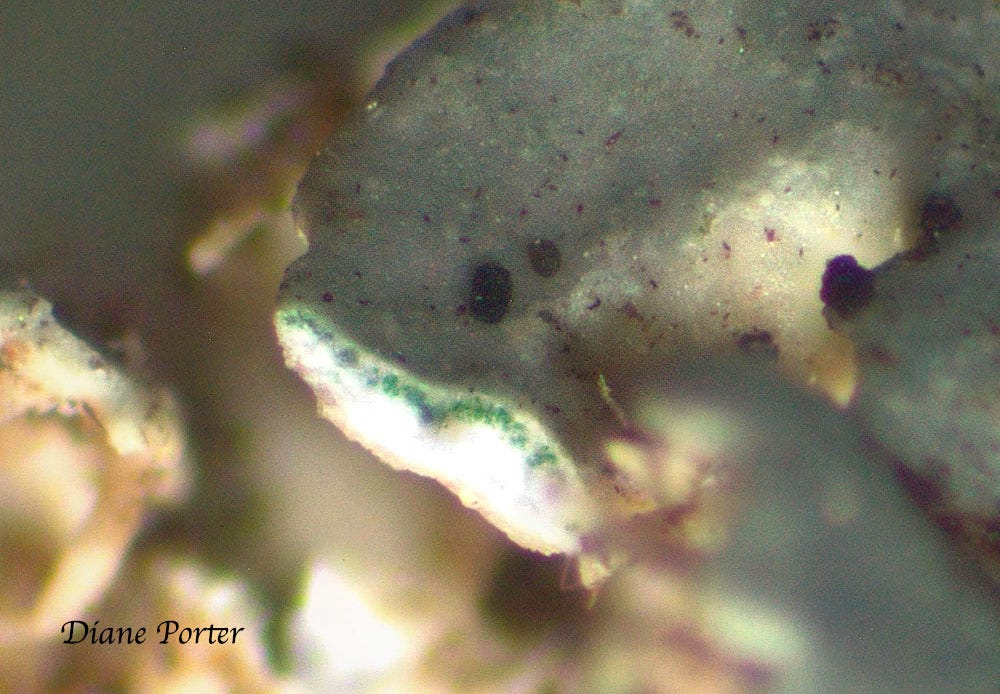
The algae was a layer of tiny, distinct packages. Sunlight would have only to penetrate the skin-like covering to reach the algae. Then the algae could work the magic of photosynthesis and create sugars to feed both itself and its fungal partner.
The fungus is in intimate contact with each speck of algae, absorbing most of the sugar as the algae makes it.
Lichen eats its greens
When dry, Hoary Rosette is pale gray or white, like frosted glass. When it gets wet, it turns green. This happens within seconds. If you happen to be looking at this lichen as the rain begins, you can watch it turn green.
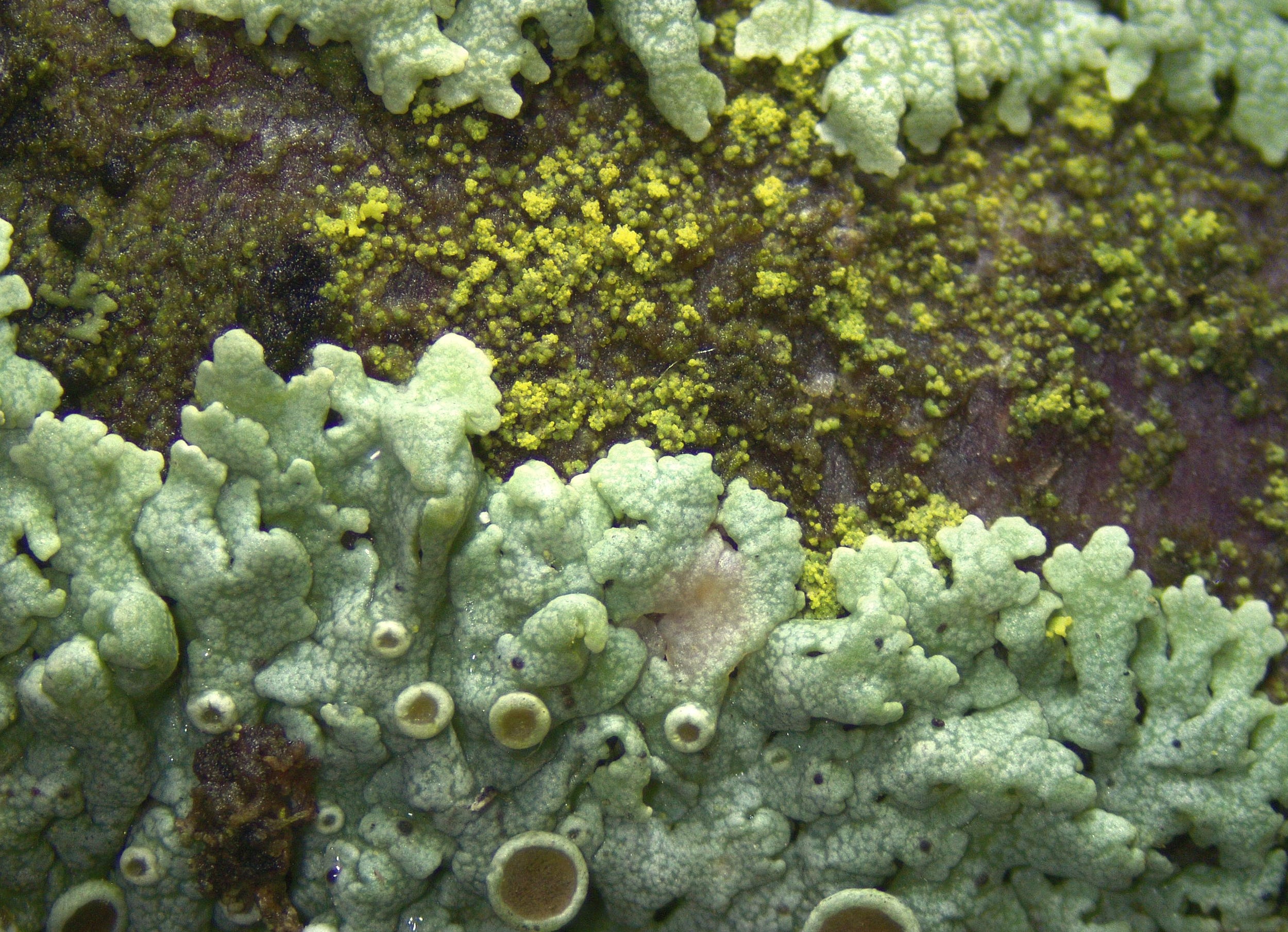
What’s happening is that the top layer of the fungus becomes translucent when it gets wet, and we can see the algae inside. As the sunlight reaches it, the algae start photosynthesizing like mad.
Hoary Rosette is mottled. When it’s wet, the darker green bits show where the algae packets lie just under the skin. The lichen’s speckled nature is also visible when dry, but less noticeable.
The two
The fungus and the algae each have their own, separate DNA. They’re as different as a poodle and a rosebush. But they need each other. The algae could not survive unsheltered in the air. The fungus needs a source of nutrition. The two combine to make something that can live where neither one could exist alone.
Scientific name
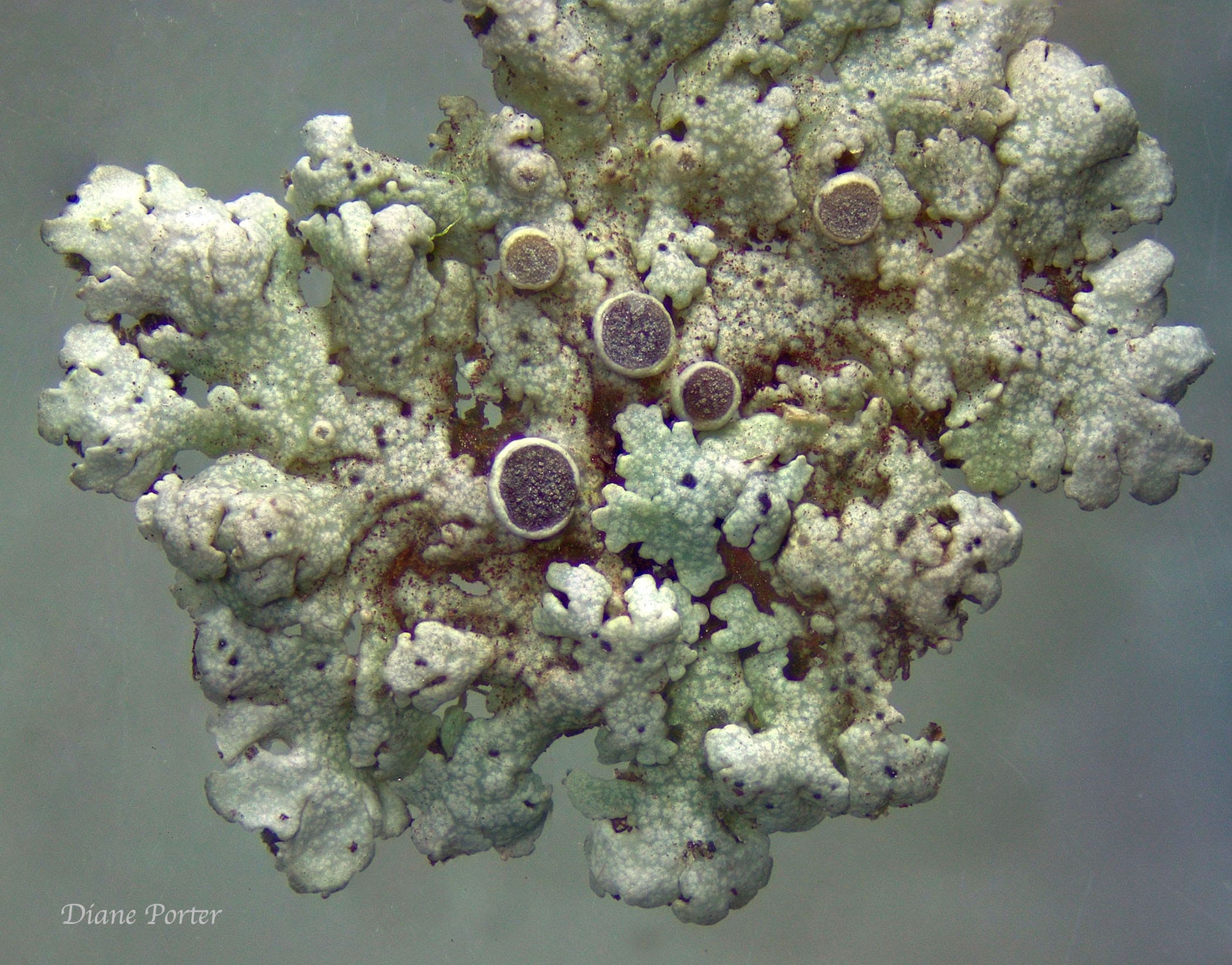
This lichen’s scientific name is Physcia aipolia.
Pronounce it like this:
FISHy - ah
Eye - POH - lee- ah
For myself, I think of it as Pastry Dough lichen.
i am reading “entangled life” by merlin sheldrake. it is an incredible journey through the lives of fungi if you haven’t read it…thanks for your writing and photographs.
Marvelous! A forest ranger taught us this little mnemonic: Freddie Fungus and Alice Algae met and took a “lichen” to each other. 🥰