

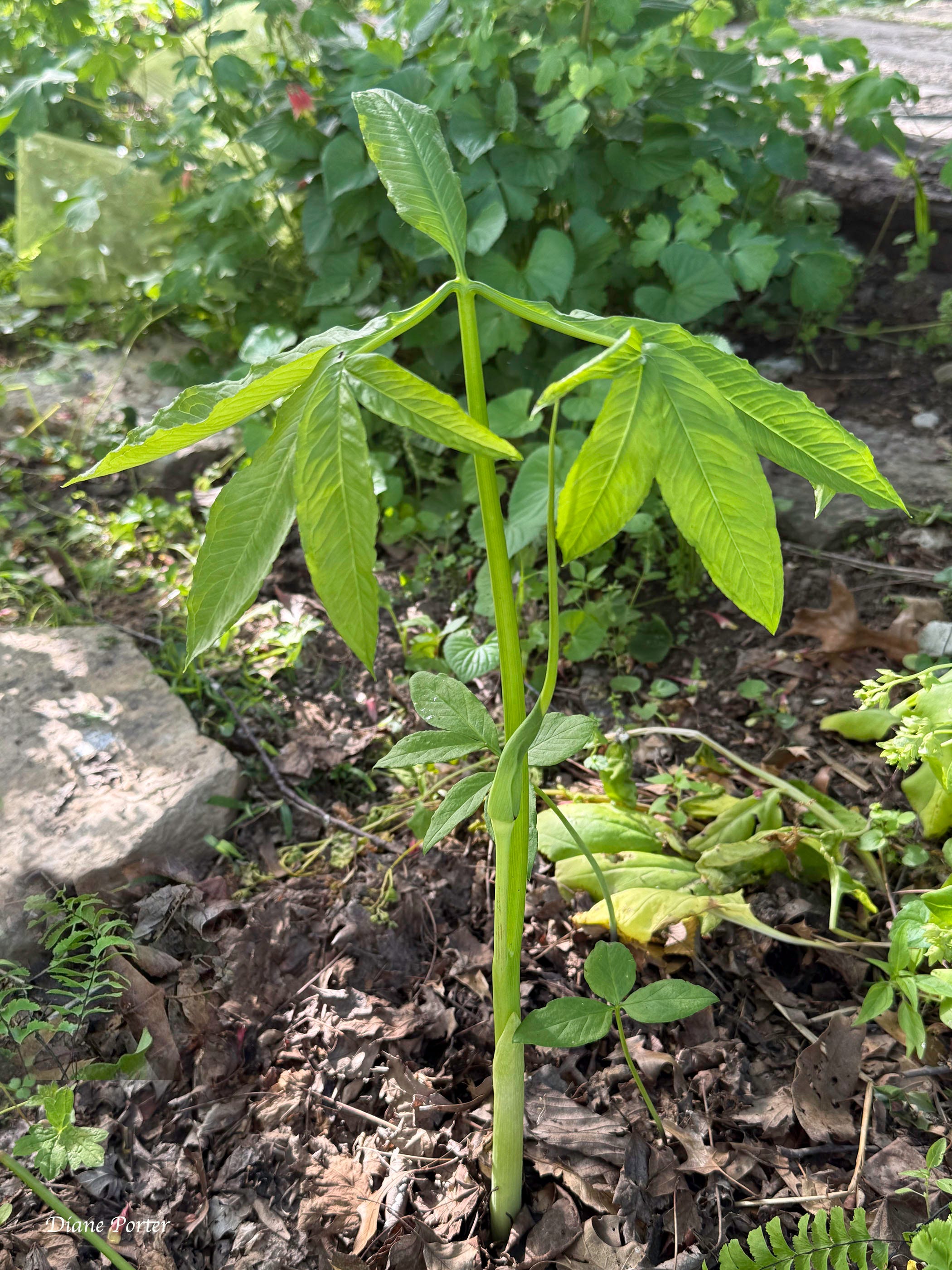
The Green Dragon has lurked in my shade garden for years. It hibernates underground in winter. In spring it blends into the forest shadows. Its color offers so little contrast to its surroundings that a person could walk right past, unseeing.
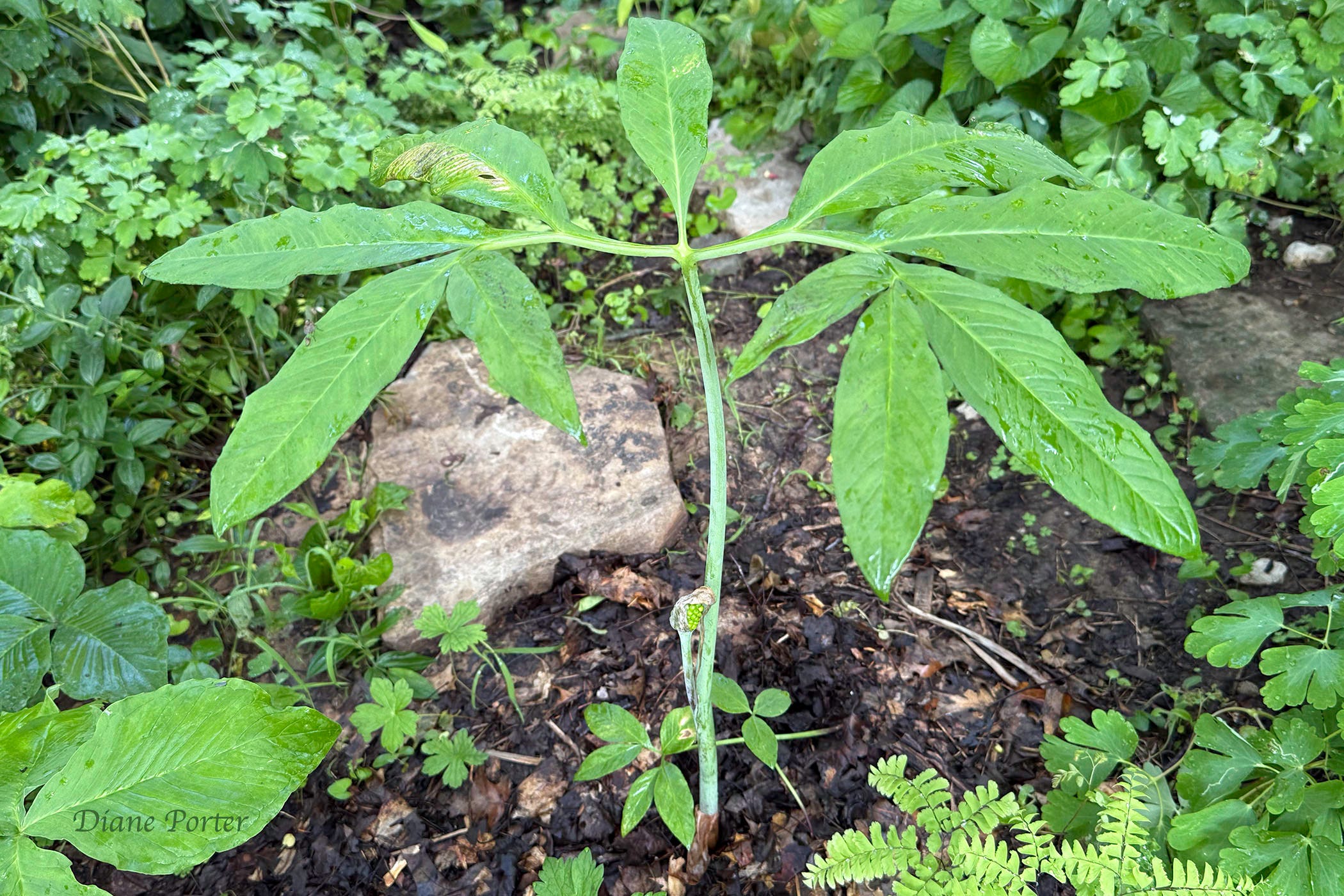
Nine years ago, a friend sent me some seeds she collected in her southeast Iowa forest. Formerly, Green Dragon must also have lived right here in what is now my woods, but I had never seen one. I wanted to bring it back.
Awakening dragon
Coming up in spring, the Green Dragon first holds its leaflets close to its sides, compressed and rolled lengthwise, as if to avoid being noticed. I think of a mythical beast creeping up from its lair.
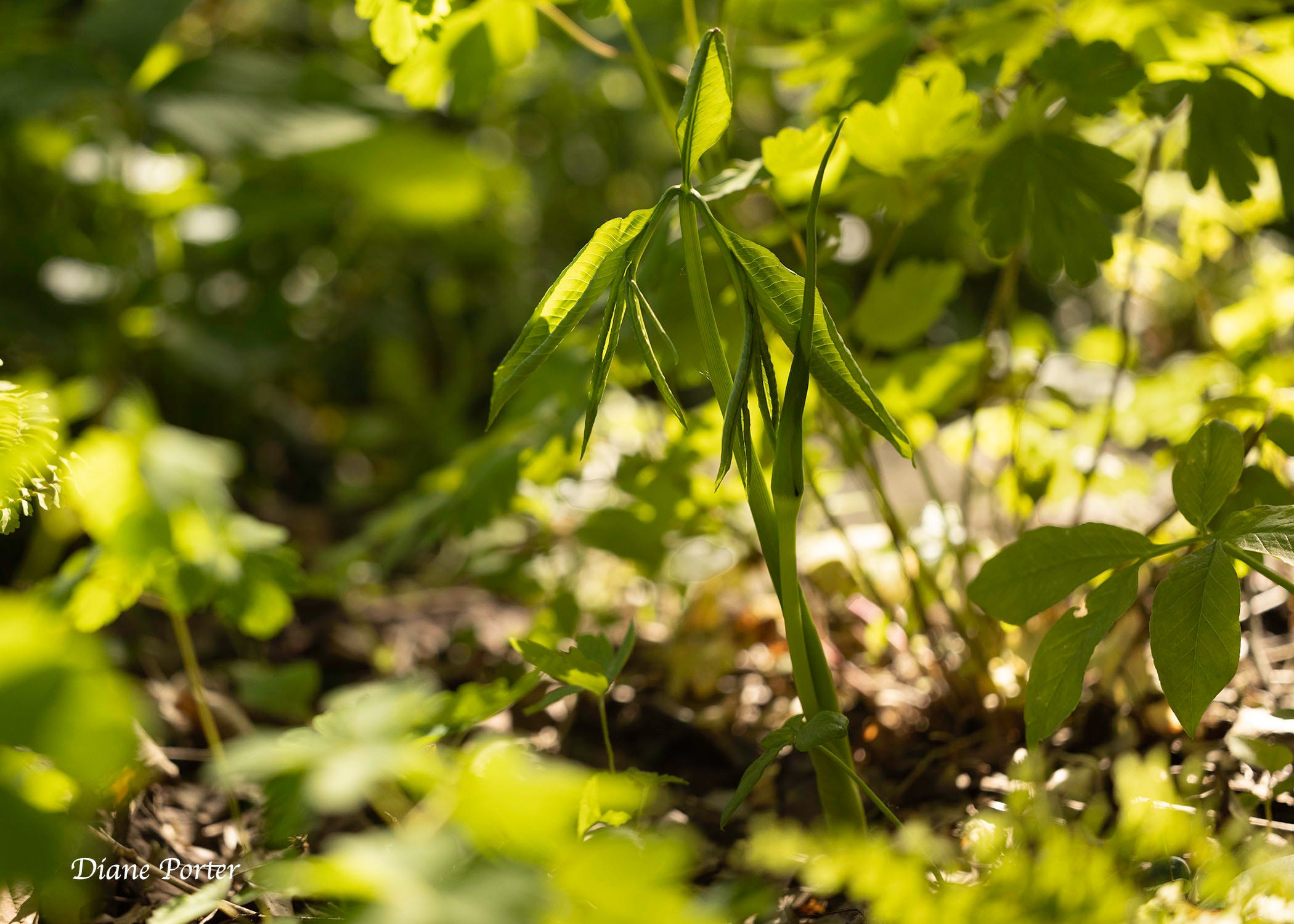
Over a few weeks, the leaflets raise themselves up and separate, until they’re level and parallel to the ground. A full-grown dragon may reach knee high, looming over its shorter forest neighbors.
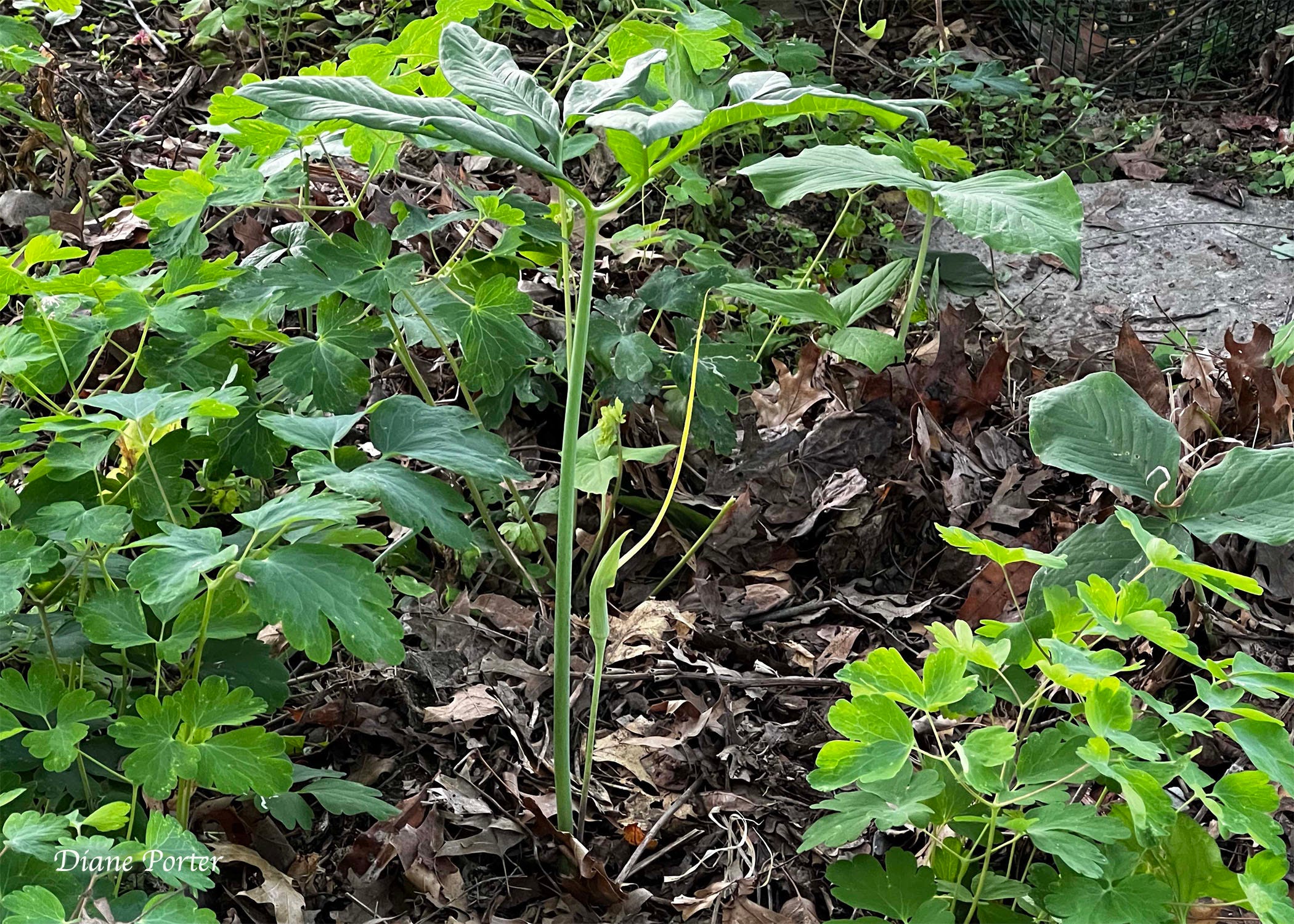
During a Green Dragon’s long infancy, it makes no flowers. For several years, it slowly builds its strength. Eventually it produces a single flowering shoot. There are no bright colors. It doesn’t even look like a flower.
Spathe
An odd structure rises alongside the main stalk. It looks something like a hoodie with a pointed top. Botanists call the hoodie a spathe. The spathe wraps around a spike of miniature flowers, concealing them inside.
Spadix
Inside the spathe, the flower spike is crusted with small blossoms. Above, the spike thins and extends upward like a curving needle for another ten inches or so. This part is bare, without any flowers. Botanists call the spike a spadix, which includes both the part covered in flowers and the naked extension. Its function is a question for speculation.
Hidden glory
Some of the uppermost flowers may peek out where the spathe wraps around the spadix, like a vest partly showing under the lapels of a coat.
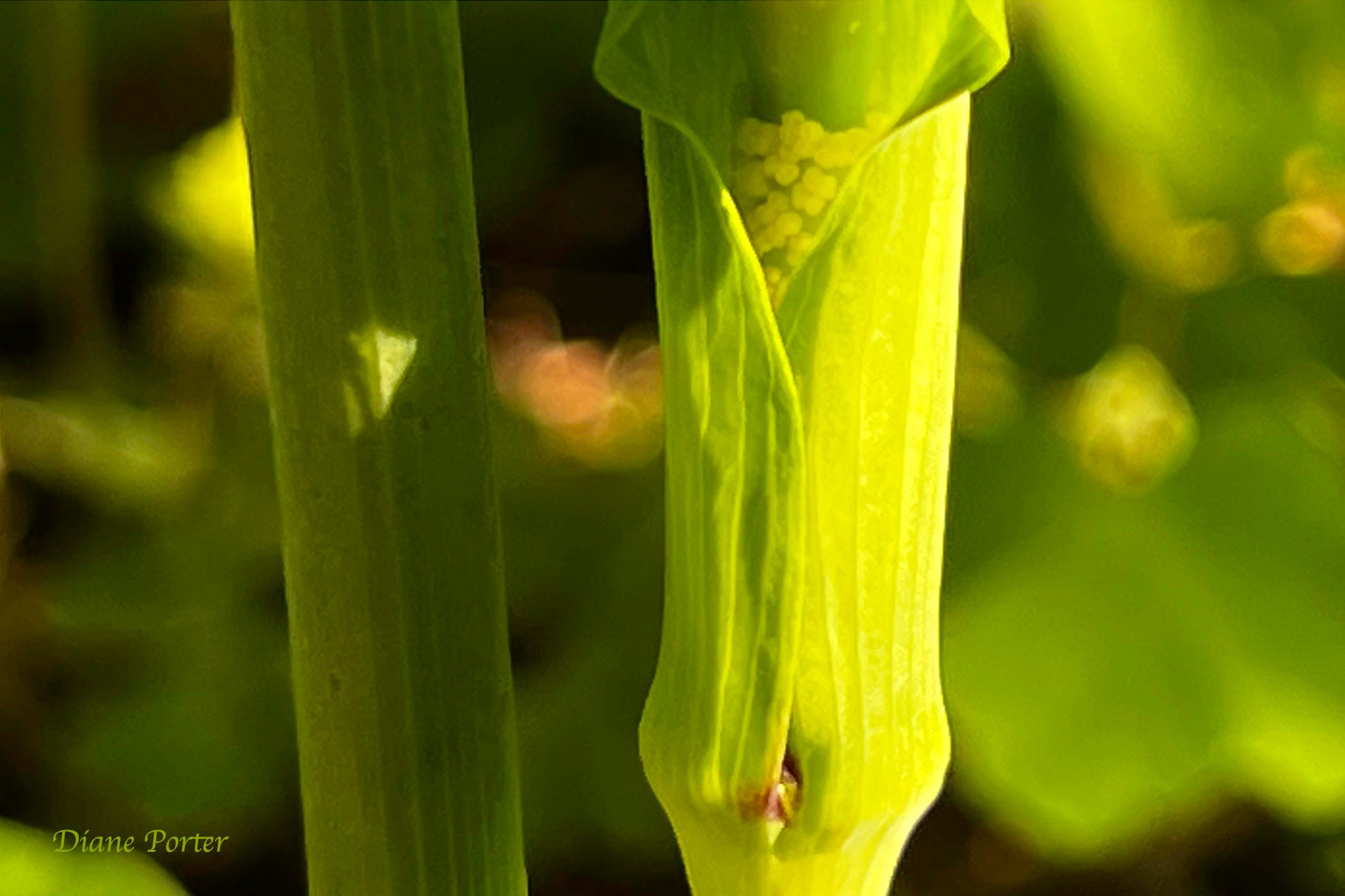
In some Green Dragons, near the bottom of the spathe is a small hole. The hole provides an exit for gnats who have found their way down into the spathe. While crowded in there with the flowers, gnats get smeared with pollen. If they are lucky enough to escape through the hole, they may enter another Green Dragon’s spathe and deliver pollen there.
Growing the green one
My friend’s seeds germinated the following spring in a nursery box protected from rodents. Each plant made only a single leaf the size of my thumbnail that first year. Soon the leaf withered, as do most spring-blooming woodland plants. Down in the soil, a small corm conserved each plant’s life.
To my relief, the Green Dragons emerged again after the next winter. Over the years, they slowly grew larger and produced more leaflets.
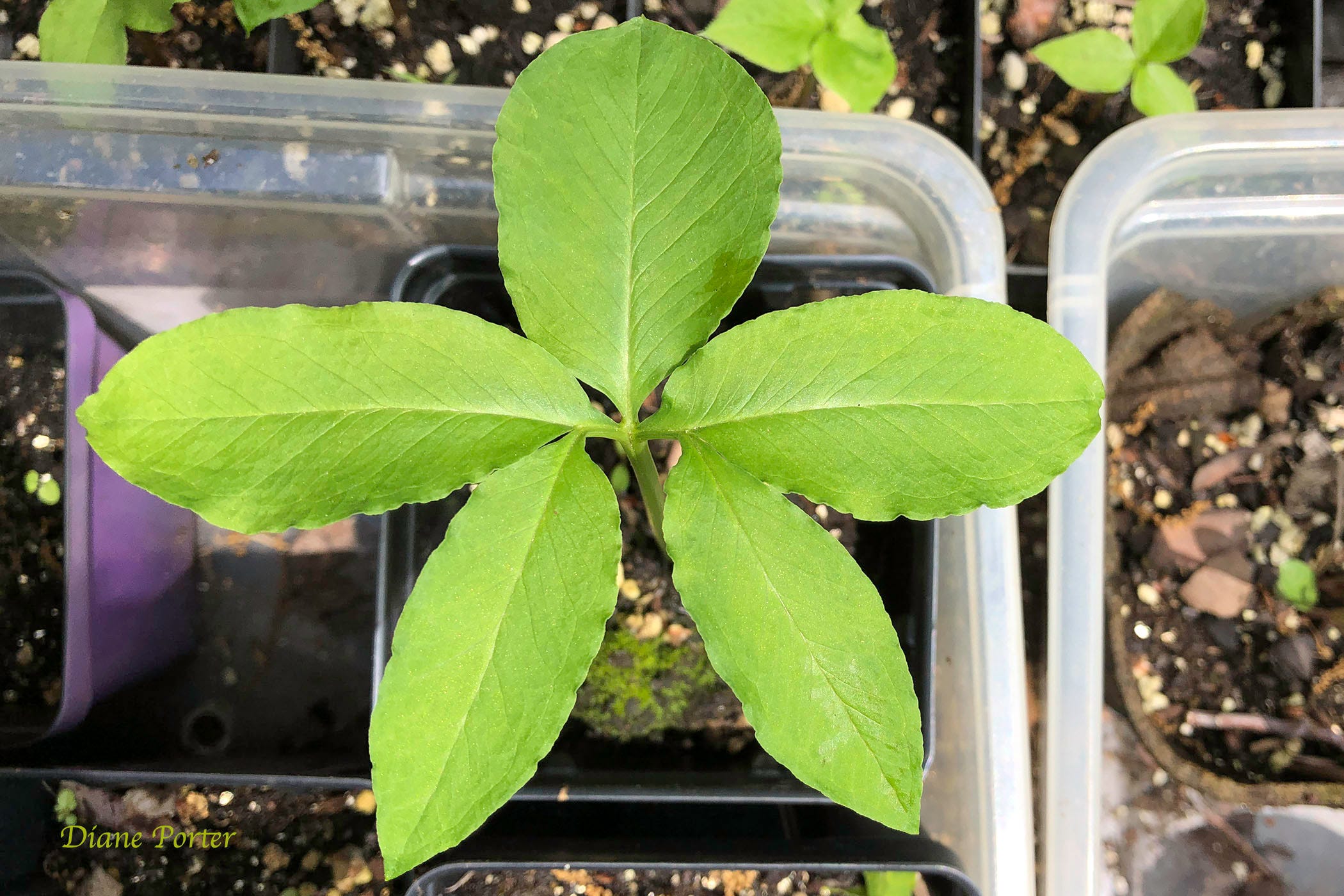
At four years old, my biggest plant had five leaflets. I settled it, along with its somewhat smaller siblings, into my shade garden. Each spring, it rose green and grew a little taller than the year before. In summer it collapsed again into the brown earth, leaving no trace aboveground.
When it was seven, it formed a spathe and a spadix with a golden green extension, which stretched waveringly to the top of the plant. My hopes for seeds rose with it.
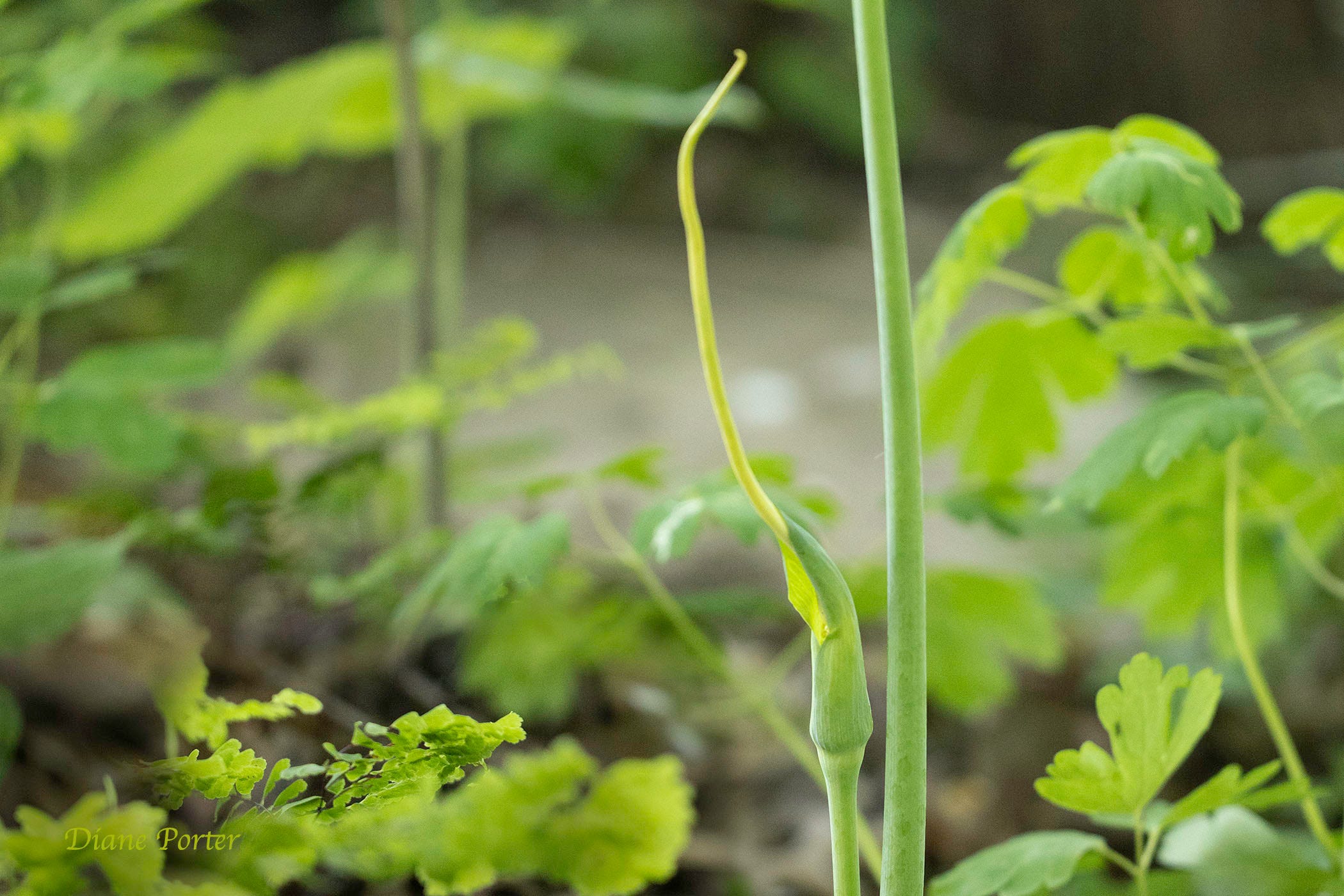
However, no seeds formed. It turns out that smaller Green Dragons have only male flowers. Although they can provide pollen to larger dragons, which have female flowers, they cannot make seeds themselves. The next year it was the same, with a flower spike but no seeds. I sighed and muttered, “Next year…”
This year, at age nine, that largest of Green Dragons has 10 leaflets, the most it has ever produced. A big dragon. And this time it is making seeds.
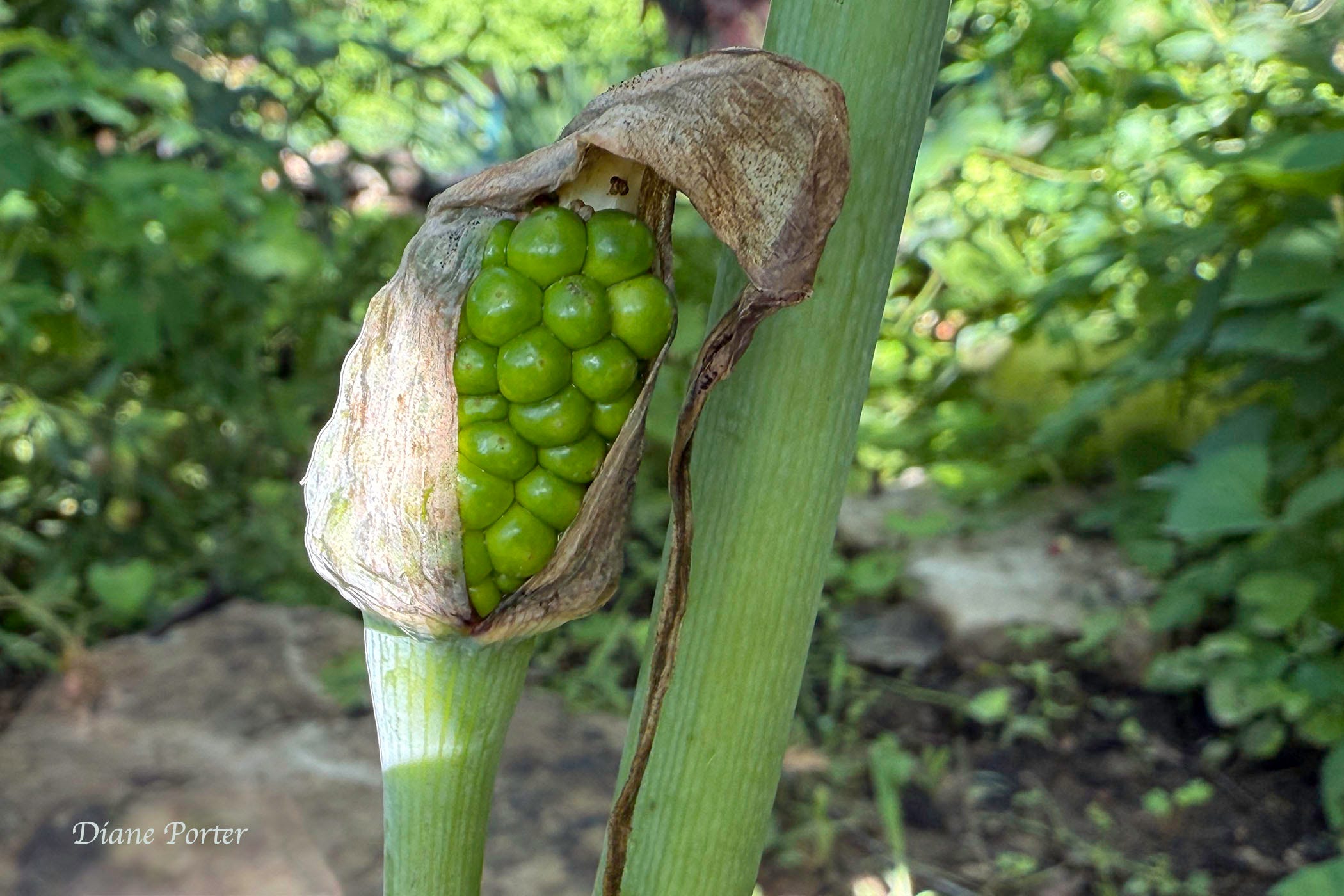
Green seeds bulge from the spathe. Each day they are a little fatter. By fall, they should be bright blood-red. The color will mean they are ready to collect. They promise me more Green Dragons. My woods await.
REFERENCES
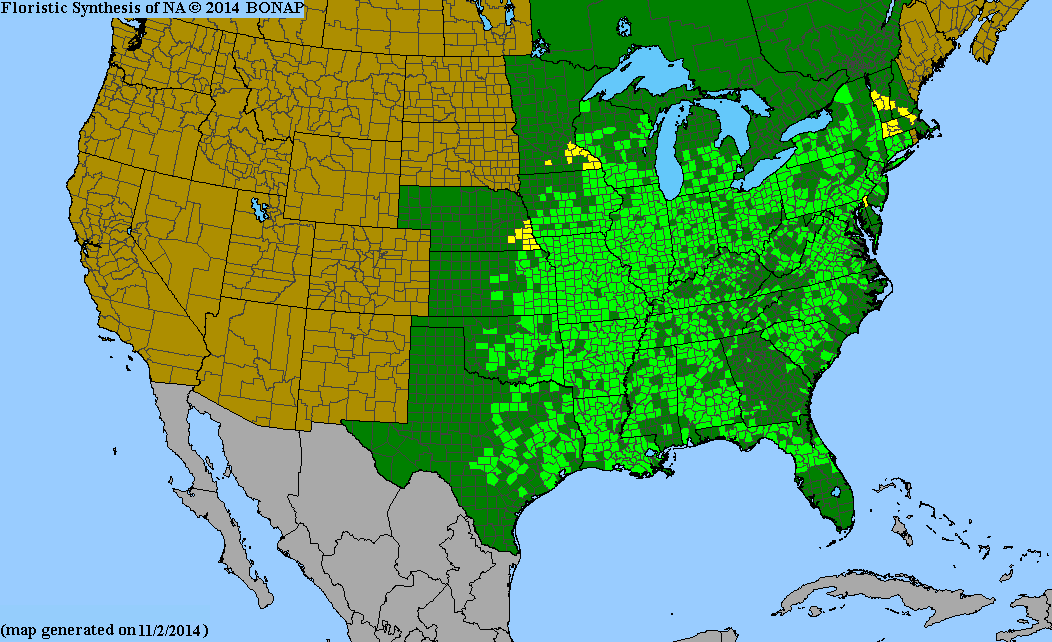
BONAP: Native range of Green Dragon, Arisaema dracontium MAP
Size-dependent Gender Change in Green Dragon (Arisaema dracontium; Araceae), Keith Clay, American Joumal of Botany 80(7): 769-777. 1993. Abstract of scientific paper
Sex-ratio variation among Arisaema species with different patterns of gender diphasy, Charles R. Richardson and Keith Clay, Plant Species Biology (2001) 16, 139–149. Abstract of scientific paper
If only we all had the patience of nature. I've never heard of this plant. Thank you for the great photos and story.
Congratulations on getting seeds this year!! What wonderful sight after your tremendous patience. What fun and excitement!!