

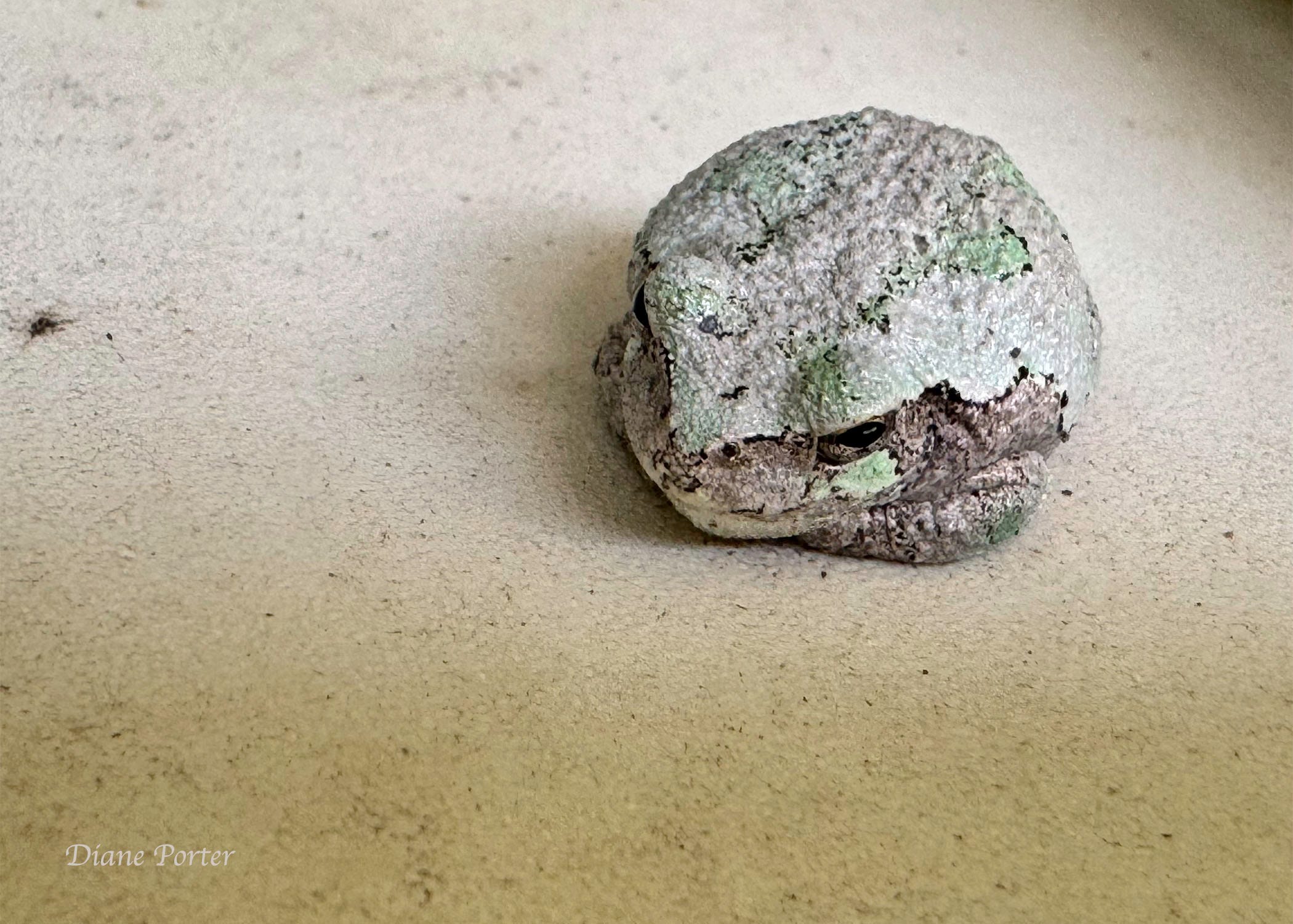
The little gray lump of clay on my potting table did not move, of course, because it was a lump of clay. When I lowered my eye to the level of the lump, I saw two eyes looking back at me from the face of a tiny treefrog.
Temperature control
Gray Treefrog is named for its gray color, but it is not gray all the time. It can change colors to manage its temperature. If the weather is chilly, gray is good for conserving heat.
Let a Gray Treefrog get warm, though, and its skin will probably turn green. The lighter color reflects heat away and helps the frog keep its cool.
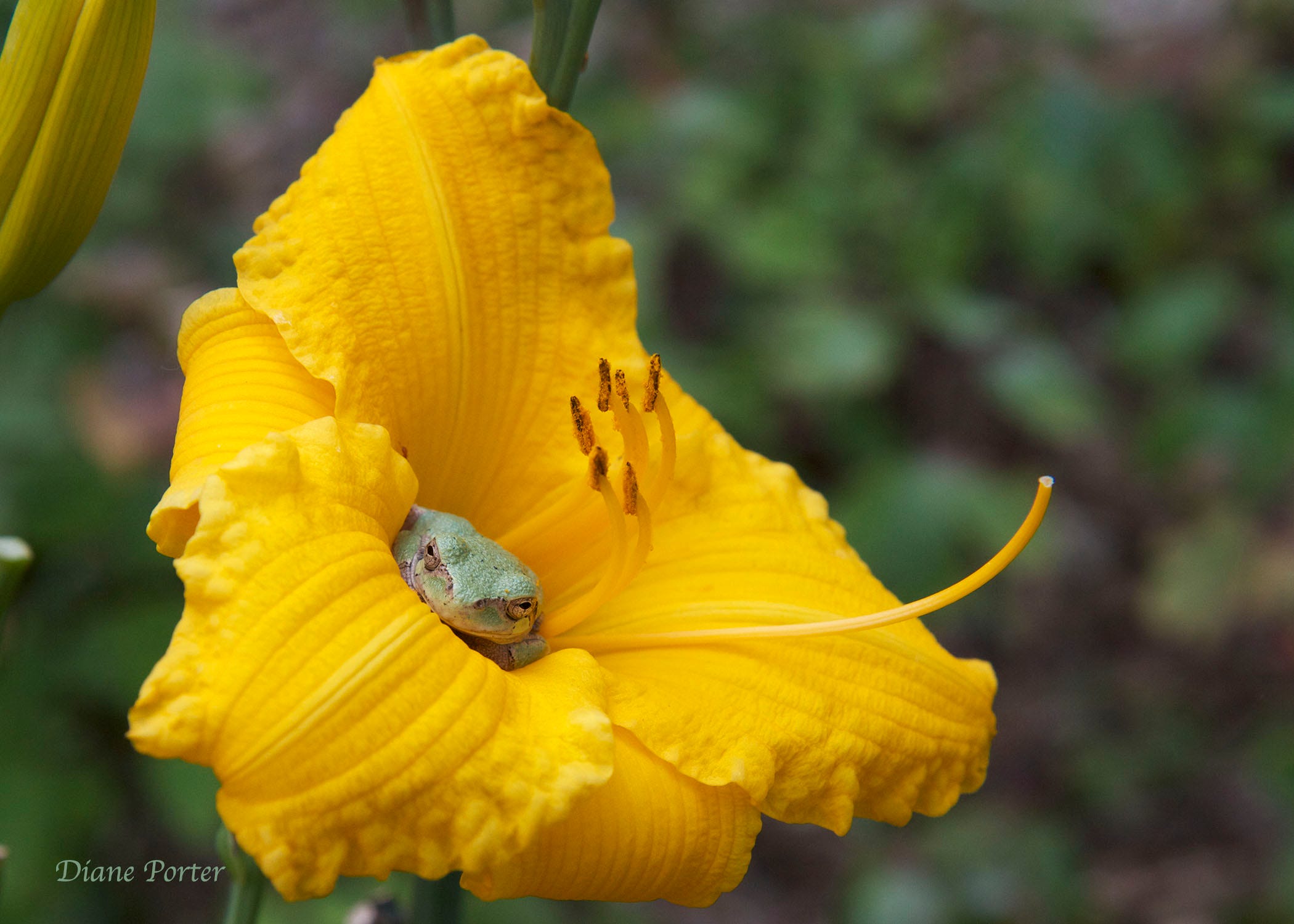
It pleases me that Gray Treefrogs don't seem afraid of me. In my garden, occasionally one lands on my hand with a cool slap. They accept living space among my plants, outdoor furniture, wall crevices, and even birdhouses.
Wherever they are, it is imperative not to become someone else’s lunch. Their defense: camouflage.
Camouflage
They can change their colors to blend with their surroundings. Last spring, I found a Gray Treefrog at the top of the door to my birdhouse.
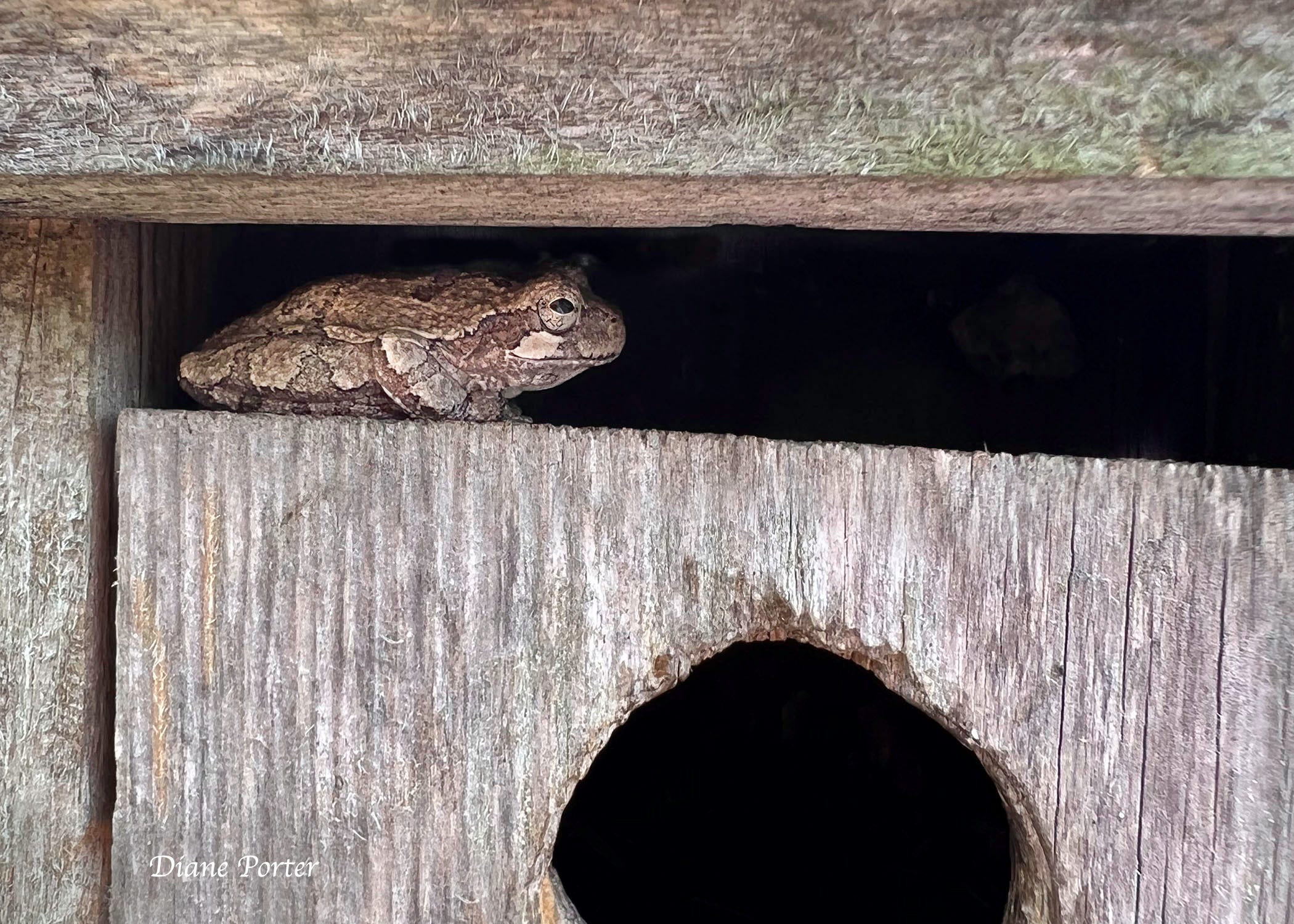
The frog’s brown colors were a pretty good match for the wooden environment.
Inside, a pair of Eastern Bluebirds were taking care of four baby birds. It seemed a good spot for the frog to shelter for the night. Maybe it got an early breakfast from any insects that dared to invade the nest. The bluebirds didn’t seem to object.
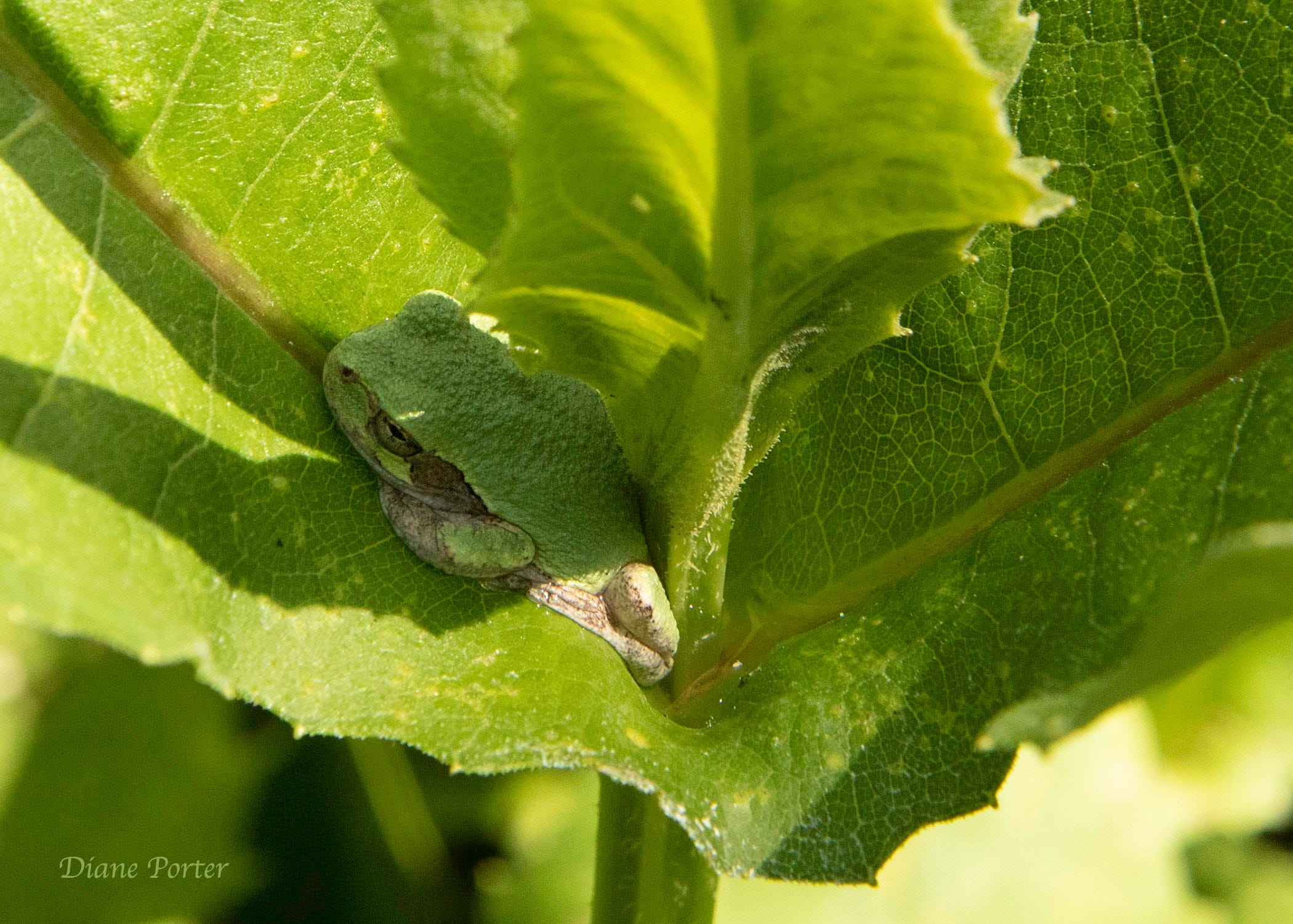
Gray Treefrogs spend most of their days on leaves. And for that, being green is a protection. So a treefrog perched on a green leaf is likely to go green.
Cup Plant
There’s a native wildflower, Cup Plant, that is a particular friend to frogs. Rainwater collects in the joints (axils) between the central stem and the clasping leaves. It may persist for several days, providing emergency water to birds and insects.
Finding a tiny pool of water in the Cup Plant, a parched Gray Treefrog scootches its hind end down into the dampness and enjoys a partial soak.


Gray Treefrog in winter
Unlike frogs who bury themselves deep underground or at the bottom of ponds, most Gray Treefrogs stay above ground throughout the winter. Some snuggle down under dead leaves or squeeze into cracks in tree trunks.
They do not sleep through the winter, as hibernating mammals do. They stay foggily awake but with all processes slowed down. They do not eat. They breathe barely or not at all. The state is called brumation.
Cold doesn’t kill them in brumation because they make a sort of froggish antifreeze out of concentrated glucose. This keeps their organs from freezing solid, even when they’re encased in solid ice.
At the end of winter, they revive...
And we meet again.
This is delightful! Thanks so much!!
What a photo!