

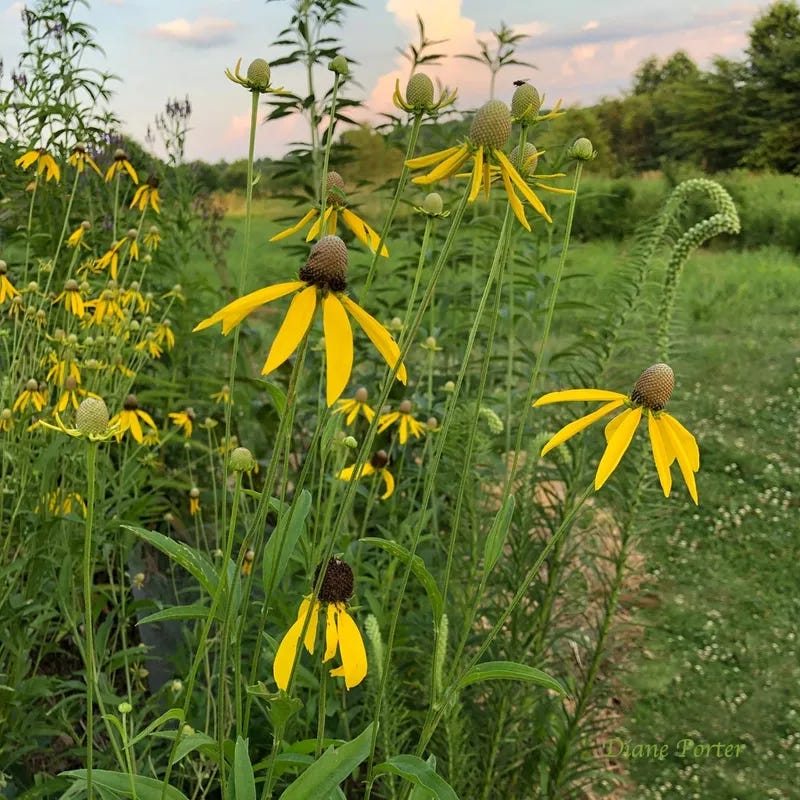
There’s a yellow wildflower that comes up every year and blooms right outside my kitchen window. It partly blocks the view of my flower garden. I didn’t plant it, and sometimes I wonder if it's in the right place.
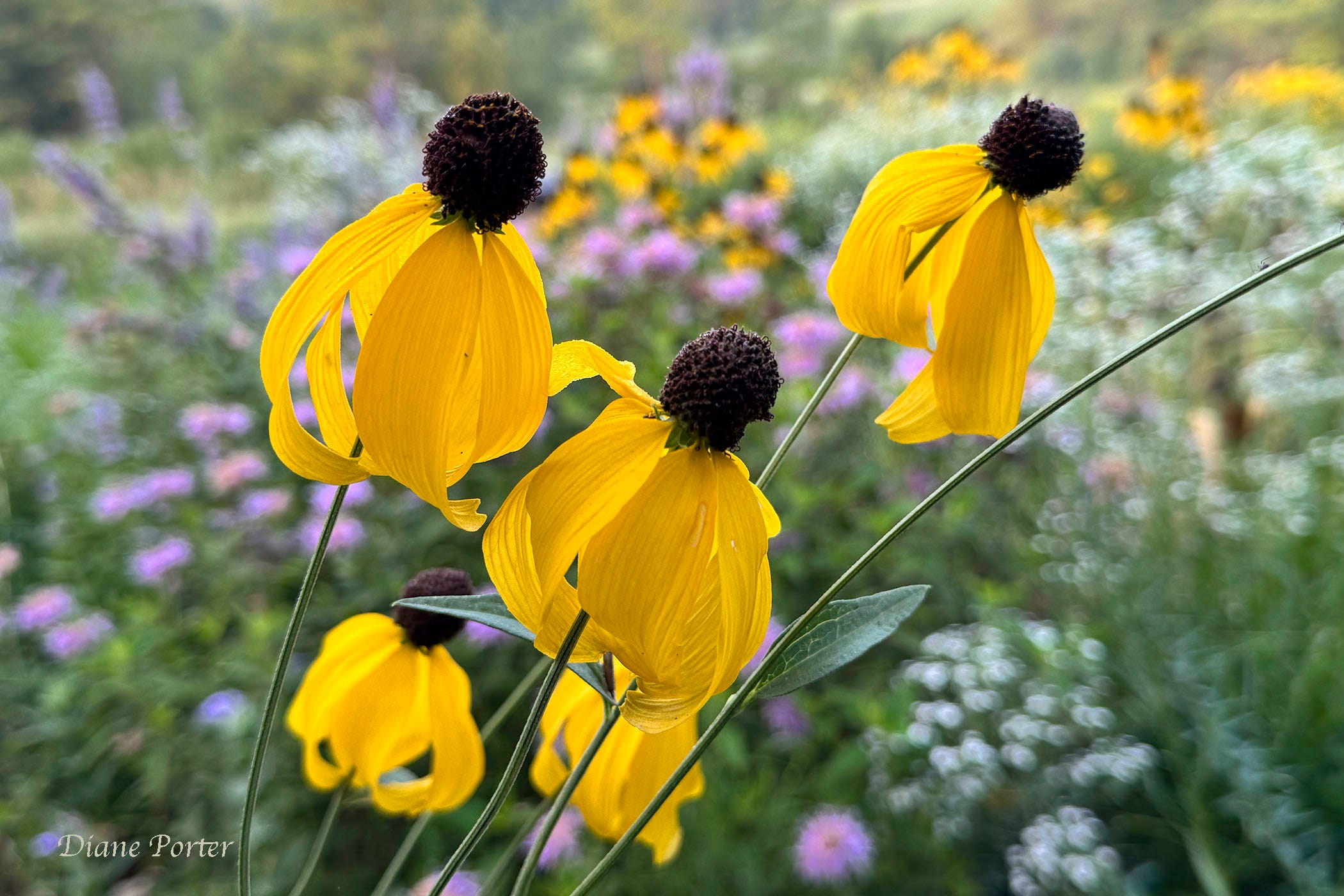
Not that I could move it. Its roots reach 5 to 8 feet down into the earth by now.
It’s a Gray-headed Coneflower. It came about six years ago, as a seed blown in from the wild. These wildflowers were already in the area when I arrived, some twenty years ago. They’ve been here much longer. They were blooming when Iowa was native prairie and the bison owned it.
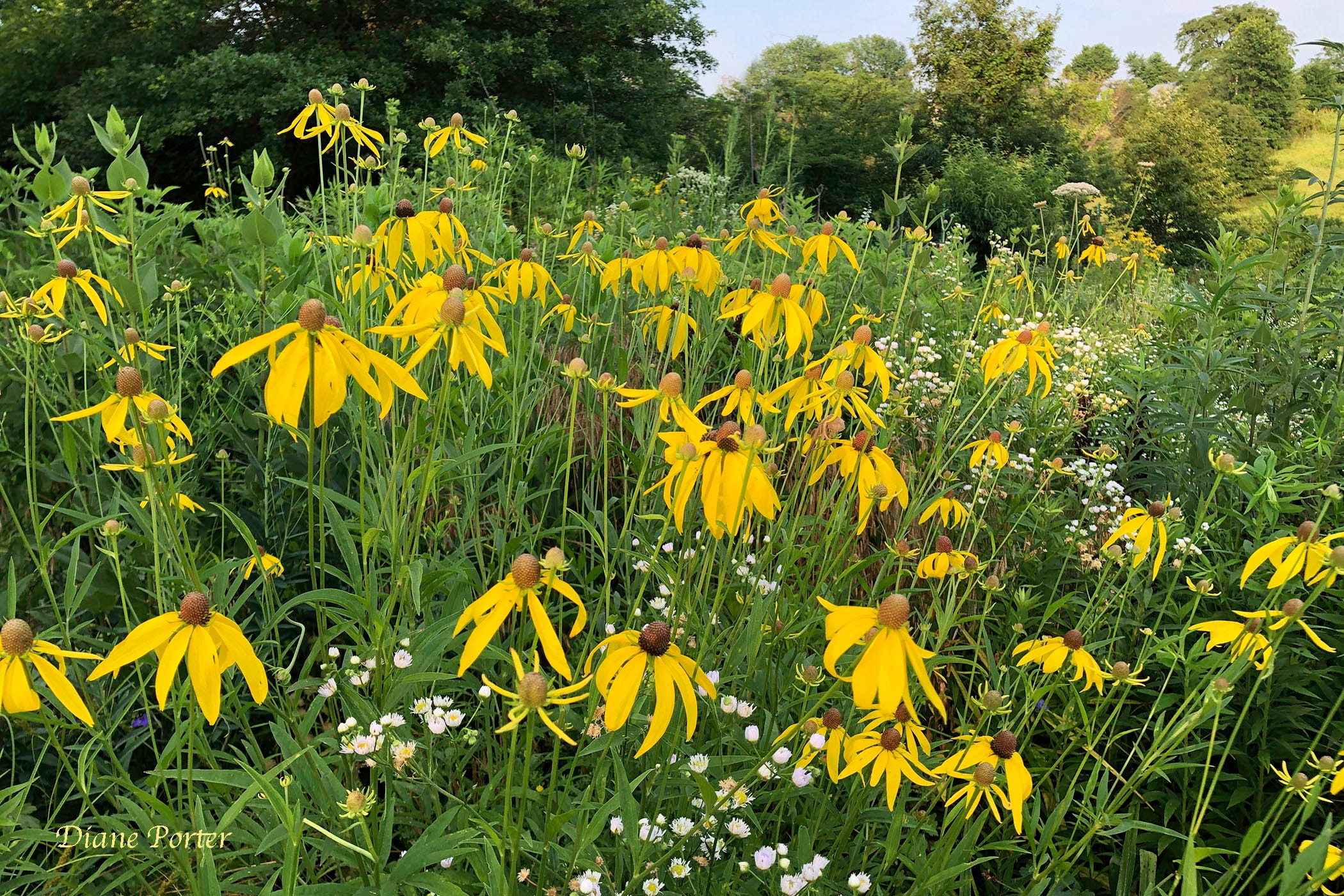
I’ve gotten to know this individual plant personally. I catch myself saying, “Hi, Yellow,” when I see it, as if it had a self of its own.
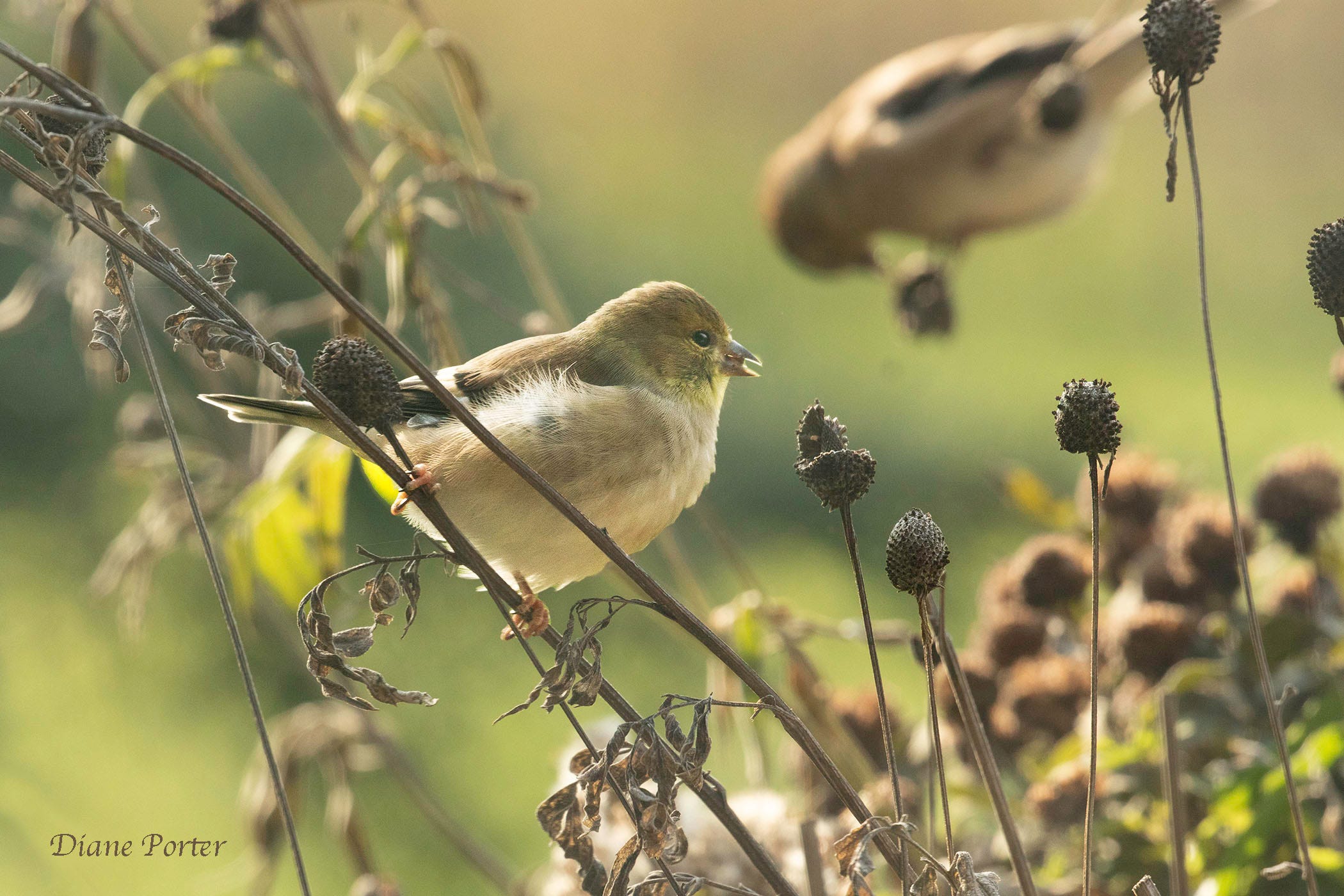
The American Goldfinches know Yellow too. They come close to my window to visit. I’m struck by how the bird and flower colors match.
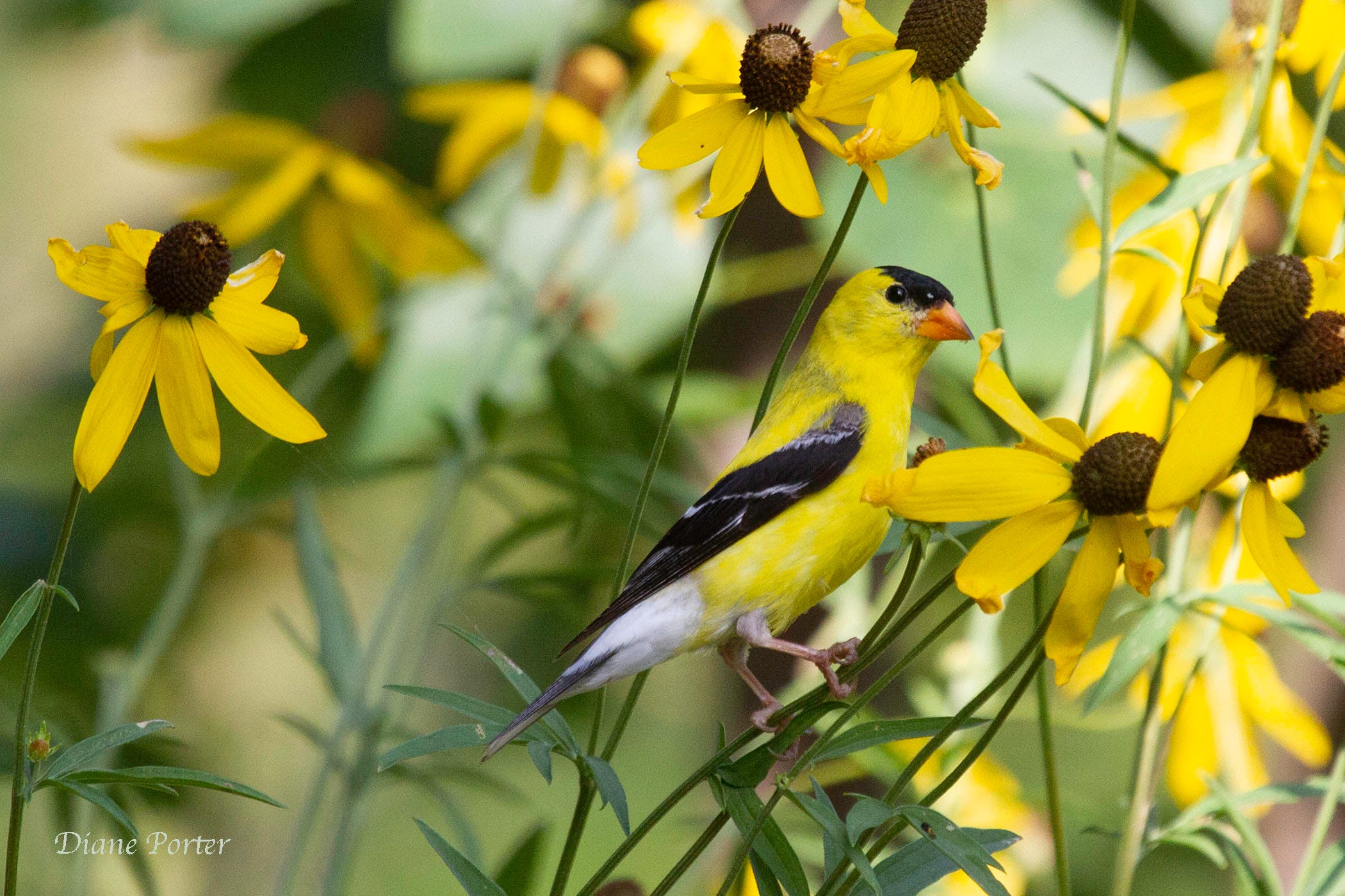
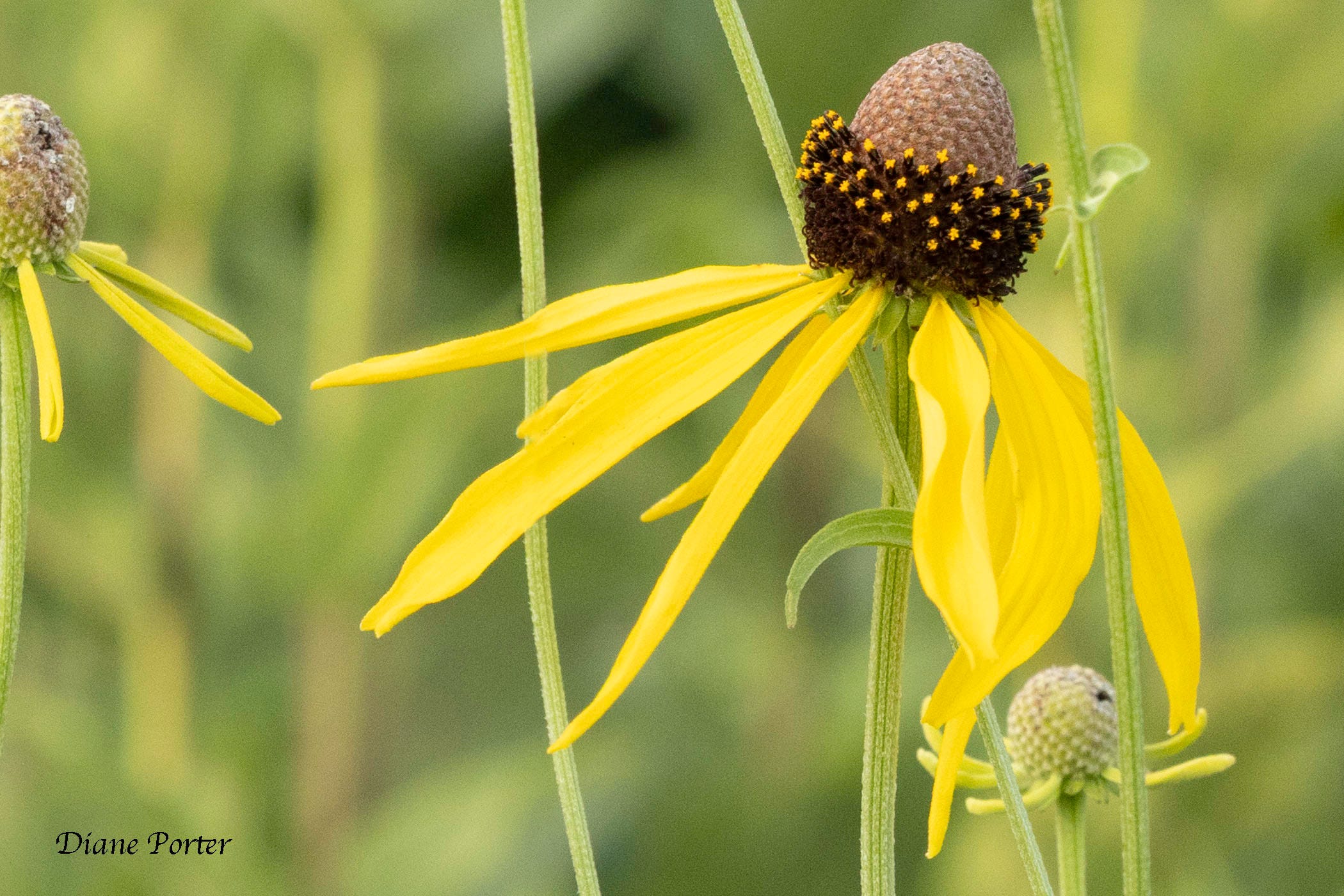
The coneflower’s petals are yellow because they contain carotenoid pigments, and in particular one called lutein. That chemical is especially concentrated in the fuzzy covering of the flower’s central dome. The fuzz is composed of microscopic flowers (“disk florets”) that open sequentially, from bottom to top.
They are jam-packed with lutein, and that is what the goldfinches are after.
Pigment bounty
Goldfinches need lutein because it's the chemical that makes their feathers yellow. However, birds can’t make their own carotenoid pigments. They have to eat plants that contain them. Then the pigments get processed by the liver and go to the feathers, turning them yellow.
No wonder goldfinches are keen to patronize yellow flowers. The birds are picking up their colors.
Seed bounty
After the petals drop and the seeds develop, the lutein content fades away. Still the goldfinches keep coming to the coneflowers, but now it’s for something else. Ripe seeds are full of yummy fats — fuel for surviving the winter.
When the seeds ripen inside the dome, the birds can remove them like kernels off an ear of corn. They are tiny, only 1/16 inch long, but nutritious and worth a goldfinch’s effort.


The seeds ripen slowly, daily getting easier to pluck out. The birds visit a lot. They are used to me looking at them.
Tribe
We’re a sort of mixed tribe, the birds and the Gray-headed Coneflower and I, on both sides of the window glass. A little group of friends.
By garden design standards, the Gray-headed Coneflower may be out of place. But it came of its own will, and it has its own life. It’s part of my life too, and that of the goldfinches. It will be here long after I’m gone.
Yellow stays.
I don't know if I love this post because it is a celebration of yellow, or because it celebrates wildness or because of the generosity of your writing. All three I'd guess.
Once again, the only writing I can read these days with a sense of peace comes from you, dear Diane.💛