

Dick, Dick, Dick Siss Siss Sissel!
Driving along the country road, I heard them. Dickcissels were singing their name over and over, until my ears were sizzling with the sound.
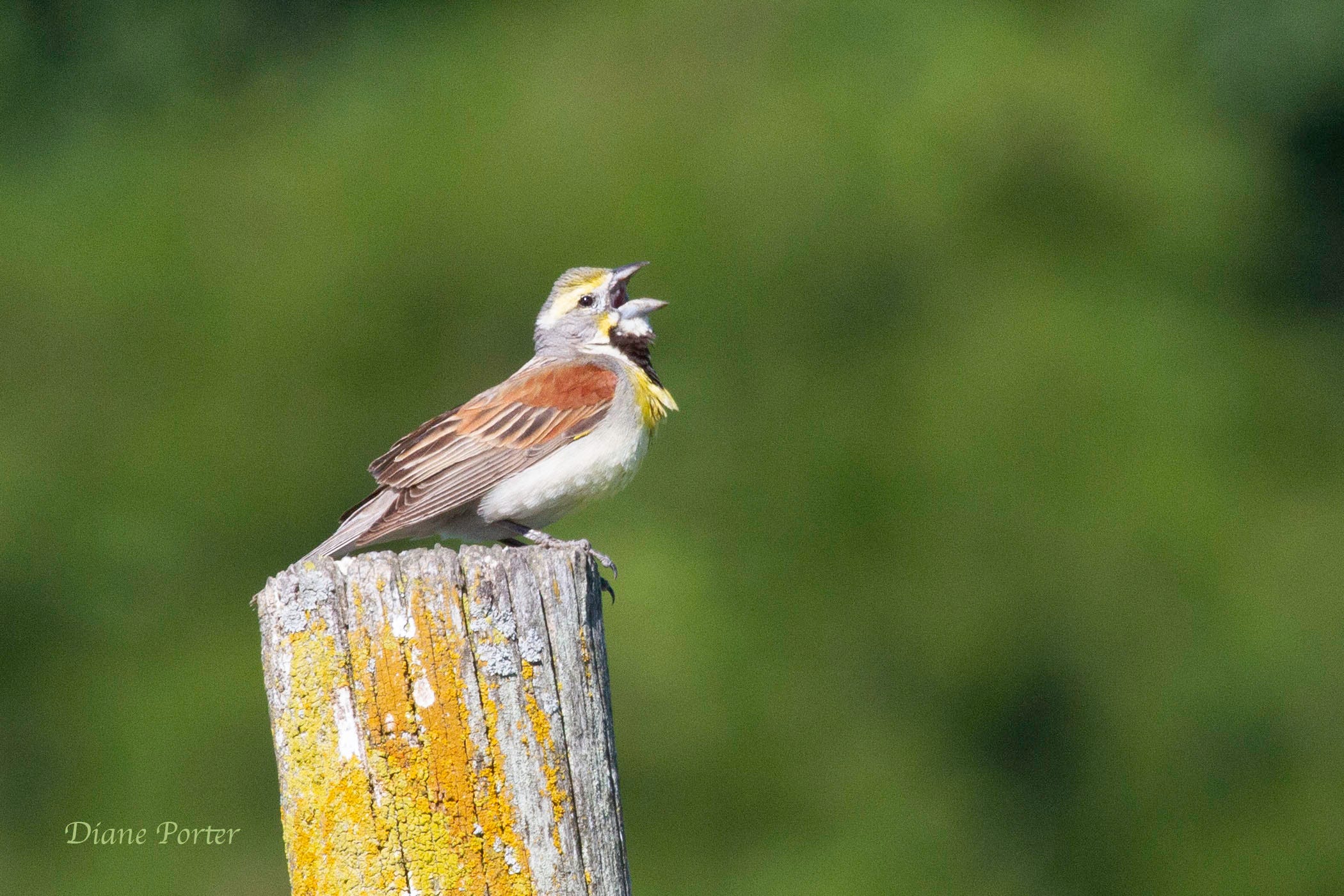
They sang from the fenceposts along pastures. From weedy roadsides, and from shrubby trees at the edge of cornfields.
Dickcissel recording by Diane Porter
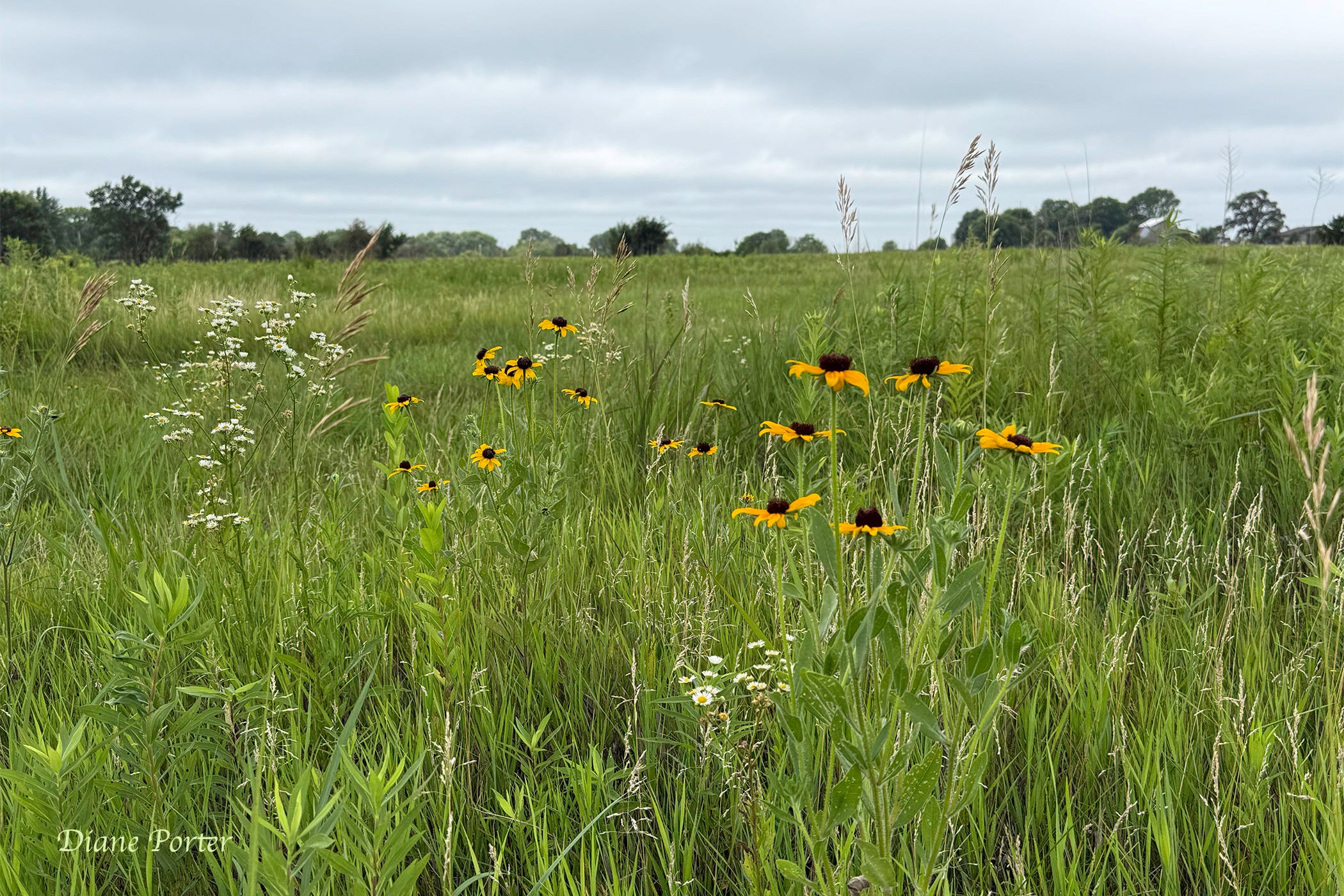
You won’t find a Dickcissel in most back yards. Nor in the cool shade of woods. Dickcissels require grasses, drenched in sunlight. Ideally mixed with wildflowers shooting up tall. A male likes to have grasses below and to be able to perch high, sing, and be seen.
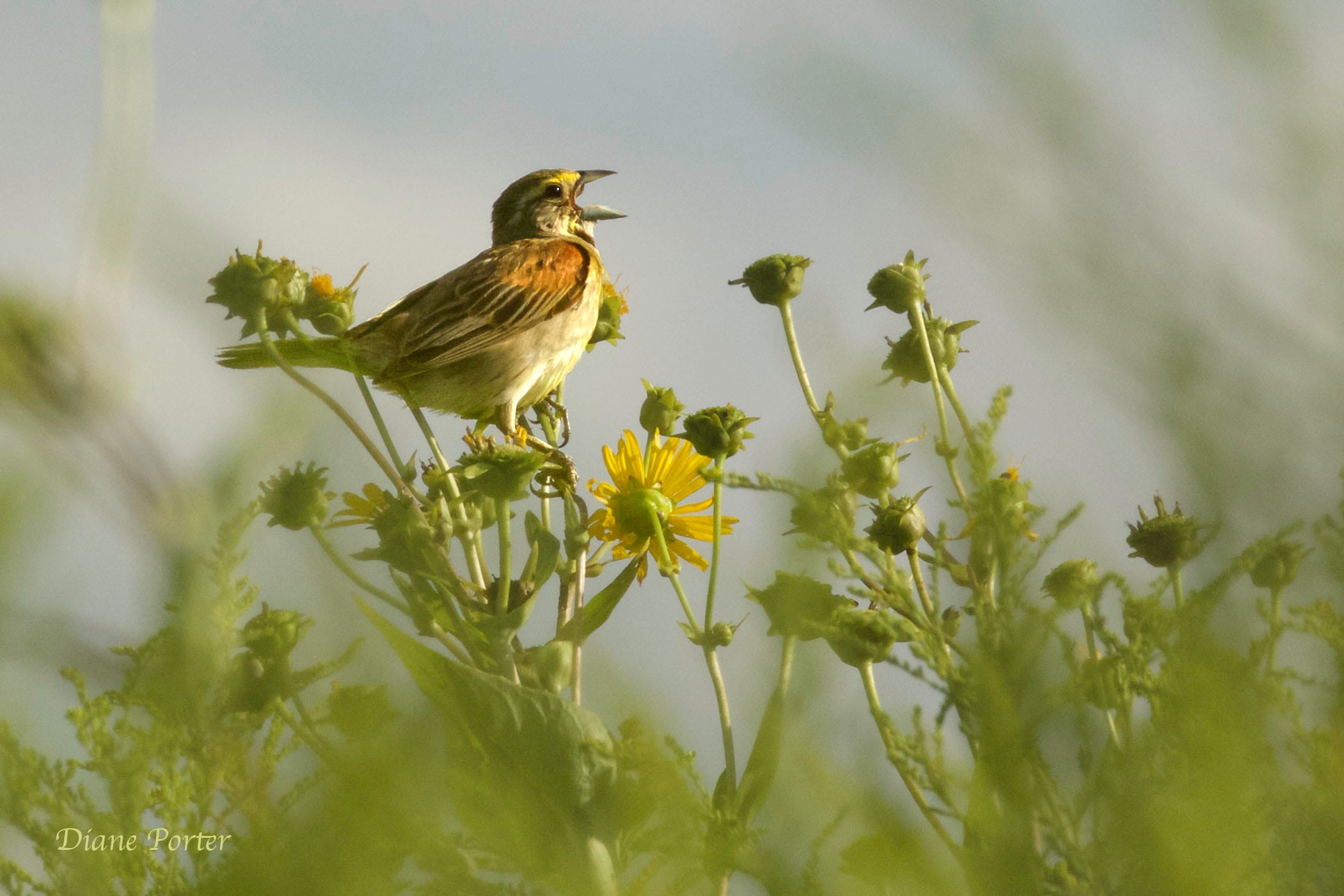
A male Dickcissel sings out his ownership of his territory. When a female chooses him (or perhaps when she chooses his land holding), she selects a site for her nest. It will be close to the ground but not right on it, in dense grass or wildflowers.
The female alone builds the nest and broods the eggs. After the babies hatch out, she almost always is the only parent who brings them food.
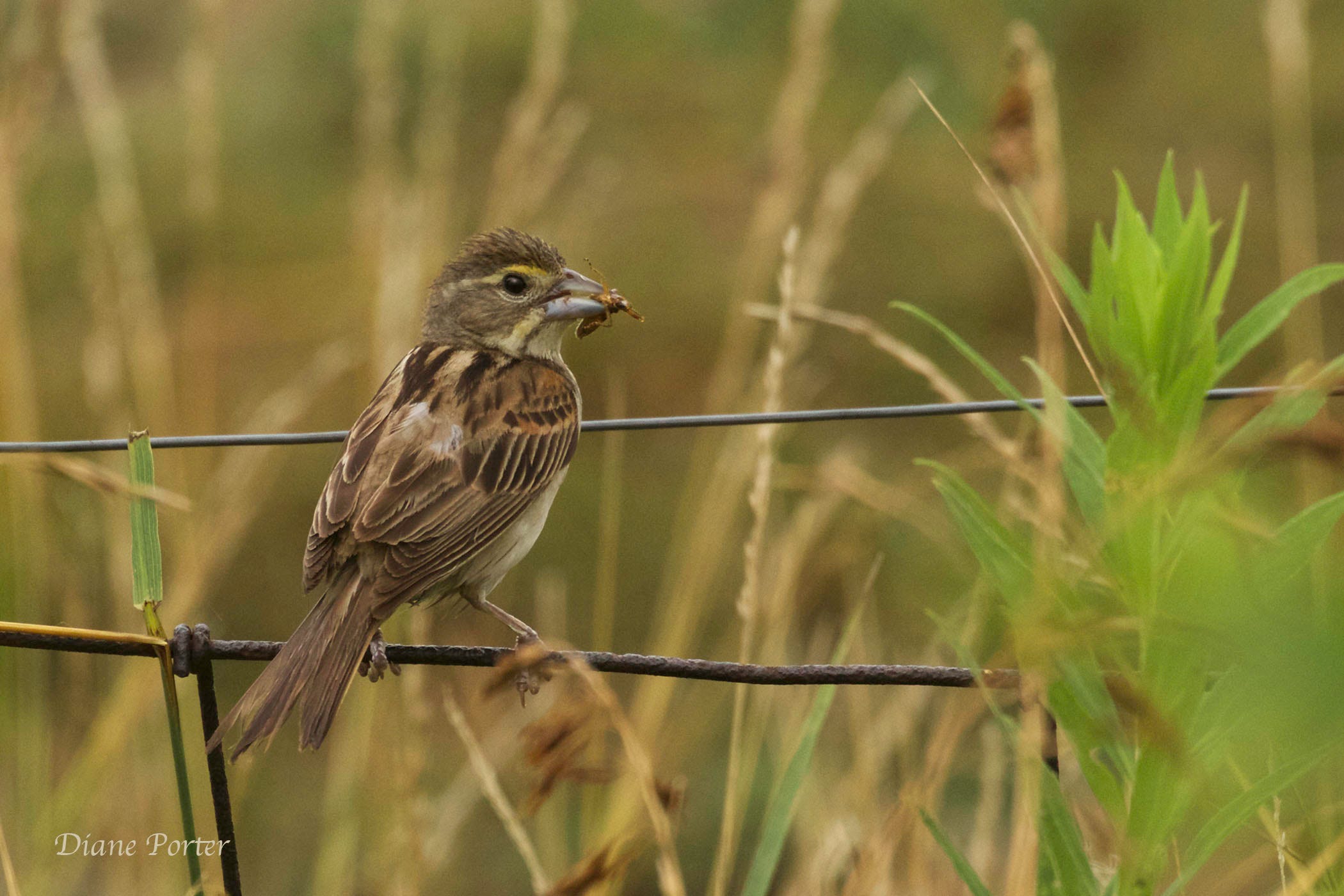
I pulled off to the shoulder of the road and watched a female who was on her way to feed her young. She was perched on a wire fence, holding an insect in her beak. She regarded me for a long moment, but she had no intention of giving away the location of the nest by delivering food while I was watching.
Not far distant, a male, probably her mate, sang on. His singing puts potential rival male Dickcissels on notice that he claims the territory. Male Dickcissels who have a good patch of land often are polygynous, so maybe he was also advertising for a second or third mate.
I did not distress them for long. I drove on and left the Dickcissels to their nesting business.
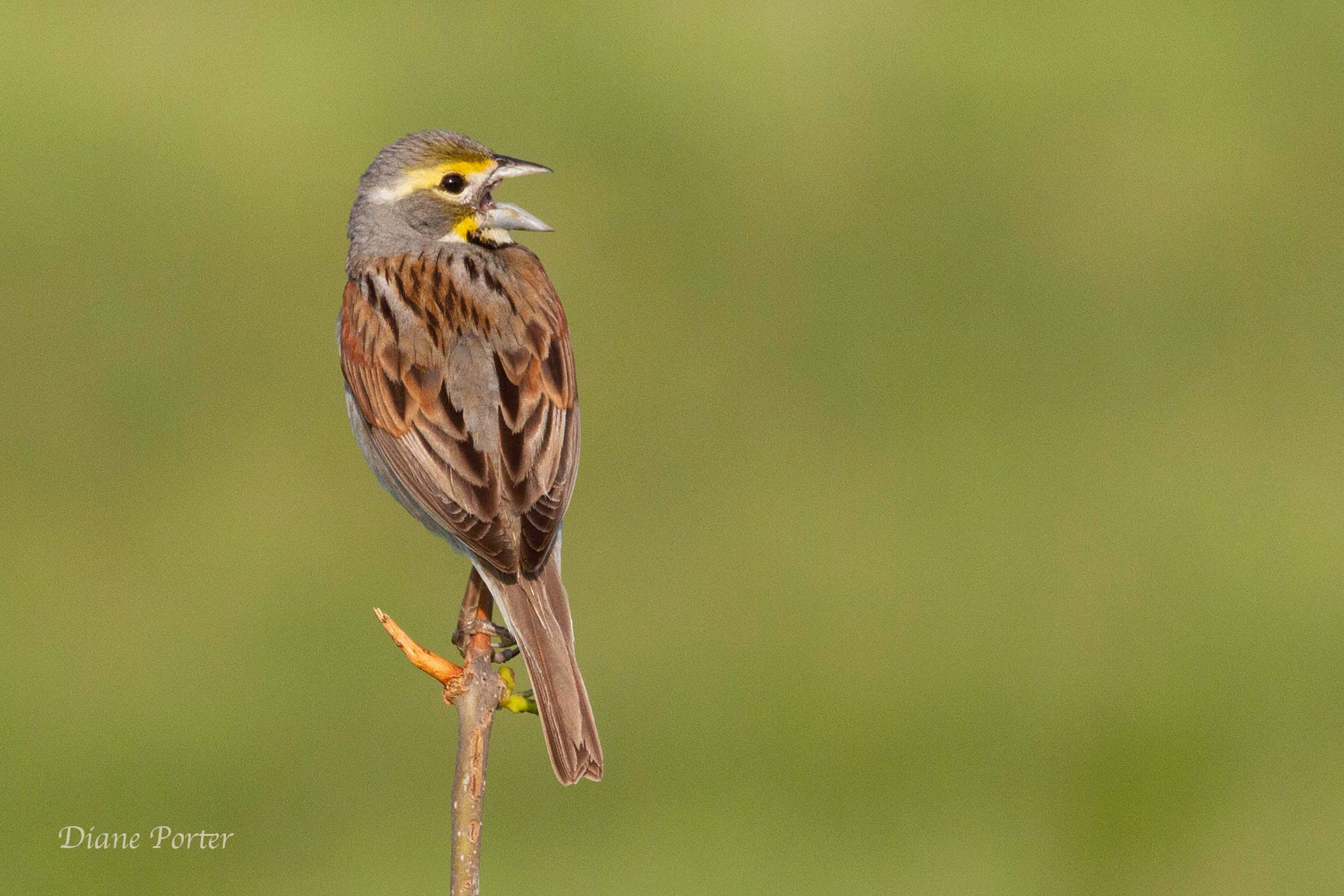
The roadside strip was narrow, but it still had some of the prairie-like structure Dickcissels use. Tall sunlit grasses mixed with other plants, creating habitat for a wealth of insects to feed young birds.
Dickcissels are grassland birds. As grasslands have shrunk in the Midwest, Dickcissels have declined too, though not as sharply as some grassland-dependent species. Their saving grace is flexibility. They can make do, to some extent, in fencerows, hayfields, weedy roadsides, and roadside ditches.
That adaptability has helped them hang on, so it is still relatively easy to find them in rural areas of the Midwest in summer. Still, there are fewer of them alive in North America than there were I was born.
How to know a male Dickcissel
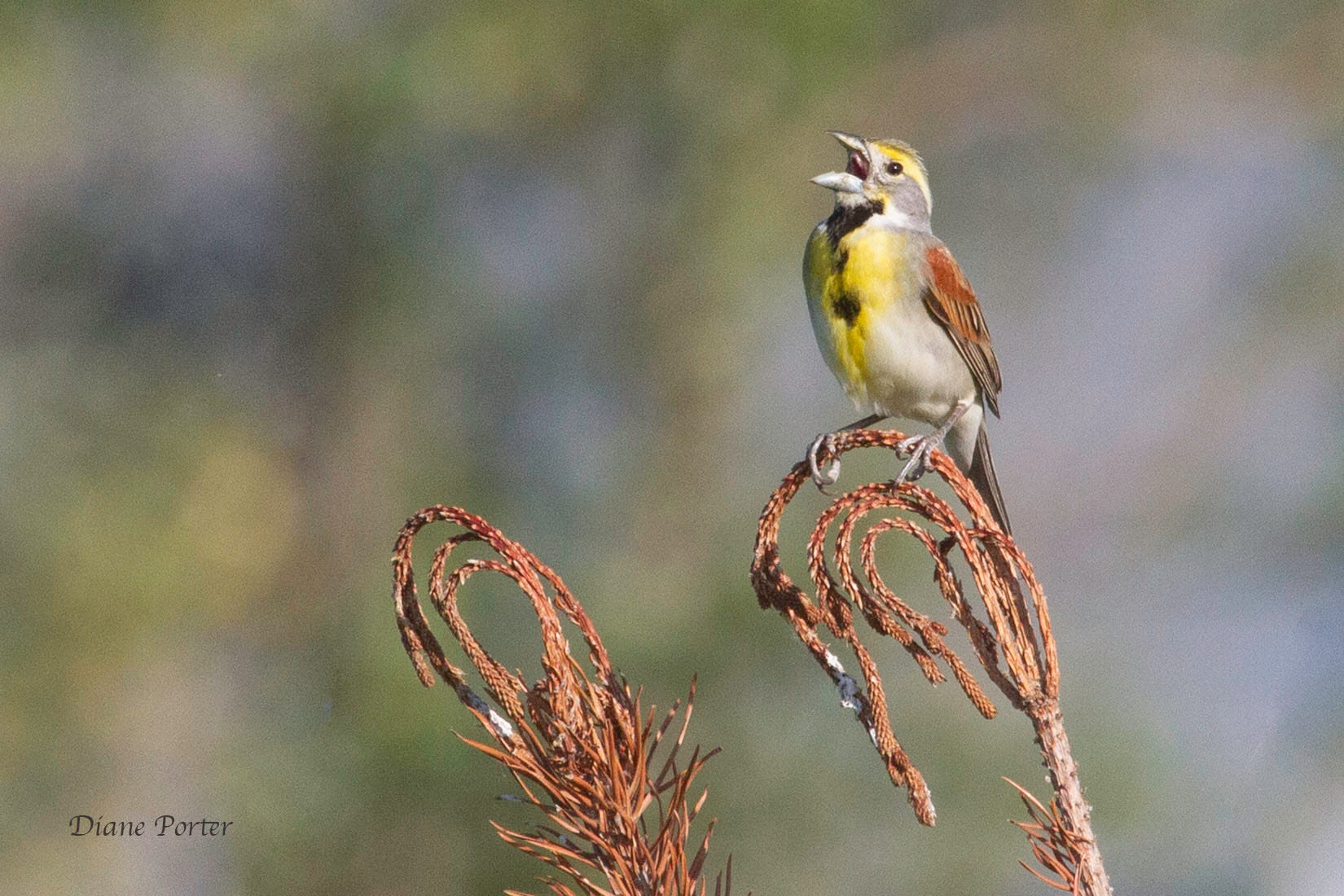
Sparrow-sized
Black patch on his throat, sometimes down his chest like a long beard
Yellow breast
Two pale yellow face stripes
Rusty shoulder patches
That sizzling song
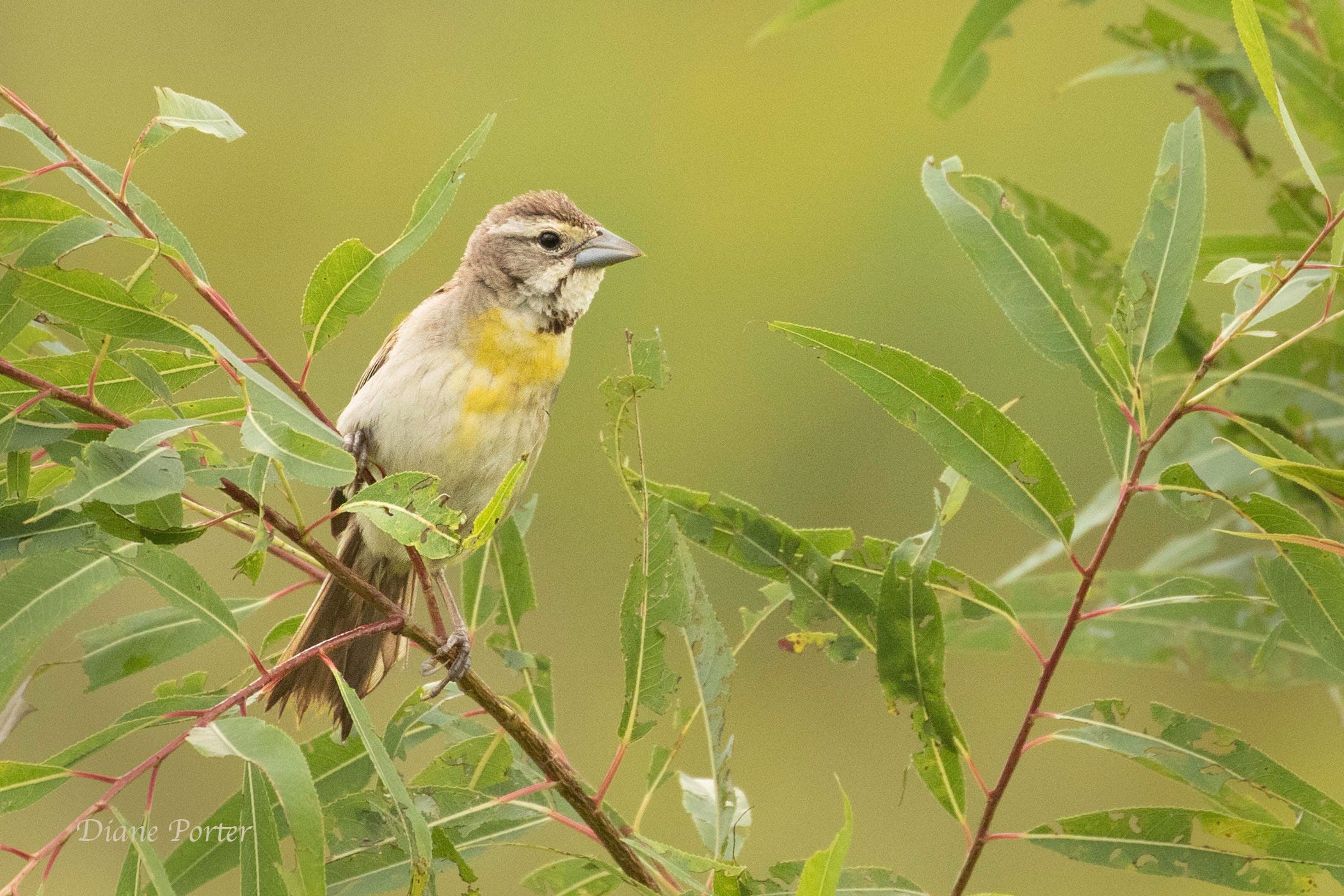
The female is less colorful, with barely any black throat patch, and a streaky brown back. She may chirp to her mate or make a buzz in flight, but she does not sing the Dickcissel serenade.
Juveniles, too, are plain during their first summer. Young females may be especially subdued, and the hardest call is often between a first-year male and an adult female.
Coming home through southeast Iowa on a recent summer afternoon, I took the country roads rather than the freeways, dawdling, pulling over to look at a milkweed, and admiring green fields. Grass and wildflower, sun and bird song dazzled my eyes and ears.
Especially the Dickcissels.
I am from NE and have never seen a dickcissel. I feel I have missed something special. Thank you for sharing your thoughts and pictures!
Gorgeous photos.