

You don’t have to drive somewhere special to see Chipping Sparrows. If you have a back yard in North America, there’s a good chance a Chipping Sparrow is near you right now.
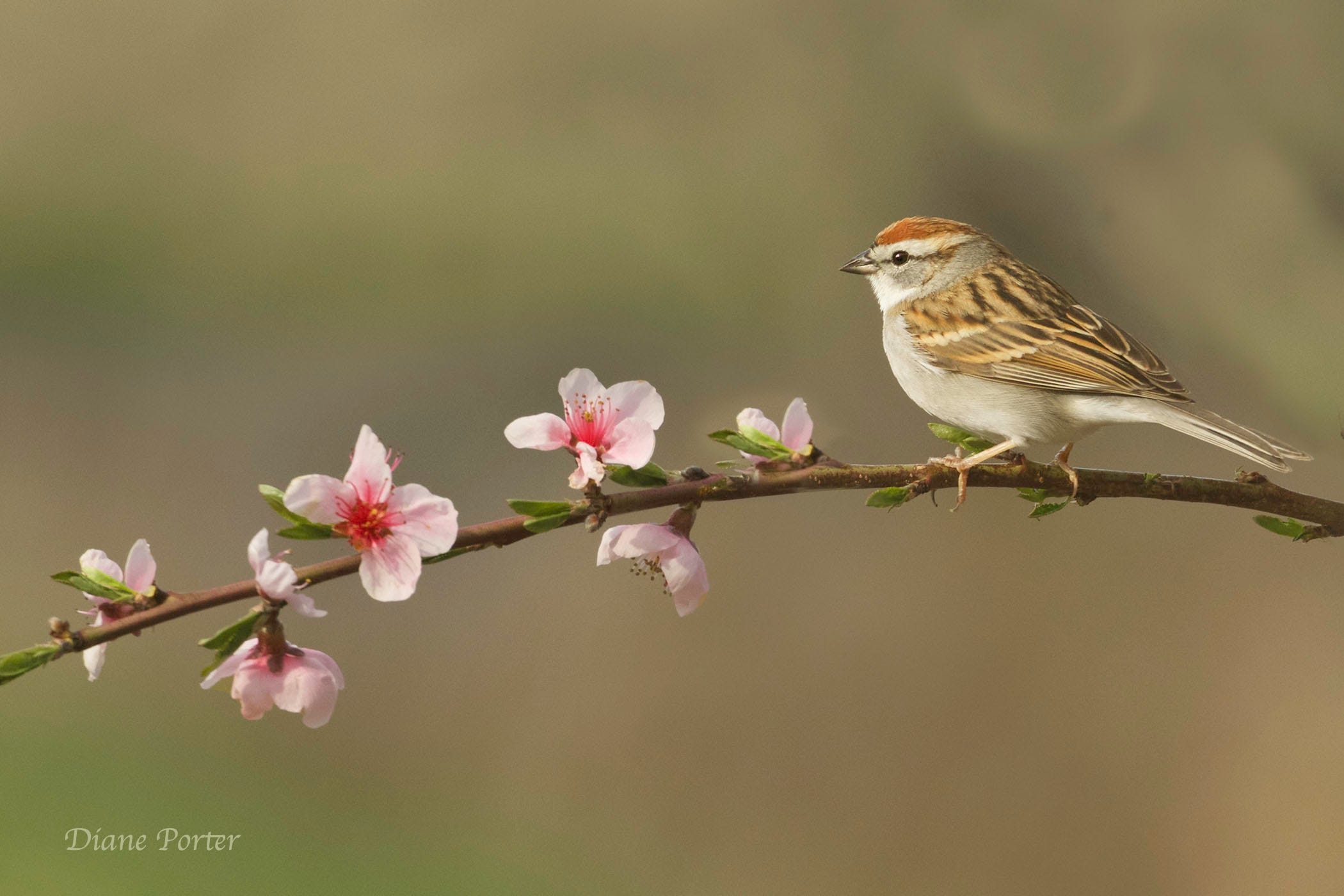
It’s one of our tiniest sparrows, with a reddish cap and a white eyebrow. If you go outside on a spring morning and don’t see a Chipping Sparrow right away, you might at least hear one. Give a listen for a trill all on one pitch.
Chipping Sparrow recording by Diane Porter
The male trills for a couple of seconds, and then he takes a longish pause. And another trill. Same thing, over and over.
The song can blend into the background. Sometimes all at once I notice the song and realize I’ve been hearing it for a while. Then I look around for the Chipping Sparrow.
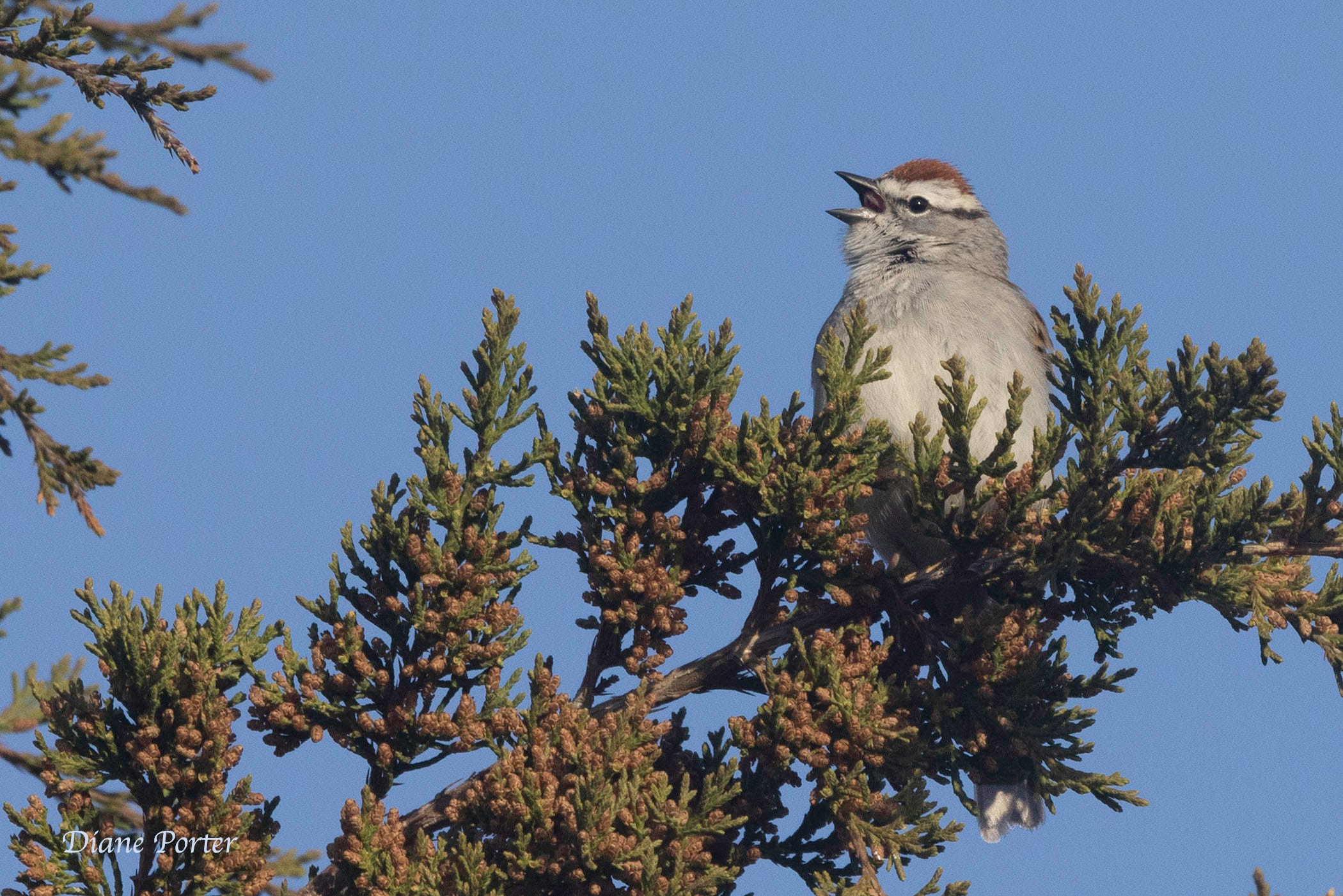
He’s usually easy to spot, often near the top of a tree but not right at the tip.
Though the song lacks melody, it does its job. With that one-pitch proclamation the male defends his territory against rivals. And he woos a mate.
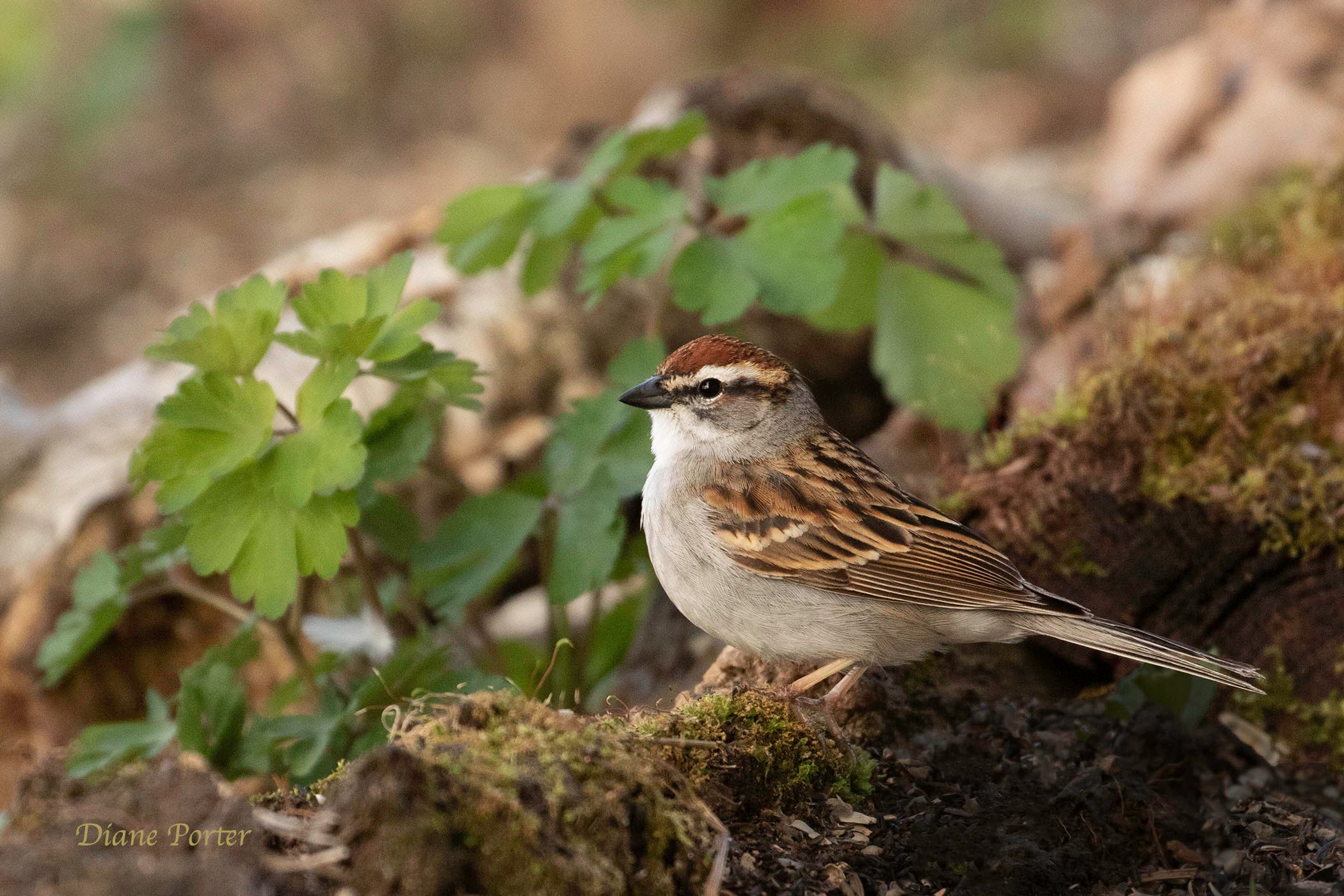
These are successful little sparrows. They live in nearly every state and province. They are not shy of people and often nest in the backyards of residential neighborhoods. They bring a bit of the wild, even in relatively tame places.
The nest is a neat cup of plant fibers, usually not more than six feet above ground level. Often it is in a conifer tree.
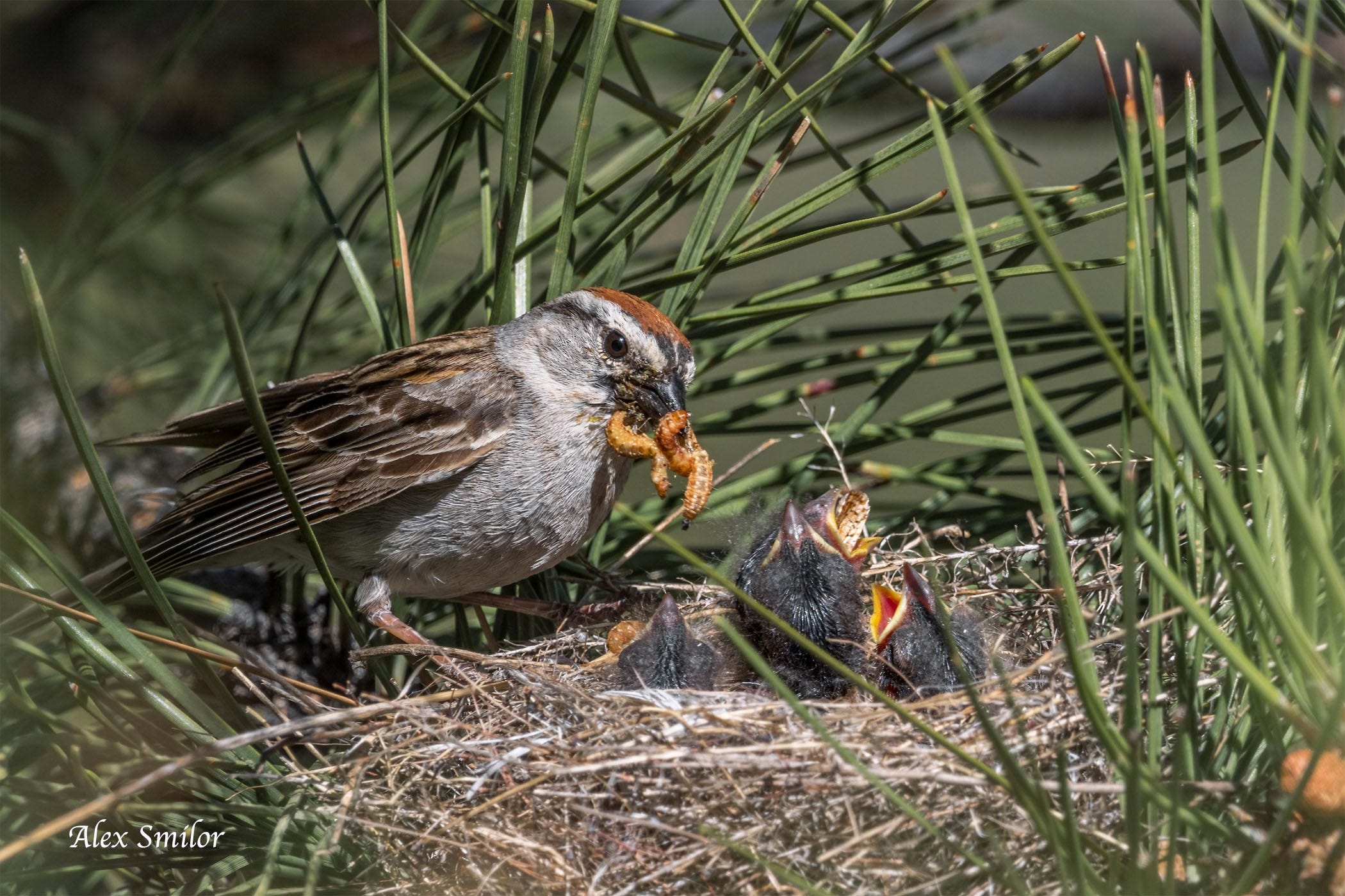
I once found a Chipping Sparrows’ nest in a juniper that grew against my house right in town. It was placed so low I looked down into the nest and saw five pale blue eggs. Many people have found Chipping Sparrow nests in hanging baskets. If you leave a holiday wreath on your front door until spring, Chipping Sparrows might come and redecorate your decoration with a tidy little nest of grass strands.
Call to action
Just step outside. Listen.
Where do they live?
Chipping Sparrows nest in every state of North America, and most provinces. They also reach into Central America.
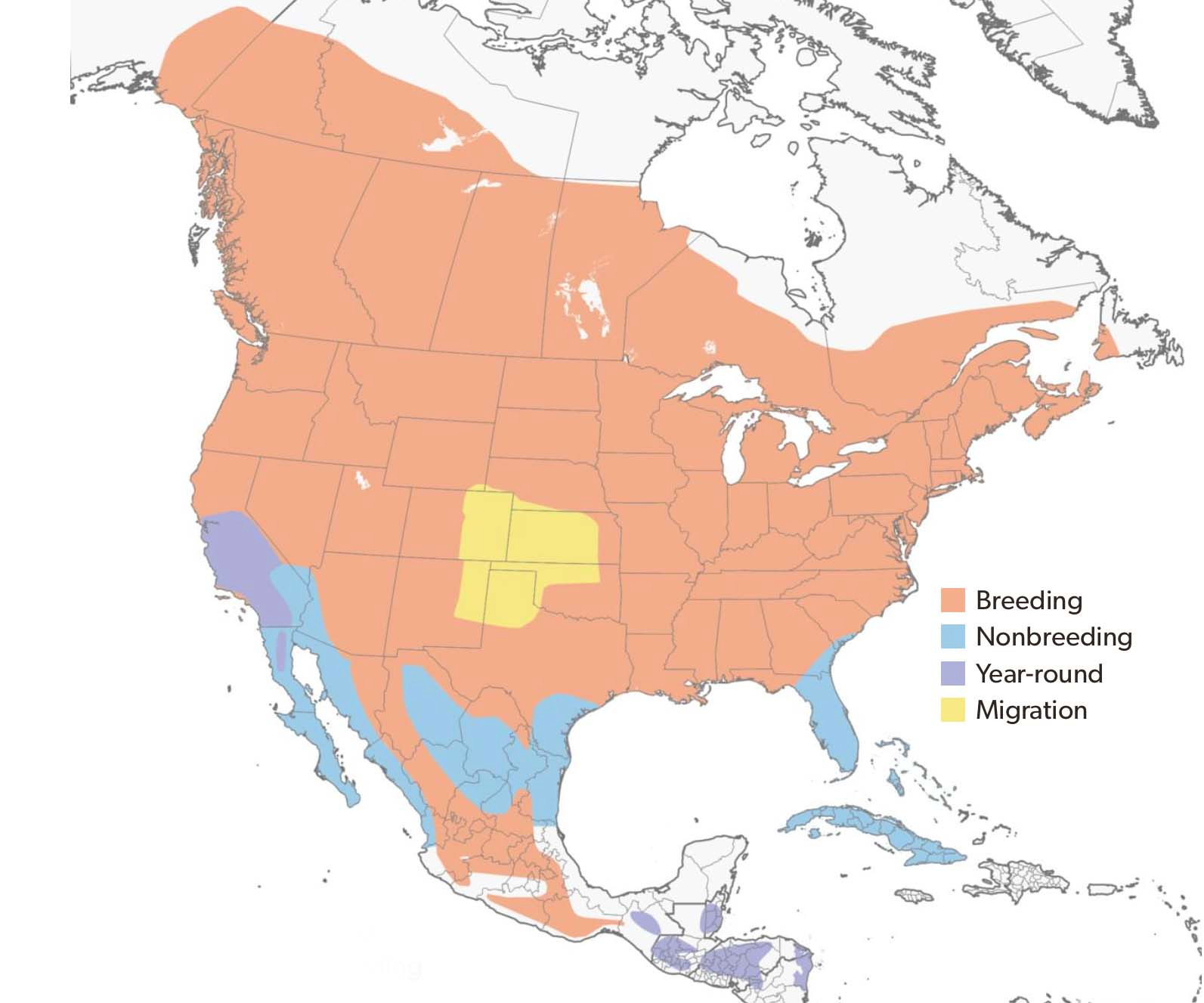
In the map, blue areas are where the birds are found only in winter, when the birds are not nesting. Orange is where the birds live only in the nesting season. Yellow is where they are only seen while they are migrating through, usually in spring or fall. The bits of purple are areas where they live all year around.
P.S. A short bit of the Chipping Sparrow’s song, slowed down to 1/5 natural speed, is in the Notes.
Oh! How delightful!
A childhood tune popped up as I listened to your Sparrow's trill:
"When the Sun in the Morning
peeks over the hill and lifted my heart to the Mockingbird's Trill." (Anyone have the correct words to this tune?)
Such a sweet pleasure! Thanks, Diane and Chipping Sparrow friend!
Nesting Season is in Full Swing here on Summerhill (Santa Cruz, California). We normally have 15-20 birds of several varieties on our feeders, but now: Nest-building! Baby-Feeding! Bugs a-plenty! Who needs Sue's Seeds!?
We do get Sparrows, usually, but none with "white eyebrows" that I can discern!
Oh Happy Springtime Everyone! (So WHAT the "other" News!! Let's listen for the Real Trills!!!!!) 🥰
Cheery chippies!