

In winter, at last, the red bird in my garden is at his personal best. Every feather is pristine — the satiny feathers of wings and tail, and the red-drenched feathers of his face, back, and belly.
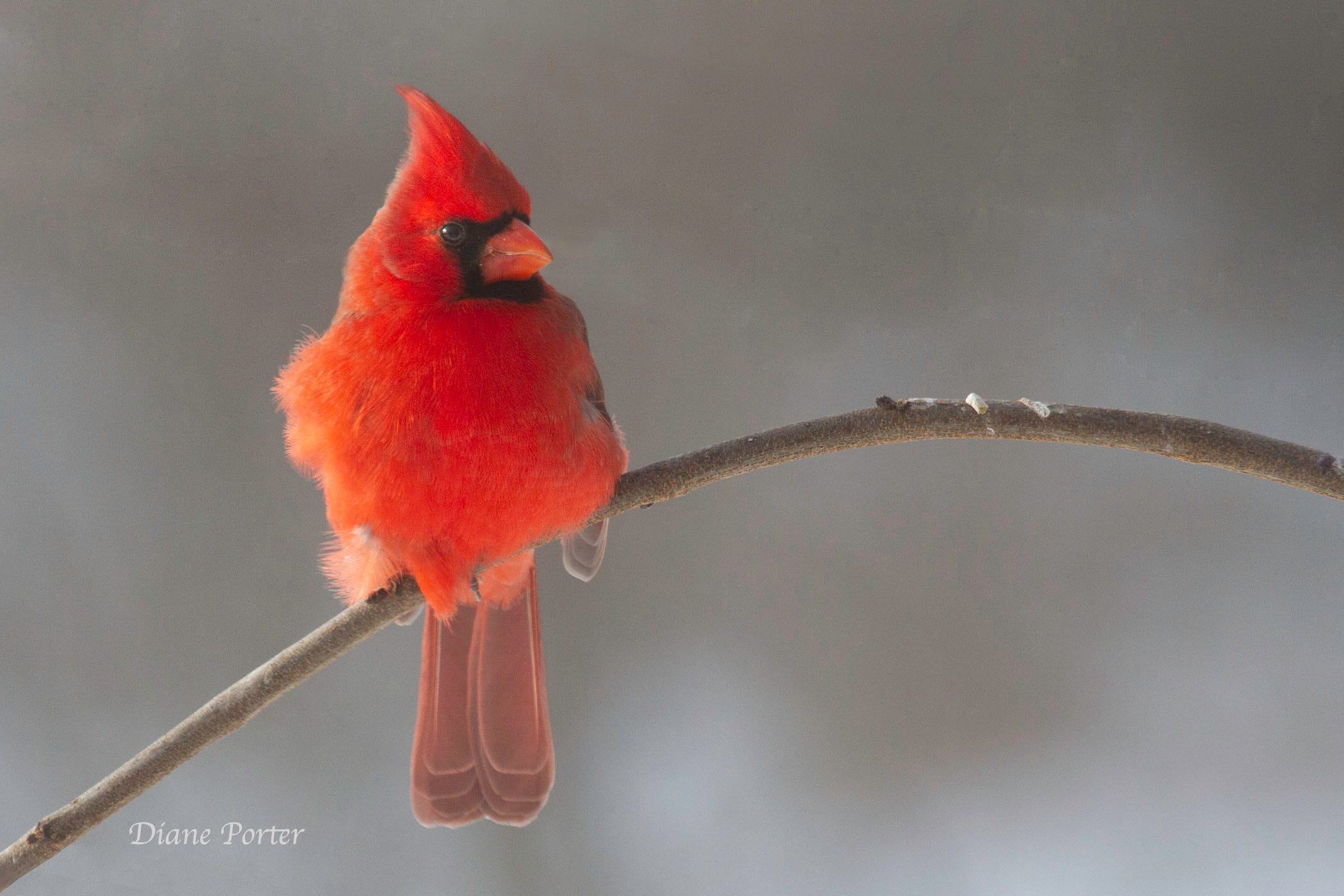
Northern Cardinals get a complete new set of feathers during late summer to early fall, after breeding season is finished. It will get them through the winter.
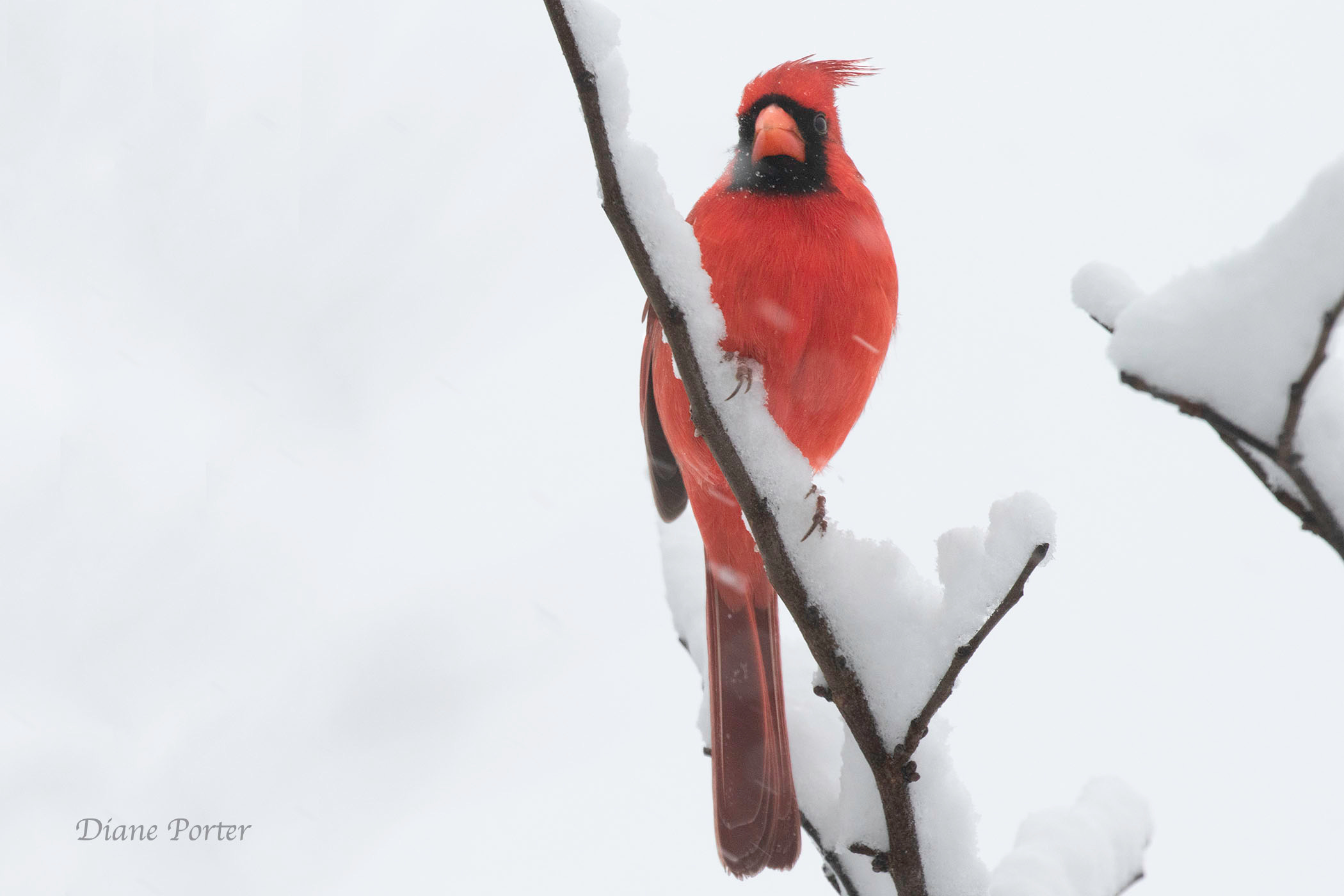
New feathers shed water. They are smooth. They cut through air with minimal friction. Other feathers, out of sight next to the skin, are also new, springy and soft. These are the down feathers, which keep the bird warm.
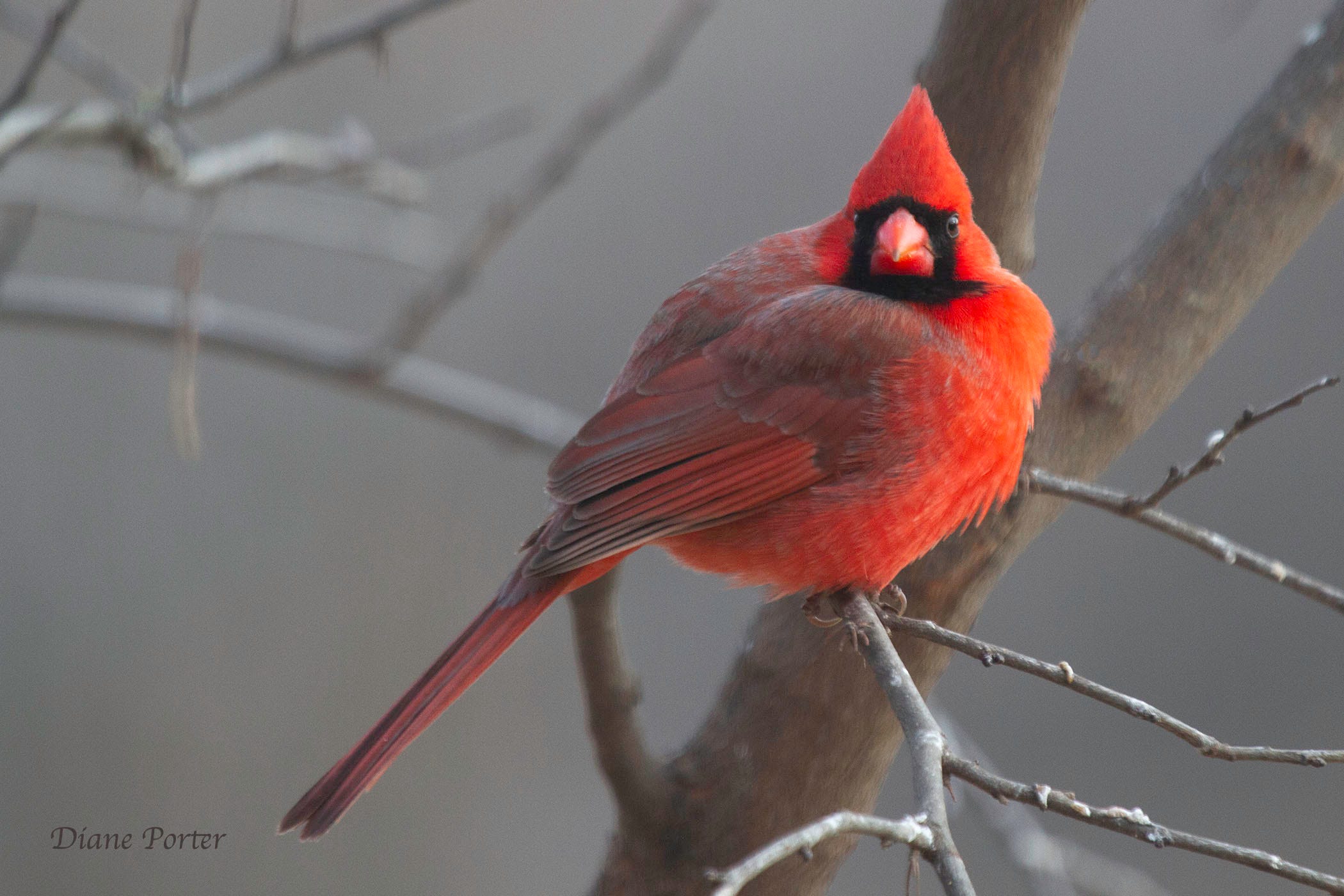
The cardinals of North America don’t migrate, so they don’t wear out their feathers very fast. They have it easier than migratory birds, who may fly thousands of miles in their yearly round trip. The wings and tail feathers of migrants may require replacement twice a year.
But cardinals molt only once. Not only do their feathers hold up through the winter, but the birds also still look good the next spring. That’s when appearance is important, both for defending territory and for impressing a potential mate.
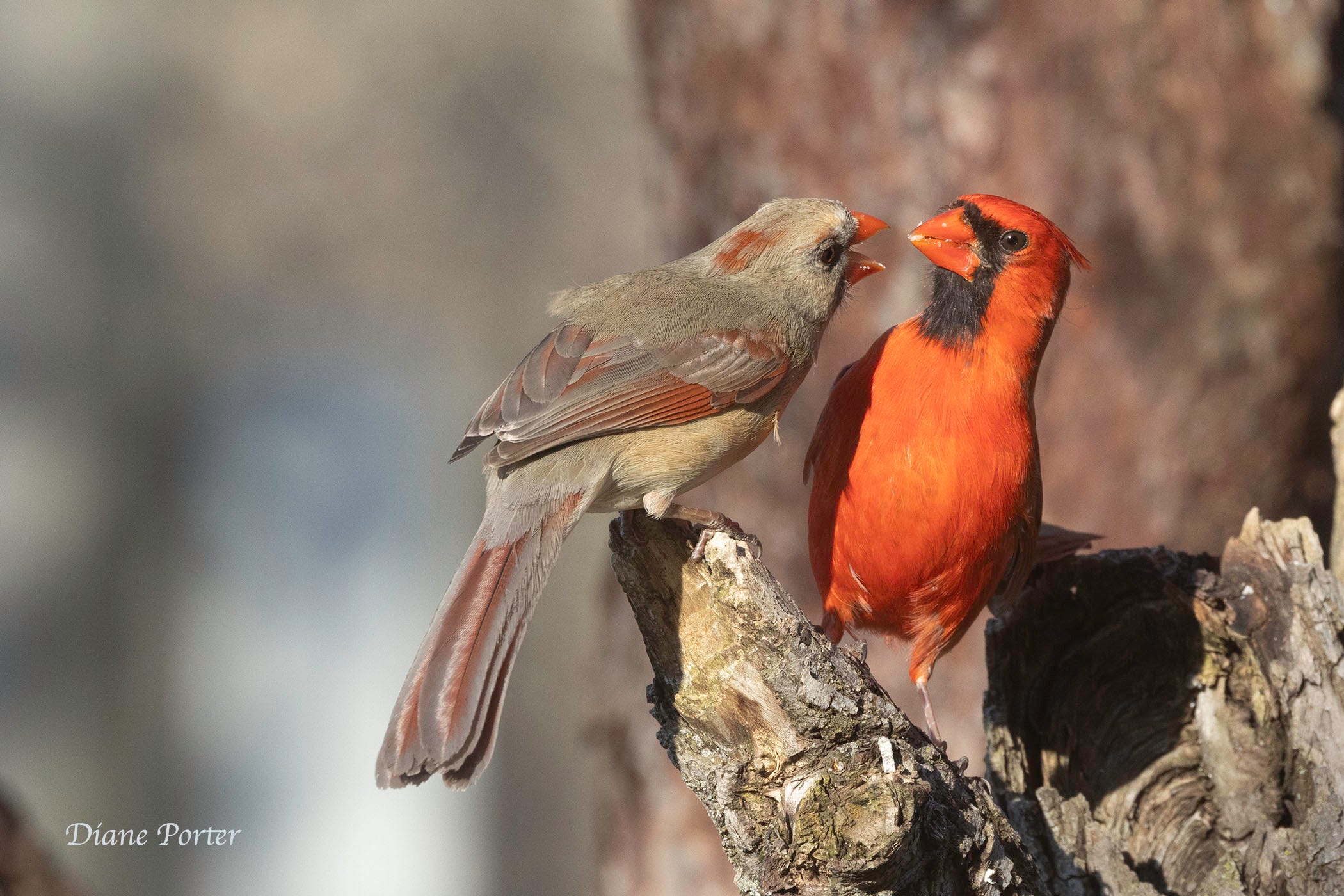
However, after the breeding season, a cardinal’s’ wing and tail feathers can be a wreck. Even the inner layer of down feathers is degraded. It has lost its springiness and is getting matted and clumpy.
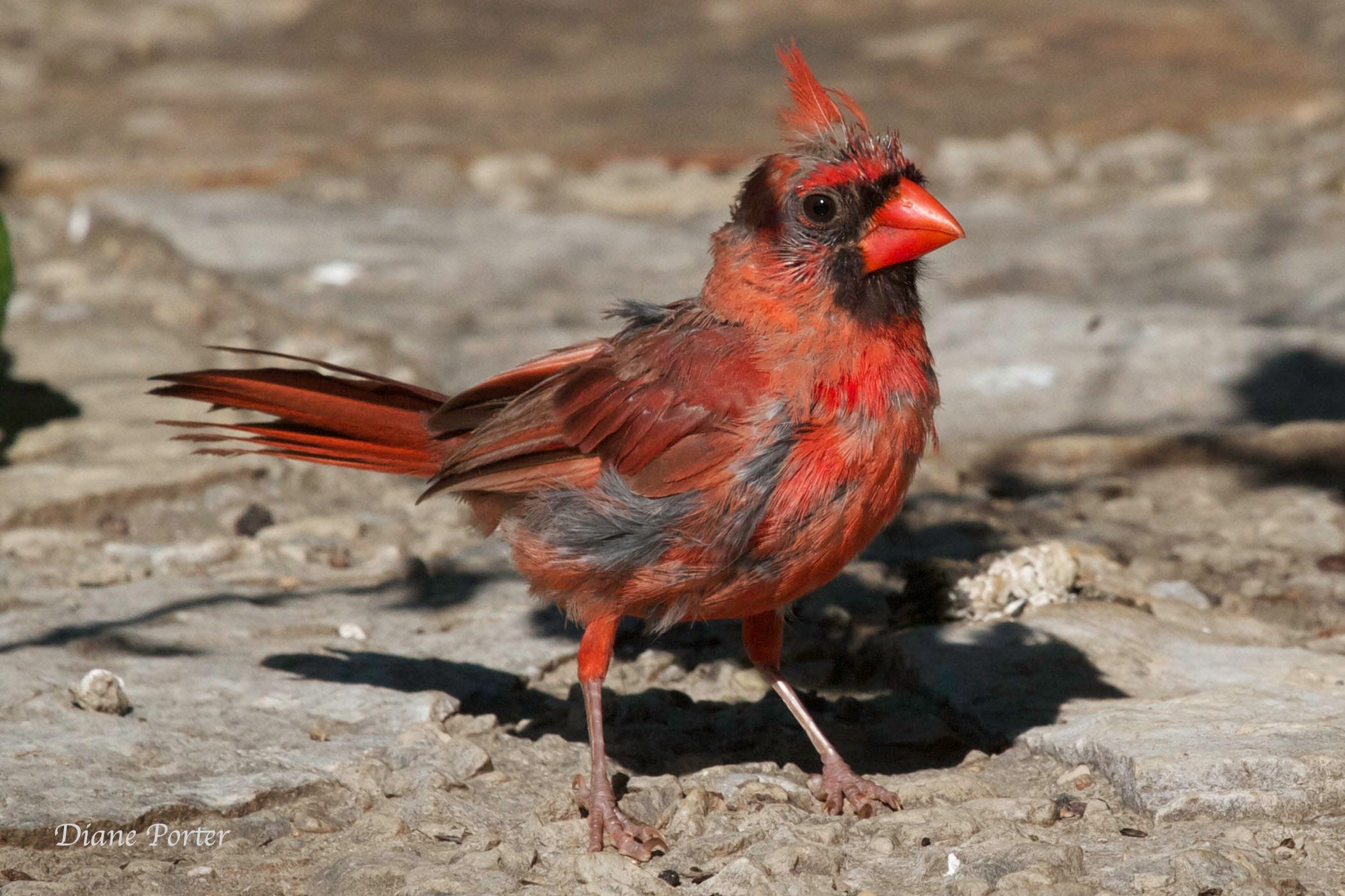
New feathers are already forming, and they nudge the old ones out. Something like the way human permanent teeth replace baby teeth.
A feather is alive as it forms, with a blood vessel supplying nutrients. Each new feather is encased in a whitish sheath, like shrink-wrap. It’s made of keratin, the same tough protein as in fingernails. Sometimes the feather sheaths are conspicuous, especially on the face and head.
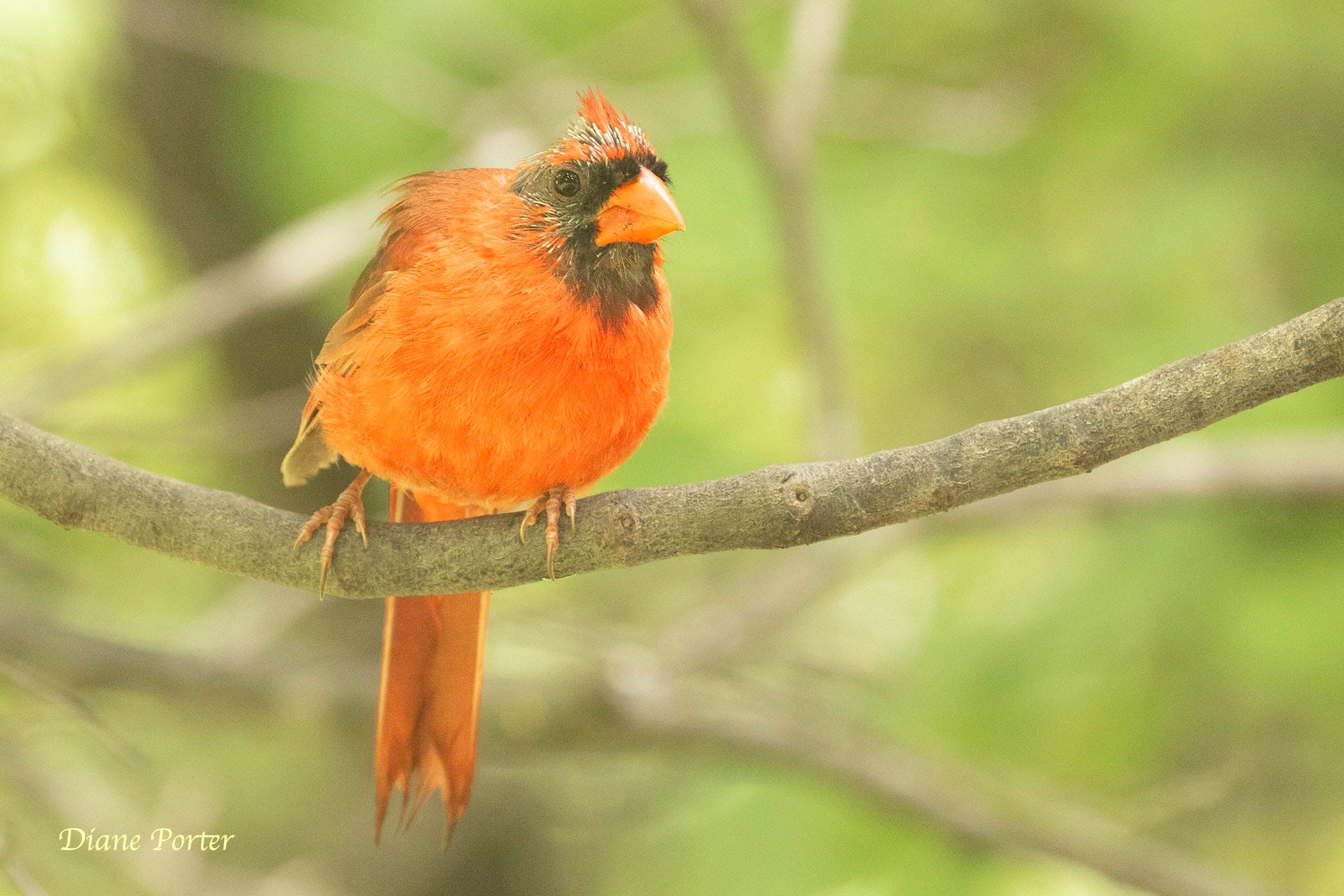
As the feather grows to full size, the blood supply stops. Like hair and fingernails, the feather still matters, but it is no longer alive. The sheath dries out and cracks. Often the tip of a red feather flares out at the end. The bird nibbles and scratches at the sheaths, shattering them and releasing the feathers.
Molting
The process of systematically replacing feathers is called molting. For Northern Cardinals, first the body feathers loosen and start to fall out. Drab splotches in the plumage are the gray down feathers showing through. Then the feathers of tail and wings are replaced, symmetrically, pair by pair.
Molting takes a lot of energy. Most birds don’t do it during the nesting season; they are already pressed to provide food for baby birds. And during the winter, cardinals need an intact set of feathers to survive the cold. But late summer is easy time for cardinals. Wild food is abundant. Babies are on their own. Migration is a nonissue. Now cardinals can molt.
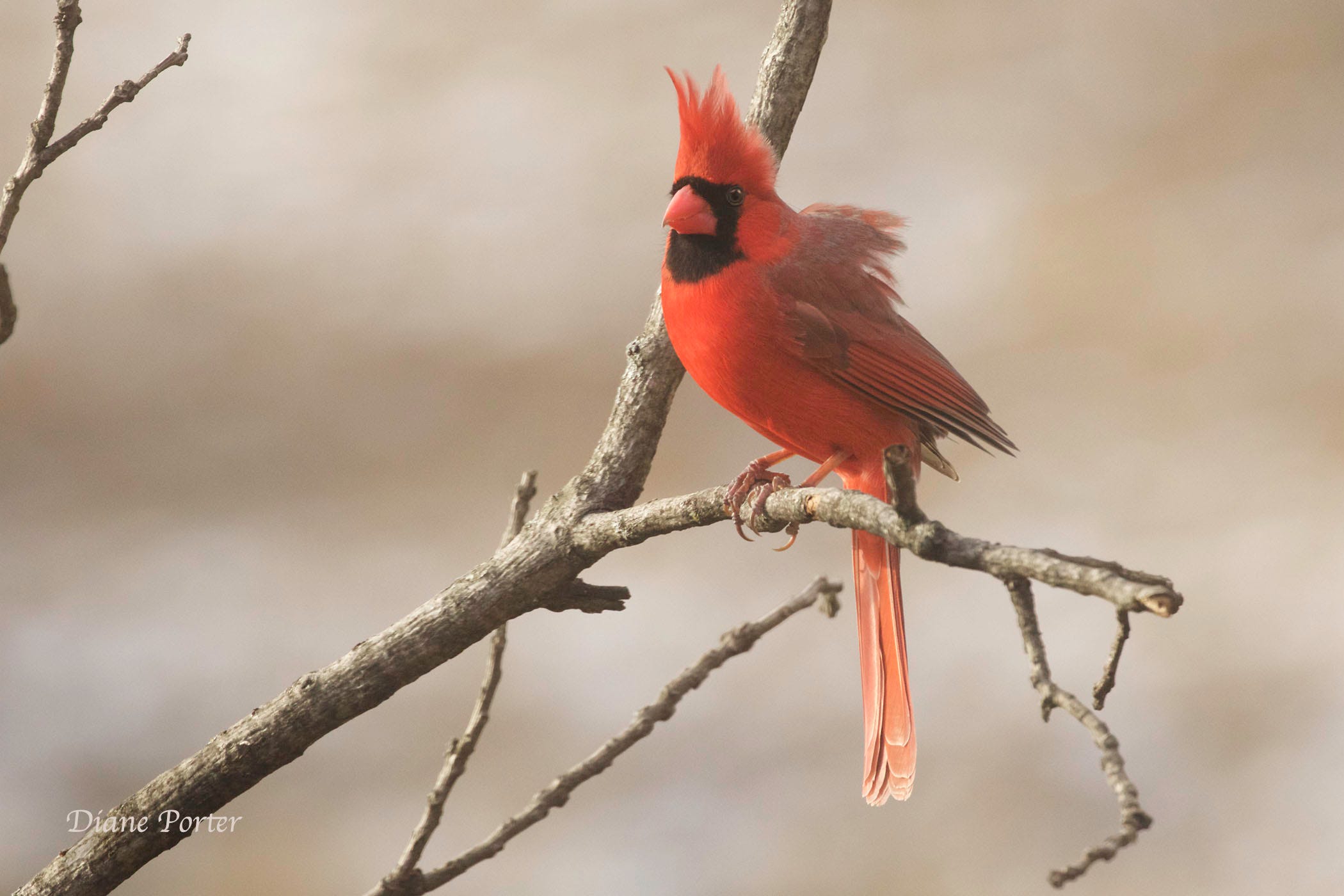
Beauty restored.
I always learn something new from your posts. Delightful!
This is fascinating and educational information, as always Diane. And what beautiful photos. Thank you!