

Iowa sand dunes? What?
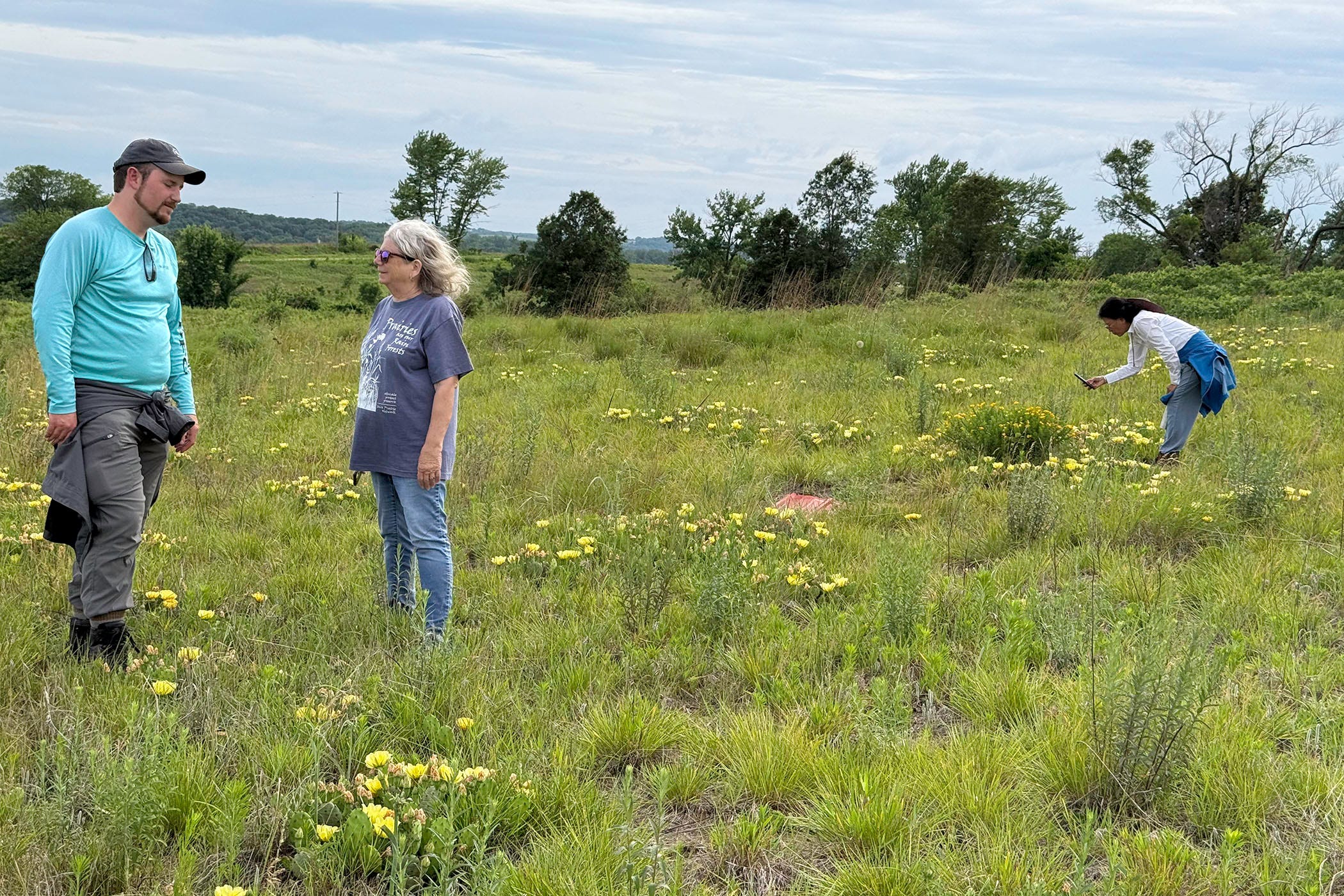
Underfoot, the sand is soft, the vegetation sparse. Splashed across the rolling ground are yellow flowers of prickly pear cactus. You watch where you step, because the cacti arm themselves with long spines.
But the plants are small. Approaching them carefully, you can step in close for a good look.
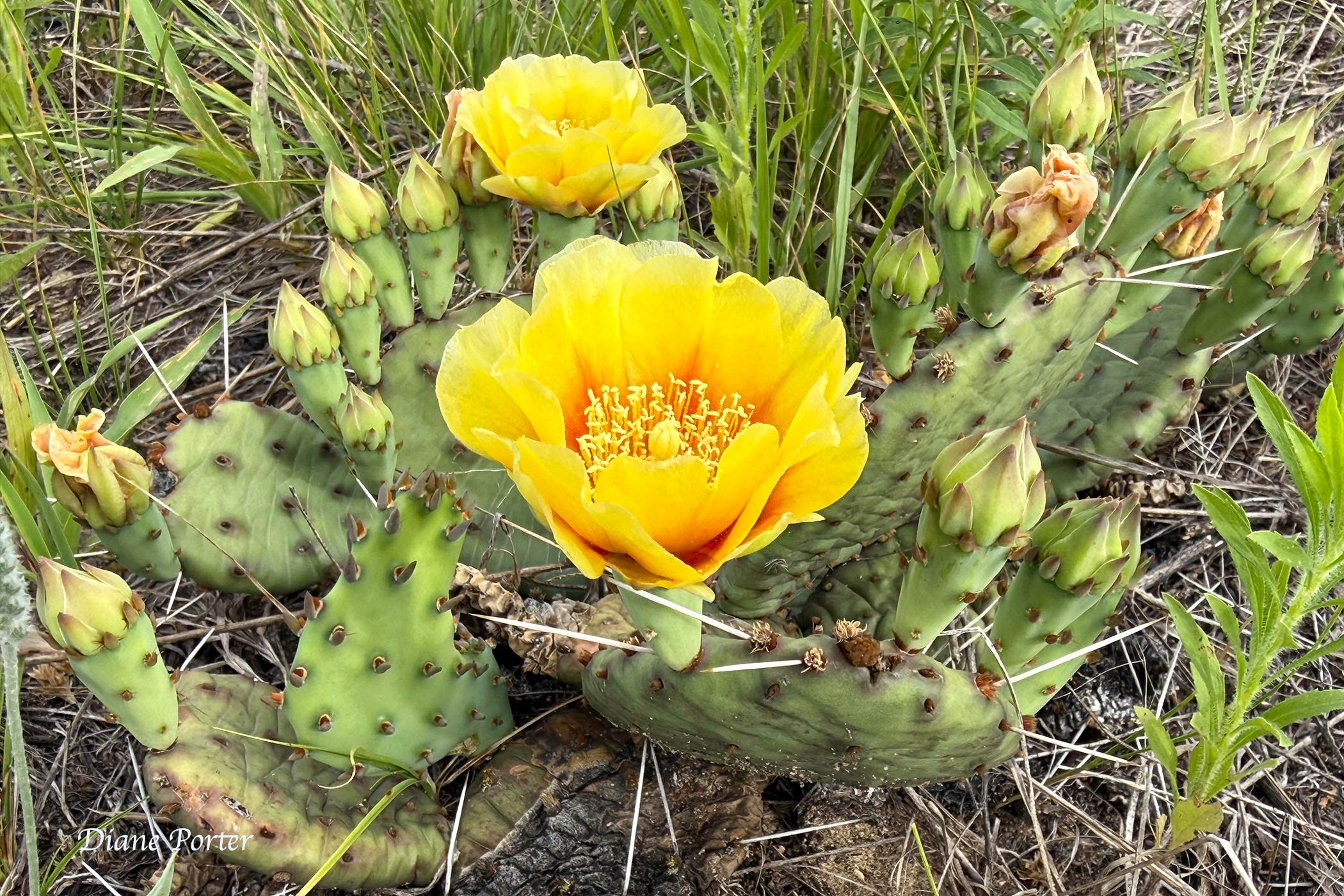
Most of the plants bear entirely yellow flowers. A few have red centers. All the flowers on a single plant are the same type. Both color schemes are considered the same species, Eastern Prickly Pear Cactus, Opuntia humifusa.


It is the most widespread cactus that is native to eastern North America. It grows in southern Canada, most of eastern and central United States, south to Florida and the Gulf Coast, and into parts of northern Mexico. It endures the winter freezes of Iowa and the hot, humid summers of Florida. It seems very much at home in sand dunes.
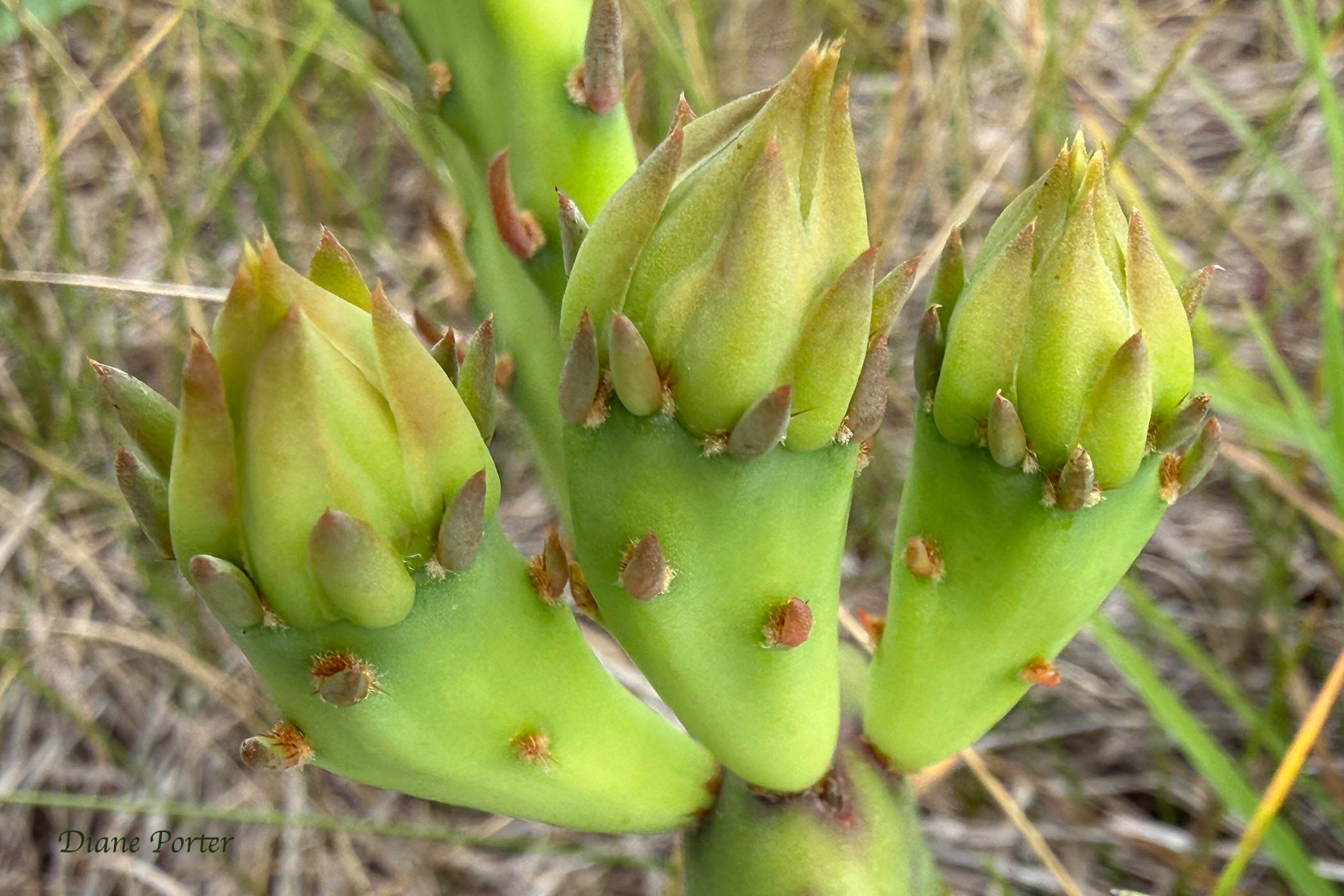
In early June, along with the blossoms there are still many unopened buds. They look plump and full.
Prickly pear cactus is uncommon in Iowa, occurring at relatively few sites. Eddyville Sand Dunes, with its deep, droughty sands, is one of the best places in the state to find it.
These dunes harbor many uncommon and rare species of plants and animals, including the cactus, ornate box turtles and a rare orchid.
In the 1990s, a proposed route for the new US 63 expressway would have cut through the dunes. Citizens, biologists, and conservation groups organized to protect the site. After years of effort, the highway was rerouted, and the dunes were saved
My June 7 visit to Eddyville Sand Dunes Prairie was my fourth visit in the last 10 years. This time, I got there at the right moment to see the cactus flowers in their full glory.
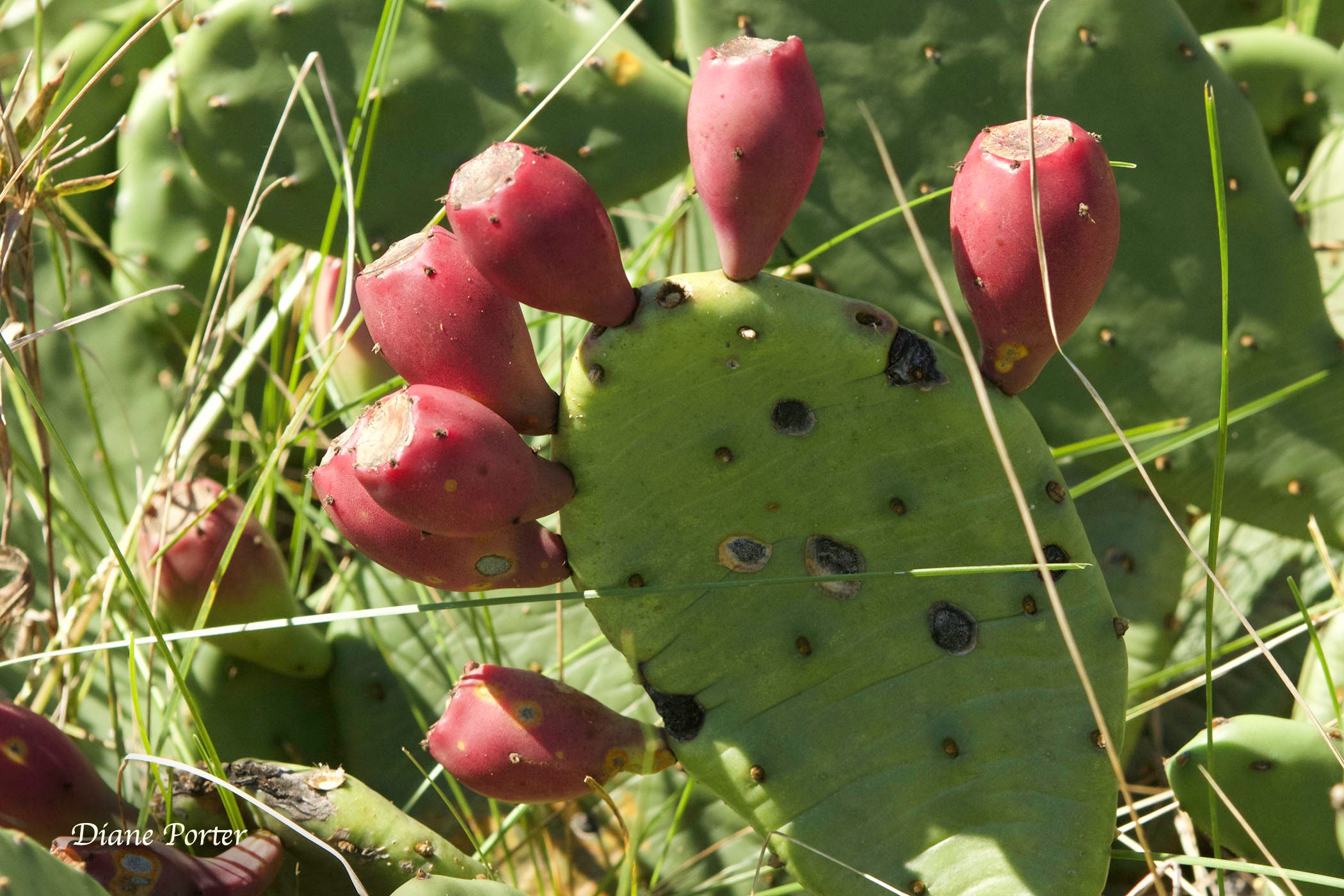
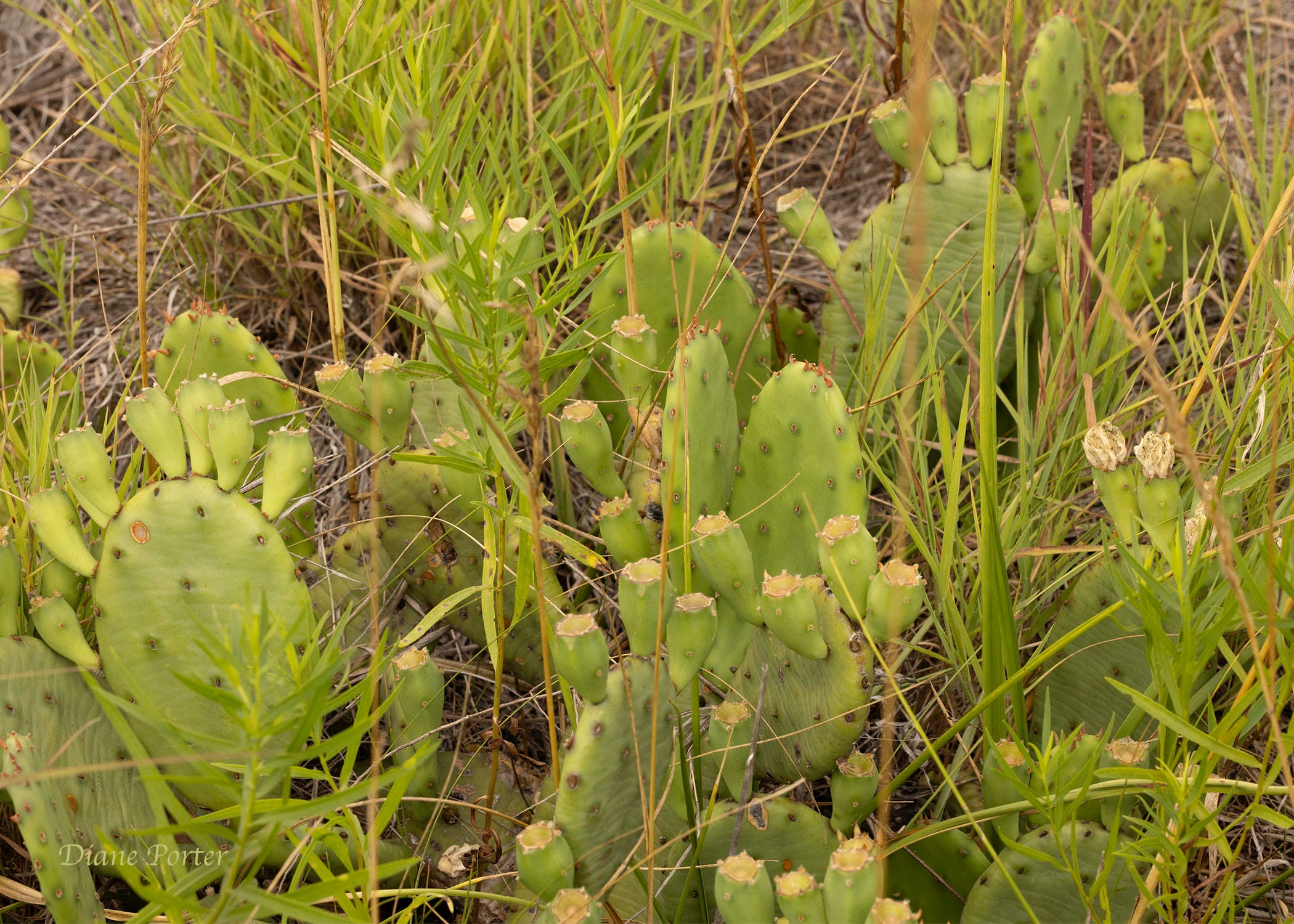
By September, the flowers will gone. Red fruits, called tunas, ripen along the edges of the cactus. (Tuna is an indigenous Caribbean word that was adopted into Spanish and is still used today. It is not related to the word tuna meaning a fish.)
The fruits are edible and slightly sweet. Many indigenous people of North America ate them. Coyotes, foxes, and raccoons still eat ripe tunas. White-tailed deer, rabbits, mice, and ground squirrels eat the body of the cactus.


The prickly pears growing at Eddyville today may be descendants of plants that colonized Iowa's sandy landscapes thousands of years ago. After the glaciers melted 12,000–14,000 years ago, enormous rivers deposited unimaginable quantities of sand. Winds later picked up that sand, carried it away, and reworked it into dunes across parts of the Midwest.
Beneath Iowa's rich black soil lies a vast history. It is a tale of glaciers, rivers, windblown sand, and landscapes that once looked very different from the Iowa we know today.
Eddyville Sand Dunes Prairie is a kind of ecological island, preserving plants and animals that have largely disappeared from Iowa.
My gratitude to everyone who helped save it.
I look forward to your posts. Thank you for the beauty and restorative sanity.
Wonder if there's a Hadrosaur beside those Prickly Pears!? Cretaceous era Iowa...